The Rise of AI World Models in Simulating Reality
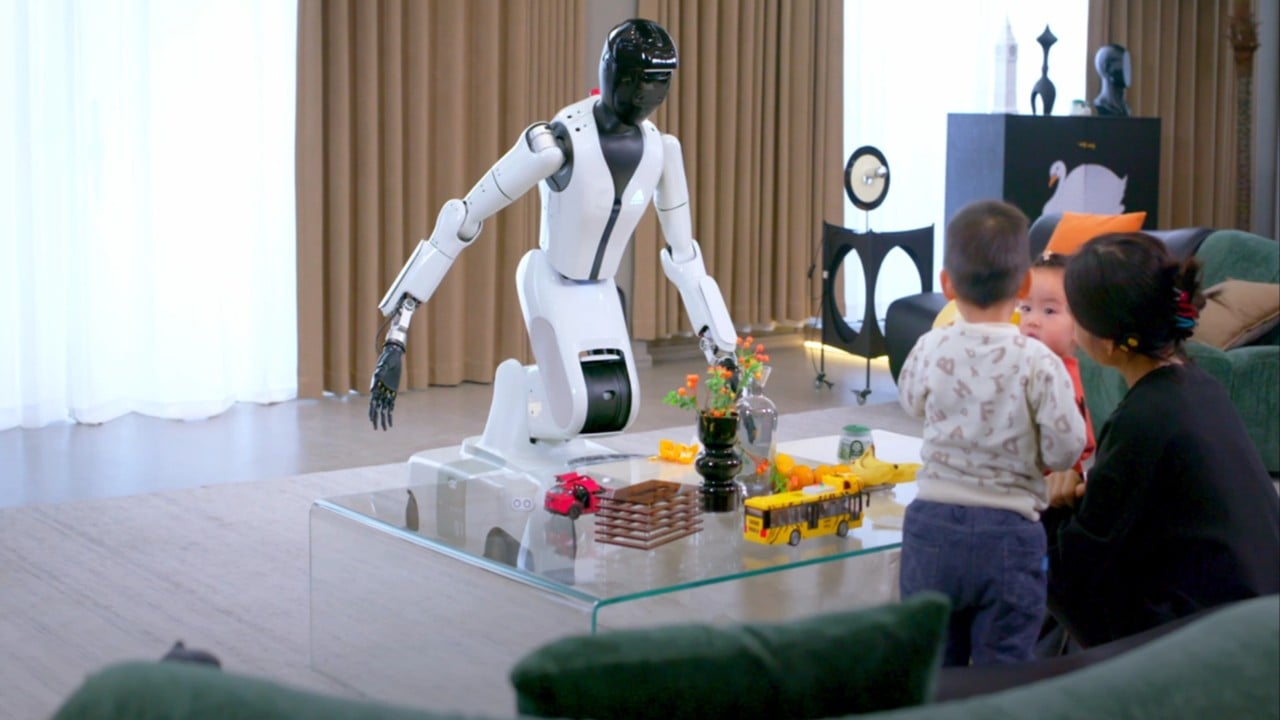
💡Understand the next major shift in AI: moving from generating static media to simulating dynamic, interactive realities.
⚡ 30-Second TL;DR
What Changed
World models move beyond static generation to simulate temporal changes in environments.
Why It Matters
World models represent a fundamental shift in AI capability, moving from passive content generation to active environment interaction. This could revolutionize autonomous systems, digital twins, and immersive simulation training.
What To Do Next
Research existing world model architectures like JEPA or Sora to understand how temporal consistency is maintained in latent space.
Key Points
- •World models move beyond static generation to simulate temporal changes in environments.
- •Initial applications focused on robotics and physics-based simulations.
- •Chinese tech companies are aggressively exploring broader use cases for world models.
- •The technology is currently in its infancy with no industry-wide consensus on architecture.
🧠 Deep Insight
AI-generated analysis for this event — not the original article.
🔑 Enhanced Key Takeaways
- •World models are increasingly utilizing 'latent dynamics' to predict future states in compressed representation spaces, significantly reducing the computational cost compared to pixel-level simulation.
- •The integration of 'Embodied AI' has become a primary driver for Chinese firms, aiming to bridge the gap between digital simulation and real-world robotic deployment through sim-to-real transfer.
- •Major research efforts are currently focused on solving the 'long-horizon prediction' problem, where models struggle to maintain physical consistency over extended temporal sequences.
- •Standardization efforts are emerging around 'World Model Benchmarks' (WMB) to evaluate how well models adhere to Newtonian physics and object permanence in synthetic environments.
- •Chinese tech giants are leveraging massive proprietary datasets from autonomous driving fleets to train world models, providing a unique advantage in real-world environmental complexity over Western counterparts.
📊 Competitor Analysis▸ Show
| Feature | Sora (OpenAI) | Genie (Google DeepMind) | Chinese World Models (e.g., various) |
|---|---|---|---|
| Primary Focus | High-fidelity video generation | Interactive 2D/3D environments | Robotics & Physical simulation |
| Architecture | Diffusion Transformer | Latent Action Model | Hybrid Transformer-Physics Engine |
| Benchmarks | Visual coherence (VBench) | Interaction accuracy | Sim-to-real transfer rate |
🛠️ Technical Deep Dive
- Architecture typically employs a Transformer-based backbone combined with a Variational Autoencoder (VAE) to compress high-dimensional sensory input into a latent space.
- Implementation often involves a 'World Model Controller' that predicts the next latent state based on current state and action tokens.
- Training utilizes self-supervised learning on large-scale video datasets, often augmented with synthetic physics engine data to enforce causality.
- Models frequently incorporate 'Temporal Attention Mechanisms' to ensure object persistence and consistent motion trajectories across frames.
🔮 Future ImplicationsAI analysis grounded in cited sources
⏳ Timeline
Weekly AI Recap
Read this week's curated digest of top AI events →
👉Related Updates

AI-curated news aggregator. All content rights belong to original publishers.
Original source: SCMP Technology ↗
This is a summary, not the original. Read the source, or get the weekly briefing.
The weekly digest
One email a week. Unsubscribe anytime.