🐯虎嗅•Freshcollected in 12m
The Rise of AI-Powered Solo 'Nano-Companies'
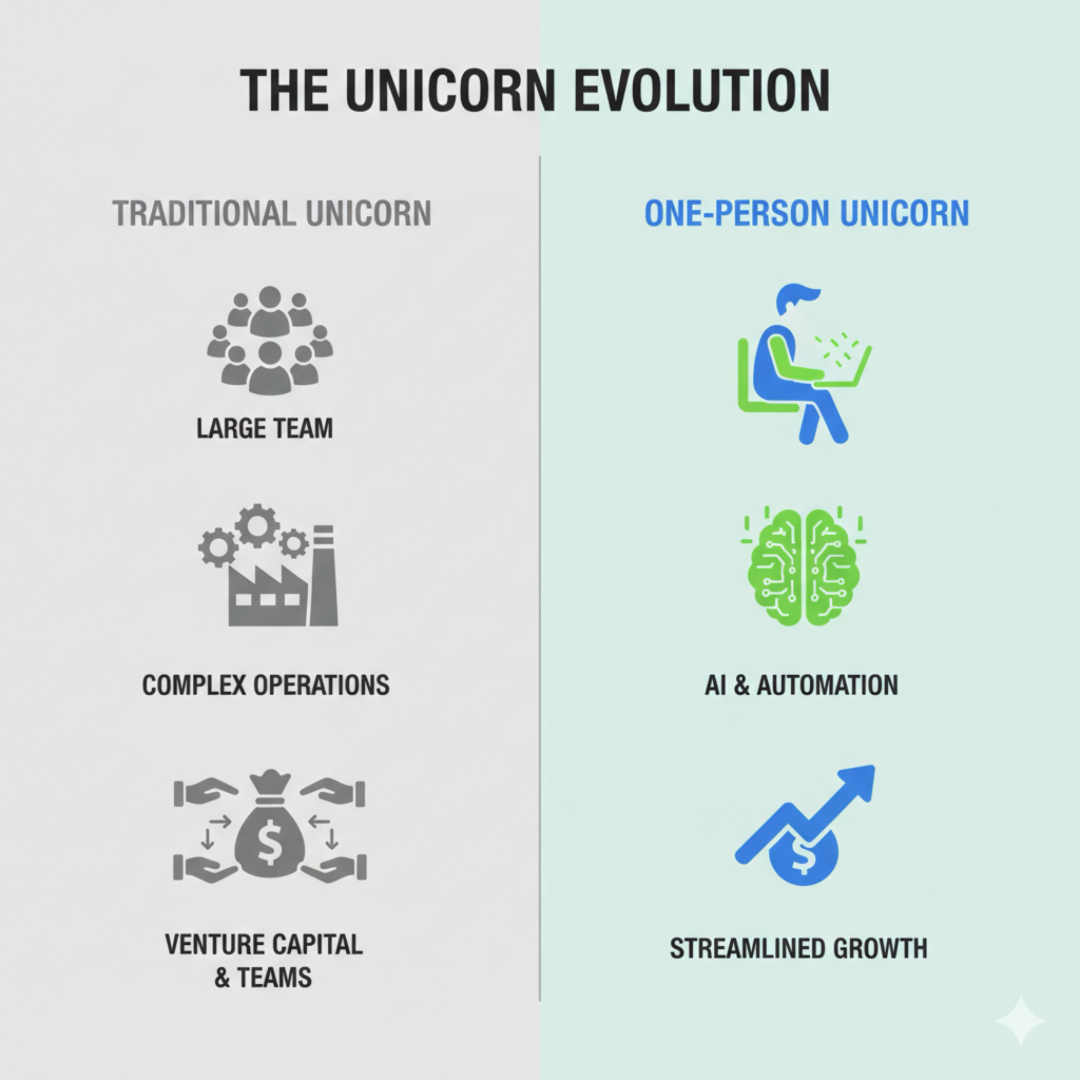
💡Learn how AI is enabling solo founders to build multi-million dollar companies without traditional teams.
⚡ 30-Second TL;DR
What Changed
Solo-founder startups rose from 23.7% in 2019 to 36.3% in 2025.
Why It Matters
The shift toward 'nano-companies' challenges traditional VC models and commercial real estate. It forces a rethink of how enterprise software and services are priced and delivered.
What To Do Next
Audit your current business processes to identify tasks that can be fully automated by AI agents to reduce reliance on full-time headcount.
Who should care:Founders & Product Leaders
Key Points
- •Solo-founder startups rose from 23.7% in 2019 to 36.3% in 2025.
- •AI agents reduce internal management overhead, allowing companies to scale revenue without hiring.
- •Traditional office-based business models are failing; future infrastructure must support high-output individuals.
- •New Chinese company laws now permit unlimited 'one-person' corporations.
🧠 Deep Insight
AI-generated analysis for this event.
🔑 Enhanced Key Takeaways
- •The rise of nano-companies is heavily correlated with the 'Agentic Workflow' paradigm, where LLM-based agents handle autonomous task decomposition, API integration, and error handling without human intervention.
- •Venture capital firms are increasingly pivoting toward 'Solo-GP' or 'Micro-VC' models to specifically fund these solo-founder entities, shifting away from traditional headcount-heavy startup metrics.
- •Cloud-native infrastructure providers have introduced 'Serverless AI' tiers specifically designed for single-user deployment, reducing operational costs for solo founders by up to 80% compared to 2020 standards.
- •The 'One-Person Corporation' legal shift in China is part of a broader 'Company Law' reform aimed at stimulating the gig economy and reducing the administrative burden for individual entrepreneurs.
- •Data indicates that solo-founder startups are disproportionately concentrated in the SaaS, digital content, and specialized AI-model fine-tuning sectors, where the marginal cost of production is near zero.
🛠️ Technical Deep Dive
- Agentic Frameworks: Utilization of frameworks like LangGraph, AutoGen, and CrewAI allows solo founders to orchestrate multi-agent systems that simulate entire departments (e.g., marketing, coding, customer support).
- API-First Architecture: Nano-companies rely on headless CMS, serverless compute (AWS Lambda, Vercel), and vector databases (Pinecone, Milvus) to maintain high-availability systems without DevOps teams.
- Automated CI/CD Pipelines: Implementation of AI-driven testing and deployment pipelines ensures that code updates are validated and pushed to production autonomously, minimizing the need for manual QA.
🔮 Future ImplicationsAI analysis grounded in cited sources
Corporate tax structures will undergo significant reform to address the blurring lines between personal income and corporate revenue for nano-companies.
Current tax codes are ill-equipped to handle entities that generate enterprise-level revenue with zero employees, necessitating new classification systems.
Traditional HR and payroll software markets will experience a decline in demand as nano-companies bypass these services entirely.
The shift toward automated, agent-based operations removes the fundamental need for human-centric management tools.
⏳ Timeline
2020-01
Initial surge in remote-work tools and cloud infrastructure accessibility during the global pandemic.
2022-11
Launch of ChatGPT triggers the widespread adoption of generative AI for individual productivity.
2023-09
Emergence of early agentic frameworks enabling autonomous task execution.
2024-07
Revision of Chinese Company Law to further simplify registration and operational requirements for single-person entities.
2025-05
Industry reports confirm solo-founder startups reach a record 36.3% share of new market entrants.
📰
Weekly AI Recap
Read this week's curated digest of top AI events →
👉Related Updates

AI-curated news aggregator. All content rights belong to original publishers.
Original source: 虎嗅 ↗