The Private-Sector Decade Ends at the Memory Boom
AI’s next bottleneck may be memory supply—not model quality.
30-Second TL;DR
What Changed
Country Garden invested RMB 20 billion in ChangXin Technology in 2021 for a 1.56% stake, which could have gained more than RMB 490 billion by the IPO.
Why It Matters
For AI practitioners, the article signals that memory and semiconductor capacity are becoming strategic constraints as AI workloads expand. It also suggests that durable AI businesses may depend as much on supply-chain access and capital efficiency as on model capability.
What To Do Next
For any AI deployment plan, model the availability and price volatility of DRAM, GPUs, and data-center capacity before committing to inference-scale growth.
Key Points
- •Country Garden invested RMB 20 billion in ChangXin Technology in 2021 for a 1.56% stake, which could have gained more than RMB 490 billion by the IPO.
- •ChangXin Technology benefited from rising AI-computing demand and strong DRAM orders, positioning it as a major Chinese memory-chip company.
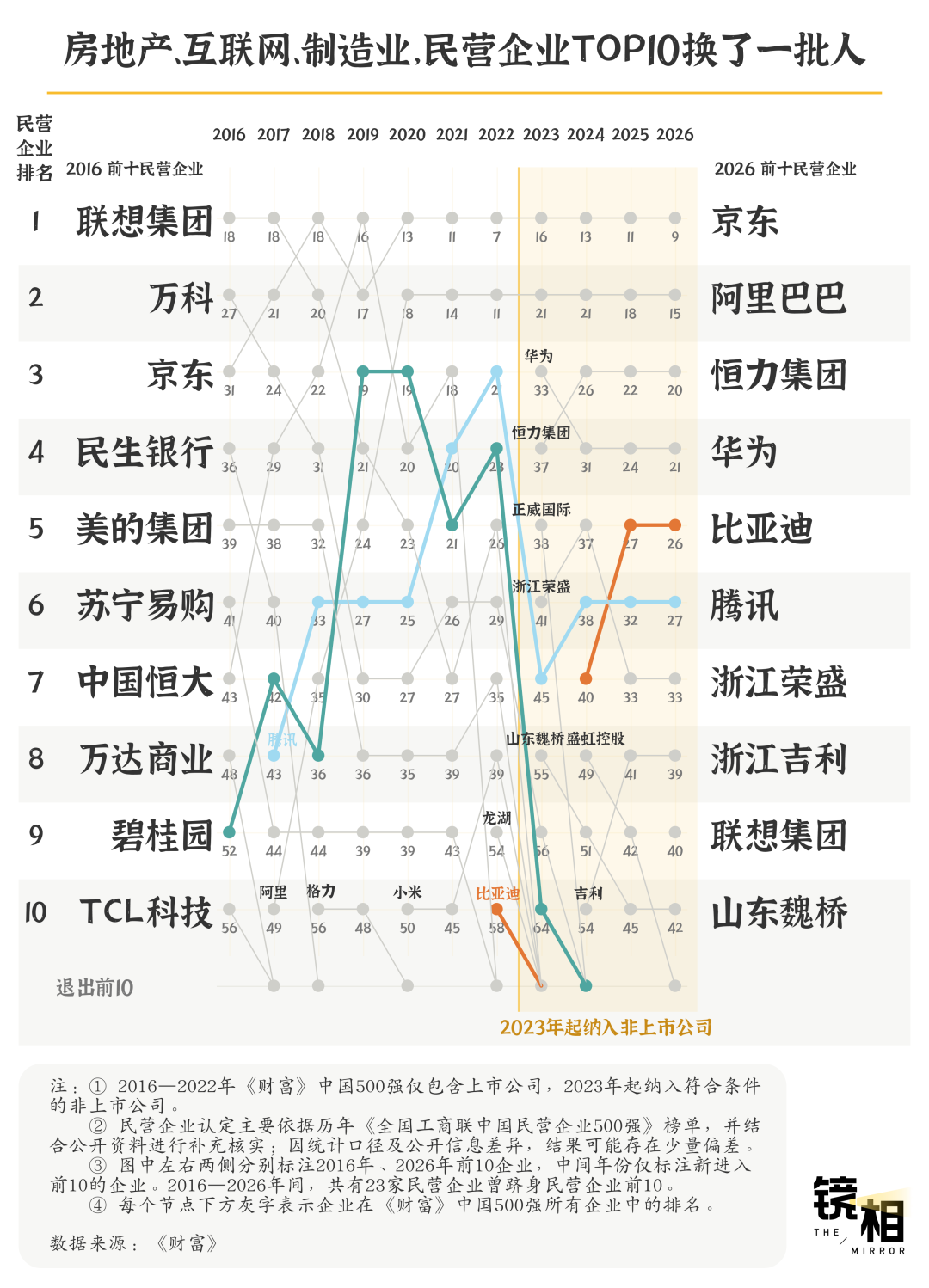
- •China’s private-sector leadership is shifting from highly leveraged property developers to EV, battery, semiconductor, and other hard-technology manufacturers.
- •The 2026 Fortune China 500 data shows property companies dominating the loss rankings, while memory, semiconductor, and computing-infrastructure firms entered the list in larger numbers.
Deep Insight
AI-generated analysis for this event — not the original article.
Enhanced Key Takeaways
- •ChangXin Memory Technologies (CXMT) has successfully transitioned from initial R&D phases to mass-producing LPDDR5 and DDR5 memory, crucial for China's domestic AI server supply chain.
- •The divestment by Country Garden was driven by a severe liquidity crisis and debt restructuring requirements, forcing the liquidation of non-core assets despite their long-term appreciation potential.
- •China's 'Big Fund' (National Integrated Circuit Industry Investment Fund) has played a pivotal role in providing the capital-intensive backing required for CXMT to scale production capacity amidst global trade restrictions.
- •The shift in the Fortune China 500 rankings reflects a broader state-led industrial policy pivot, prioritizing 'New Productive Forces' (semiconductors, green energy) over the debt-fueled real estate model that dominated the 2010s.
- •CXMT's IPO valuation reflects a premium placed on 'technological sovereignty' by domestic investors, as the company is viewed as a strategic hedge against potential US-led export controls on high-bandwidth memory (HBM).
Competitor Analysis
- ChangXin Memory (CXMT)
- Domestic Chinese Market
- Samsung Electronics
- Global / High-End
- SK Hynix
- Global / High-End
- Micron Technology
- Global / High-End
- ChangXin Memory (CXMT)
- 17nm / 1x nm class
- Samsung Electronics
- 12nm / 10nm class
- SK Hynix
- 10nm class (1a/1b)
- Micron Technology
- 1-beta / 1-gamma
- ChangXin Memory (CXMT)
- DDR4, LPDDR4X, DDR5
- Samsung Electronics
- HBM3E, DDR5, LPDDR5X
- SK Hynix
- HBM3E, DDR5, LPDDR5X
- Micron Technology
- HBM3E, DDR5, LPDDR5X
- ChangXin Memory (CXMT)
- Emerging / Strategic
- Samsung Electronics
- Market Leader
- SK Hynix
- Market Leader
- Micron Technology
- Market Leader
| Feature | ChangXin Memory (CXMT) | Samsung Electronics | SK Hynix | Micron Technology |
|---|---|---|---|---|
| Primary Focus | Domestic Chinese Market | Global / High-End | Global / High-End | Global / High-End |
| Process Node | 17nm / 1x nm class | 12nm / 10nm class | 10nm class (1a/1b) | 1-beta / 1-gamma |
| Product Mix | DDR4, LPDDR4X, DDR5 | HBM3E, DDR5, LPDDR5X | HBM3E, DDR5, LPDDR5X | HBM3E, DDR5, LPDDR5X |
| Market Position | Emerging / Strategic | Market Leader | Market Leader | Market Leader |
Technical Deep Dive
- CXMT utilizes a proprietary DRAM architecture that focuses on high-density 1x nm process nodes to balance yield rates with performance.
- The company has implemented advanced packaging techniques to support LPDDR5 speeds, enabling integration into mobile and edge-AI devices.
- Manufacturing processes rely on a mix of domestic lithography equipment and non-restricted international tools to maintain production continuity.
- The firm's R&D roadmap emphasizes the development of HBM (High Bandwidth Memory) to compete with global leaders in the AI accelerator market.
Future ImplicationsAI analysis grounded in cited sources
Timeline
- 2016-05ChangXin Memory Technologies (CXMT) is founded in Hefei, Anhui.
- 2019-09CXMT begins mass production of its first-generation 8Gb DDR4 memory chips.
- 2021-01Country Garden completes its RMB 20 billion strategic investment in CXMT.
- 2023-04CXMT announces the successful development of its LPDDR5 memory products.
- 2025-11Country Garden liquidates its stake in CXMT as part of a broader debt restructuring plan.
- 2026-06CXMT officially lists on the stock exchange, marking a major milestone for China's semiconductor sector.
Weekly AI Recap
Read this week's curated digest of top AI events →
AI-curated news aggregator. All content rights belong to original publishers.
Original source: 虎嗅 ↗
This is a summary, not the original. Read the source, or get the weekly briefing.
The weekly digest
One email a week. Unsubscribe anytime.