The Next Consumer Is Context-Aware and Creative
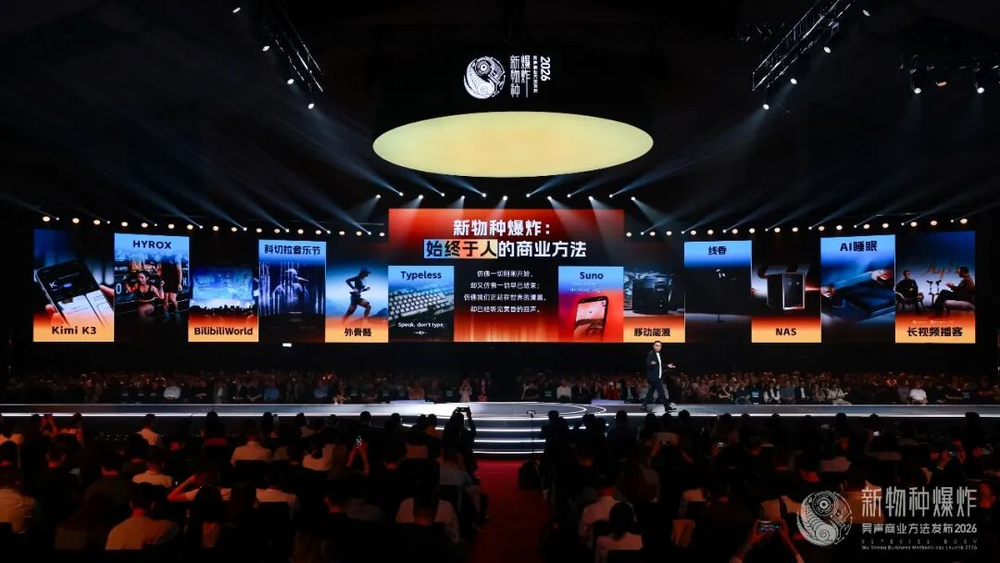
A useful framework for designing AI products around context, creativity, trust, and real-world action.
30-Second TL;DR
What Changed
“XSpecies of Us” is not an age group, but a new consumer personality emerging across generations.
Why It Matters
The speech suggests that AI product differentiation will increasingly depend on persistent context, trustworthy evidence, and the ability to support user agency. For founders and builders, this shifts attention from model capability alone toward workflows that connect personal data, real-world behavior, and authorized actions.
What To Do Next
Prototype one context-aware workflow with your preferred LLM, retaining session memory and requiring explicit user approval before any external action.
Key Points
- •“XSpecies of Us” is not an age group, but a new consumer personality emerging across generations.
- •The three core traits are body awareness, personal creativity, and skepticism toward packaged information.
- •AI is moving knowledge from search boxes into everyday workflows and devices that can understand habits, assist decisions, and act with authorization.
- •Products increasingly serve as tools for self-understanding, self-expression, and world-building rather than finished goods alone.
- •Context, memory, continuous interaction, and authentic human participation are presented as foundations for next-generation AI experiences.
Deep Insight
AI-generated analysis for this event — not the original article.
Enhanced Key Takeaways
- •Wu Sheng's 'XSpecies' concept draws heavily on the 'Digital Nomad' and 'Prosumer' sociological frameworks, evolving them to account for the shift from passive consumption to AI-augmented generative agency.
- •The framework emphasizes 'Ambient Intelligence' as the underlying infrastructure, where devices utilize multi-modal sensor fusion to anticipate user needs without explicit prompting.
- •Data privacy and 'Data Sovereignty' are identified as critical friction points for the XSpecies, who demand granular control over the personal memory banks required to train their personalized AI agents.
- •The shift toward 'World-Building' products is linked to the rise of spatial computing and persistent digital twins, allowing consumers to treat their digital environments as extensions of their physical identity.
- •Industry analysts note that this shift necessitates a move away from 'Attention Economy' business models toward 'Intention Economy' models, where value is derived from successful task completion rather than time spent on platform.
Future ImplicationsAI analysis grounded in cited sources
Timeline
- 2024-05Wu Sheng begins public discourse on the intersection of generative AI and human behavioral evolution.
- 2025-02Initial publication of 'The New Consumer' whitepaper, laying the groundwork for the XSpecies archetype.
- 2026-08Wu Sheng delivers the 2026 annual speech formally defining the 'XSpecies of Us' framework.
Weekly AI Recap
Read this week's curated digest of top AI events →
AI-curated news aggregator. All content rights belong to original publishers.
Original source: 虎嗅 ↗
This is a summary, not the original. Read the source, or get the weekly briefing.
The weekly digest
One email a week. Unsubscribe anytime.