The impact of MaaS on Chinese cloud providers
💡Essential reading for understanding the shifting landscape of Chinese AI cloud infrastructure and pricing models.
⚡ 30-Second TL;DR
What Changed
MaaS is becoming a core growth engine for cloud providers
Why It Matters
Cloud providers are increasingly prioritizing AI infrastructure to capture market share, forcing developers to adapt to new API-first ecosystems.
What To Do Next
Evaluate your cloud provider's MaaS offerings against open-source alternatives to optimize inference costs.
Key Points
- •MaaS is becoming a core growth engine for cloud providers
- •Shift from traditional IaaS to AI-centric service models
- •Analysis of the incremental value behind AI cloud adoption
🧠 Deep Insight
AI-generated analysis for this event — not the original article.
🔑 Enhanced Key Takeaways
- •Chinese cloud providers are increasingly adopting a 'Model-as-a-Service' (MaaS) architecture to bypass hardware export restrictions by offering API-based access to proprietary LLMs rather than selling high-end GPUs.
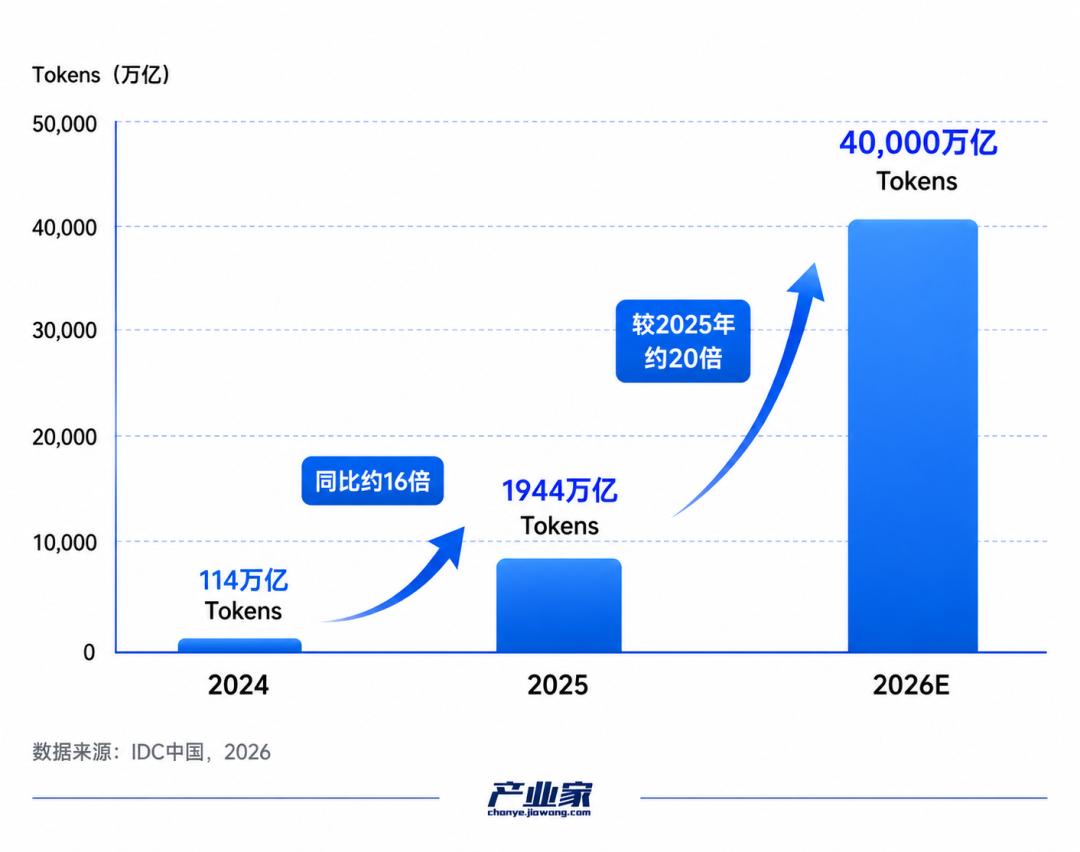
- •The integration of MaaS has shifted cloud revenue metrics from traditional storage and compute consumption (IaaS) to 'token-based' billing models, fundamentally altering long-term customer lifetime value (CLV) projections.
- •Major Chinese cloud players are establishing 'Model Marketplaces' that allow third-party developers to fine-tune and deploy open-source models (like Qwen or DeepSeek) directly on their infrastructure, creating a platform-ecosystem lock-in effect.
- •Regulatory compliance in China has necessitated the development of 'private-cloud MaaS' deployments, where models are containerized and deployed within a client's firewall to meet strict data sovereignty requirements.
- •The 'MaaS-first' strategy has led to a significant increase in R&D expenditure for cloud providers, as they now compete on model performance benchmarks (MMLU, GSM8K) rather than just data center uptime or latency.
📊 Competitor Analysis▸ Show
| Feature | Alibaba Cloud (MaaS) | Baidu Cloud (Qianfan) | Tencent Cloud (MaaS) |
|---|---|---|---|
| Primary Model | Qwen Series | Ernie Bot | Hunyuan |
| Pricing Model | Token-based (Input/Output) | Tiered API/Private Deployment | Token-based/Resource-based |
| Key Strength | Open-source ecosystem | Enterprise integration | WeChat/Game ecosystem |
🛠️ Technical Deep Dive
- Implementation of Model-as-a-Service typically utilizes a multi-tenant inference architecture leveraging vLLM or similar high-throughput serving engines to optimize GPU utilization.
- Integration of LoRA (Low-Rank Adaptation) and P-Tuning allows cloud providers to offer cost-effective fine-tuning services without requiring full model retraining.
- Deployment pipelines often utilize Kubernetes-based orchestration to manage model weights, which can exceed 100GB+ for large-scale parameter models.
- API gateways are configured with rate-limiting and token-counting middleware to support the shift from resource-based billing to usage-based billing.
🔮 Future ImplicationsAI analysis grounded in cited sources
⏳ Timeline
Weekly AI Recap
Read this week's curated digest of top AI events →
👉Related Updates



AI-curated news aggregator. All content rights belong to original publishers.
Original source: 钛媒体 ↗
This is a summary, not the original. Read the source, or get the weekly briefing.
The weekly digest
One email a week. Unsubscribe anytime.