The Hidden Reality of Token Economics
💡Learn how token economics are reshaping AI business sustainability and inference strategies.
⚡ 30-Second TL;DR
What Changed
Token-based billing is becoming the primary revenue driver for AI companies.
Why It Matters
Practitioners must prioritize inference cost optimization as token pricing becomes the standard for profitability.
What To Do Next
Audit your current LLM API usage and implement caching strategies to mitigate rising token costs.
Key Points
- •Token-based billing is becoming the primary revenue driver for AI companies.
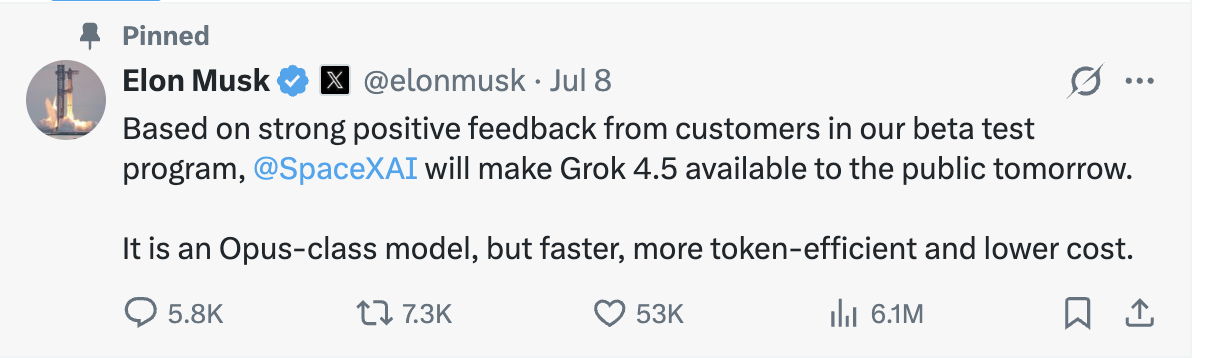
- •xAI is effectively optimizing its token monetization strategy.
- •The industry is moving from 'intelligence-first' to 'cost-first' business models.
🧠 Deep Insight
AI-generated analysis for this event — not the original article.
🔑 Enhanced Key Takeaways
- •The transition to token-based billing is being accelerated by the 'inference wall,' where the marginal cost of compute is outpacing the revenue growth from subscription-based SaaS models.
- •xAI has leveraged its integration with the X (formerly Twitter) data stream to create a unique 'data-to-token' feedback loop, reducing the cost of fine-tuning models for real-time relevance.
- •Industry analysts observe that companies are increasingly adopting 'dynamic token pricing,' where costs fluctuate based on real-time GPU cluster utilization and energy grid pricing.
- •The shift toward cost-first models has led to the rise of 'token-efficient' architectures, such as Mixture-of-Experts (MoE), which xAI utilizes to minimize active parameters per inference request.
- •Regulatory bodies in several jurisdictions are beginning to scrutinize token-based billing transparency, fearing that opaque 'token consumption' metrics could lead to consumer exploitation.
📊 Competitor Analysis▸ Show
| Feature | xAI (Grok) | OpenAI (GPT-4o) | Anthropic (Claude 3.5) |
|---|---|---|---|
| Primary Billing | Token-based (Usage) | Token-based (Usage) | Token-based (Usage) |
| Architecture | MoE (Sparse) | Dense/Hybrid | Dense |
| Data Advantage | Real-time X stream | Web crawl/Partnerships | Curated/Licensed data |
| Cost Strategy | Aggressive inference optimization | Tiered API pricing | High-precision/High-cost |
🛠️ Technical Deep Dive
- xAI employs a Mixture-of-Experts (MoE) architecture which activates only a subset of model parameters per token, significantly lowering the FLOPs required for inference.
- Implementation of speculative decoding techniques allows xAI to use smaller 'draft' models to predict token sequences, which are then verified by the larger model to increase throughput.
- Quantization strategies (INT8/FP8) are being deployed at the inference layer to reduce memory bandwidth bottlenecks, allowing for higher token generation speeds per watt.
- Integration of custom kernel optimizations for NVIDIA H100/B200 clusters specifically targets the reduction of latency in the KV cache during long-context token generation.
🔮 Future ImplicationsAI analysis grounded in cited sources
⏳ Timeline
Weekly AI Recap
Read this week's curated digest of top AI events →
👉Related Updates



AI-curated news aggregator. All content rights belong to original publishers.
Original source: 钛媒体 ↗
This is a summary, not the original. Read the source, or get the weekly briefing.
The weekly digest
One email a week. Unsubscribe anytime.