The Fragile Era of Current AI Models
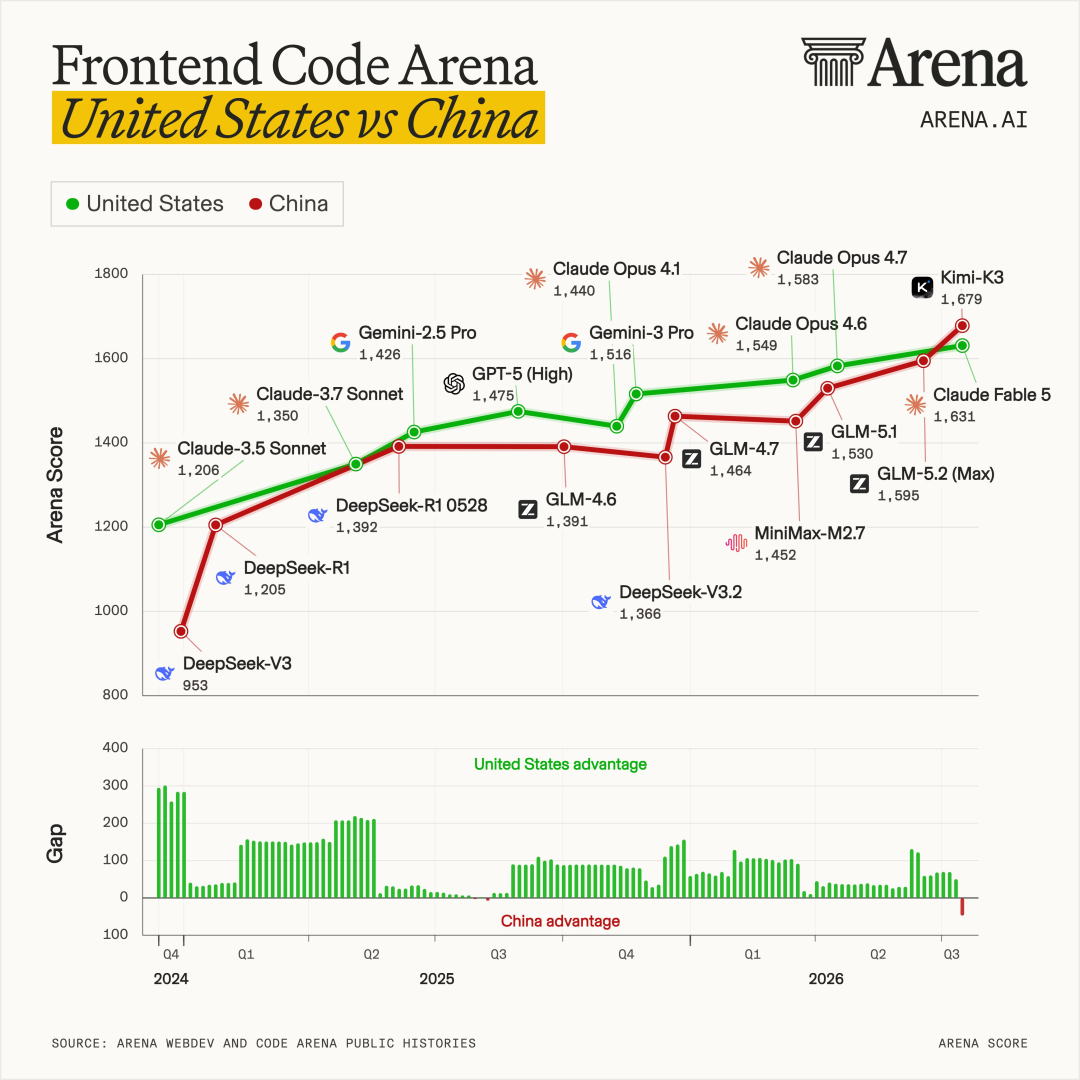
💡Understand the limitations of current LLMs to build more reliable AI systems.
⚡ 30-Second TL;DR
What Changed
Current models exhibit high sensitivity to prompt variations.
Why It Matters
Developers should implement defensive programming and robust evaluation frameworks to mitigate current model instability.
What To Do Next
Implement multi-step validation and guardrails for any production-level LLM application.
Key Points
- •Current models exhibit high sensitivity to prompt variations.
- •Reliability remains a major concern for enterprise-grade adoption.
- •The industry is in a transitional phase awaiting more stable architectures.
🧠 Deep Insight
AI-generated analysis for this event — not the original article.
🔑 Enhanced Key Takeaways
- •Research indicates that current Transformer-based architectures suffer from 'catastrophic forgetting' when fine-tuned on new, mission-critical datasets, limiting their long-term reliability.
- •The industry is shifting focus toward Neuro-Symbolic AI and State Space Models (SSMs) like Mamba to address the inherent lack of logical reasoning consistency found in standard LLMs.
- •Recent benchmarks reveal that 'hallucination rates' in enterprise-grade deployments remain above 15% for complex multi-step reasoning tasks, necessitating expensive human-in-the-loop verification.
- •Data poisoning and prompt injection vulnerabilities have become systemic risks, as current models lack native, hardware-level isolation for sensitive enterprise data.
- •The 'Fragile Era' is characterized by a plateau in scaling laws, where increasing parameter counts no longer yields proportional gains in model robustness or factual accuracy.
🛠️ Technical Deep Dive
- Current models rely on Softmax attention mechanisms which are computationally expensive and prone to 'attention drift' during long-context processing.
- Implementation of Retrieval-Augmented Generation (RAG) is currently the primary, albeit imperfect, patch for model fragility, introducing latency and retrieval-bias issues.
- Transitioning architectures are exploring Sparse Mixture-of-Experts (MoE) to improve efficiency, though these models often exhibit inconsistent performance across different expert activation paths.
- Lack of formal verification methods for neural network weights makes it impossible to mathematically guarantee output stability in mission-critical environments.
🔮 Future ImplicationsAI analysis grounded in cited sources
⏳ Timeline
Weekly AI Recap
Read this week's curated digest of top AI events →
👉Related Updates



AI-curated news aggregator. All content rights belong to original publishers.
Original source: 钛媒体 ↗
This is a summary, not the original. Read the source, or get the weekly briefing.
The weekly digest
One email a week. Unsubscribe anytime.