The evolution of AI-managed smart cities
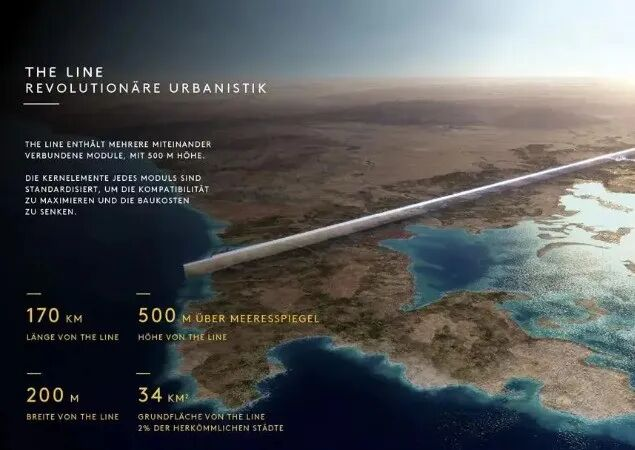
💡AI-driven urban management is reshaping cities; learn the risks of over-optimizing human social spaces.
⚡ 30-Second TL;DR
What Changed
Corporate-led cities (like Japan's JR East projects) prioritize efficiency and data-driven optimization.
Why It Matters
AI practitioners building urban tech must balance algorithmic efficiency with the need for 'intentional gaps' to preserve human social dynamics.
What To Do Next
When designing urban AI systems, incorporate 'human-in-the-loop' features that allow for spontaneous, non-optimized social interactions.
Key Points
- •Corporate-led cities (like Japan's JR East projects) prioritize efficiency and data-driven optimization.
- •US-style private cities treat urban living as a subscription-based service for elites.
- •Government-led smart cities (like in China) focus on large-scale system integration and macro-order.
- •Over-optimization risks eliminating the 'unquantifiable' social interactions that create urban vitality.
🧠 Deep Insight
AI-generated analysis for this event — not the original article.
🔑 Enhanced Key Takeaways
- •The integration of Digital Twins in smart cities now utilizes real-time IoT sensor fusion to create high-fidelity simulations, allowing for predictive maintenance of urban infrastructure before failures occur.
- •Edge computing architectures are increasingly replacing centralized cloud processing in smart cities to reduce latency for autonomous traffic management systems and emergency response protocols.
- •Privacy-preserving AI techniques, such as federated learning and differential privacy, are being piloted to train urban management models without exposing sensitive citizen movement data.
- •The '15-minute city' urban planning concept is being algorithmically optimized by AI to ensure equitable access to essential services, though critics argue this risks creating 'digital ghettos' based on socioeconomic data.
- •Interoperability standards like ISO/IEC 30182 are becoming critical battlegrounds as cities struggle to integrate legacy infrastructure with modern AI-driven management platforms.
🛠️ Technical Deep Dive
- Digital Twin Architecture: Utilizes BIM (Building Information Modeling) integrated with real-time telemetry from IoT sensor networks to maintain a dynamic 3D representation of urban assets.
- Federated Learning Implementation: Enables decentralized model training across municipal departments, ensuring raw data remains on local servers while only model updates are aggregated.
- Semantic Interoperability Layers: Employs ontologies and knowledge graphs to map disparate data formats from energy, transport, and public safety systems into a unified urban operating system.
- Edge AI Deployment: Uses NVIDIA Jetson or similar edge-compute modules within traffic cameras and smart streetlights to perform real-time computer vision tasks locally, minimizing bandwidth consumption.
🔮 Future ImplicationsAI analysis grounded in cited sources
⏳ Timeline
Weekly AI Recap
Read this week's curated digest of top AI events →
👉Related Updates


AI-curated news aggregator. All content rights belong to original publishers.
Original source: 虎嗅 ↗
This is a summary, not the original. Read the source, or get the weekly briefing.
The weekly digest
One email a week. Unsubscribe anytime.