The Backrooms: How Low-Budget Horror Conquered the Box Office
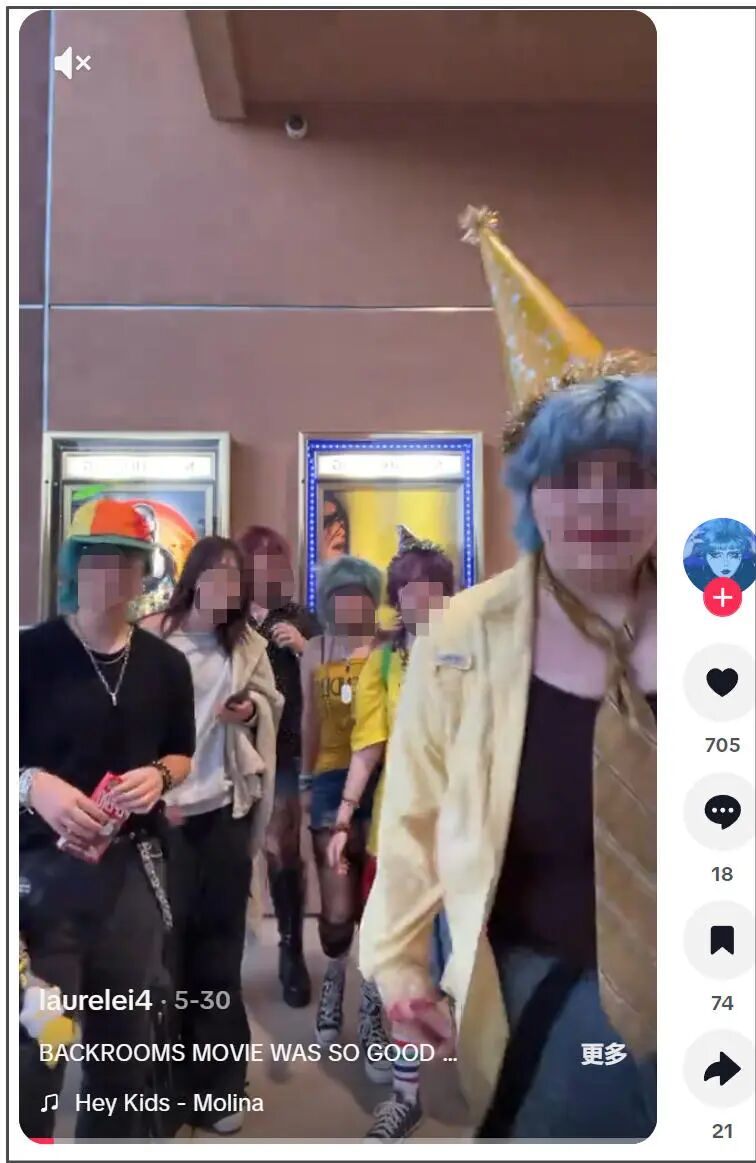
💡Understand why AI-generated aesthetics and 'liminal space' content are dominating the modern horror market.
⚡ 30-Second TL;DR
What Changed
Low-budget horror films are outperforming traditional high-investment titles by targeting niche subcultures.
Why It Matters
The success of The Backrooms signals a paradigm shift in content consumption where viral internet aesthetics and low-cost, high-concept production models outperform traditional studio blockbusters.
What To Do Next
Experiment with generating 'liminal space' visuals using Stable Diffusion or Midjourney to test engagement with retro-horror aesthetics in your creative projects.
Key Points
- •Low-budget horror films are outperforming traditional high-investment titles by targeting niche subcultures.
- •The aesthetic shift from 'spatial unknown' to 'temporal unknown' (retro-analog, liminal spaces) defines modern horror.
- •AI-generated content and viral internet memes are becoming core drivers for horror IP engagement.
- •Younger audiences (under 25) are the primary demographic for these 'liminal' horror experiences.
🧠 Deep Insight
AI-generated analysis for this event — not the original article.
🔑 Enhanced Key Takeaways
- •The Backrooms phenomenon originated from a 2019 4chan post featuring a single image of an empty office space, which was later expanded into a viral YouTube series by Kane Parsons (Kane Pixels) in 2022.
- •A24 officially partnered with Kane Parsons to produce the feature film adaptation, marking a significant shift in how major independent studios acquire IP directly from creator-led digital platforms.
- •The 'liminal space' aesthetic relies heavily on 'kenopsia'—the eerie, forlorn atmosphere of a place that is usually bustling with people but is now abandoned.
- •The production utilized a hybrid workflow combining traditional cinematography with Blender-based 3D environment rendering to maintain the 'found footage' aesthetic while scaling for a theatrical release.
- •The film's marketing strategy bypassed traditional media, instead leveraging the existing 'Backrooms' wiki community and ARG (Alternate Reality Game) participants to build grassroots hype.
📊 Competitor Analysis▸ Show
| Feature | The Backrooms (A24) | Five Nights at Freddy's (Blumhouse) | Skinamarink (IFC Midnight) |
|---|---|---|---|
| Origin | YouTube/Internet Lore | Video Game Franchise | Experimental Short Film |
| Budget | Low-Mid | Moderate | Micro-Budget |
| Aesthetic | Liminal/Analog Horror | Animatronic/Jump Scare | Lo-fi/Surrealist |
| Primary Driver | Viral World-building | Established IP/Fanbase | Social Media Virality |
🛠️ Technical Deep Dive
- The visual style is achieved through a process called 'digital degradation,' where high-fidelity 3D renders are passed through post-processing filters to simulate VHS tape artifacts, tracking errors, and color bleeding.
- Environment assets are primarily constructed in Blender, utilizing photogrammetry to scan real-world textures and apply them to modular office geometry.
- The 'temporal unknown' effect is technically implemented via frame-rate manipulation, often dropping the output to 12-15 FPS to mimic the look of consumer-grade camcorders from the 1990s.
- Spatial audio design utilizes binaural recording techniques to create a sense of claustrophobia, emphasizing the 'hum-buzz' of fluorescent lights as a constant, low-frequency drone.
🔮 Future ImplicationsAI analysis grounded in cited sources
⏳ Timeline
Weekly AI Recap
Read this week's curated digest of top AI events →
👉Related Updates


AI-curated news aggregator. All content rights belong to original publishers.
Original source: 虎嗅 ↗
This is a summary, not the original. Read the source, or get the weekly briefing.
Weekly AI briefing
One email a week. Unsubscribe anytime.