The arithmetic of multi-billion dollar subsidies
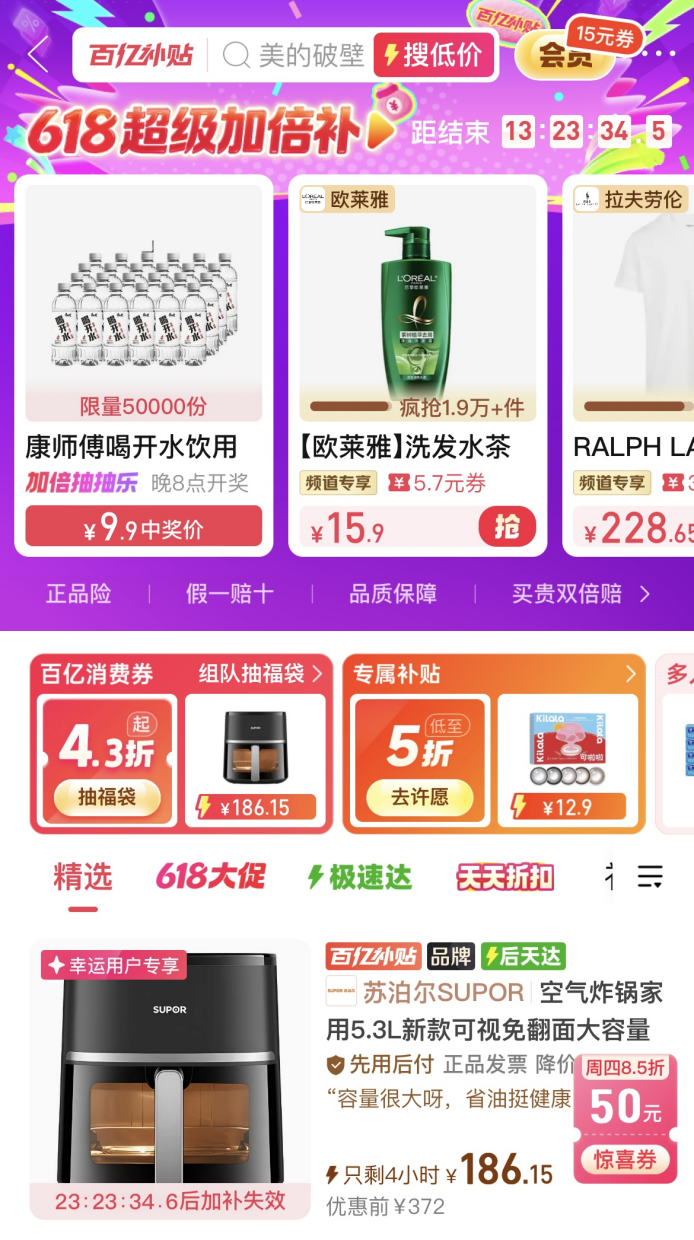
💡Understand the strategic logic behind massive subsidy wars to better price your own AI services.
⚡ 30-Second TL;DR
What Changed
Subsidy programs serve as a strategic moat for platform retention.
Why It Matters
Understanding these subsidy models is crucial for AI companies looking to enter the Chinese market and compete with established e-commerce giants.
What To Do Next
Evaluate the unit economics of your AI product's free-tier or promotional pricing against the long-term LTV of acquired users.
Key Points
- •Subsidy programs serve as a strategic moat for platform retention.
- •The cost-benefit analysis of subsidies has been widely misunderstood by market observers.
- •Long-term sustainability depends on platform-wide ecosystem efficiency.
🧠 Deep Insight
Background and context from public sources — not the original article. 23 sources cited.
🔑 Enhanced Key Takeaways
- •Chinese e-commerce platforms, including Alibaba, JD.com, Pinduoduo, Douyin, and Xiaohongshu, have recently faced regulatory scrutiny from the Beijing Municipal Administration for Market Regulation for engaging in 'involution-style' competition, false advertising, and non-transparent disclosure of actual subsidy amounts during major shopping festivals like 618.
- •While subsidies initially focused on consumer acquisition, some platforms like Douyin have shifted their strategy to provide substantial subsidies and support directly to merchants, aiming to lower merchant costs and improve profitability to foster ecosystem growth.
- •The 'subsidy war' has created a 'structural crisis' for merchants, where increased order volumes stimulated by subsidies do not necessarily translate into higher profits, leading to a 'false prosperity' in the market.
- •Subsidy programs are increasingly being integrated with broader national economic strategies, such as JD.com's significant investment in grocery subsidies and trade-in programs for home appliances, aligning with government initiatives to boost consumption and support specific industries.
- •Chinese firms' rapid global expansion, particularly in e-commerce, has been significantly fueled by government subsidies, with an OECD report indicating that nearly 60% of their overseas market share gains between 2005 and 2023 could be attributed to these subsidies.
🛠️ Technical Deep Dive
- AI-Powered Optimization: E-commerce platforms are increasingly integrating AI to optimize various aspects, including supply chains, consumer experiences, and operational costs.
- Algorithmic Subsidies: Douyin E-commerce leverages algorithmic subsidies to amplify exposure for quality products and content, rapidly turning commodities into top-selling items.
- AI Customer Service & Live-streaming: AI-powered customer service has reached a high penetration rate (60-75%) in e-commerce, and AI live-streaming tools are used by many small and medium-sized merchants to reduce operational costs by up to 72%.
- Data Analytics: Platforms utilize big data to understand market customers, enabling low-cost customer acquisition and the establishment of sticky customer relationships.
🔮 Future ImplicationsAI analysis grounded in cited sources
⏳ Timeline
📎 Sources (23)
Factual claims are grounded in the sources below. Forward-looking analysis is AI-generated interpretation.
Weekly AI Recap
Read this week's curated digest of top AI events →
👉Related Updates



AI-curated news aggregator. All content rights belong to original publishers.
Original source: 钛媒体 ↗
This is a summary, not the original. Read the source, or get the weekly briefing.
The weekly digest
One email a week. Unsubscribe anytime.