The AI Startup Trap: Normal Technology vs. Revolutionary Paradigm
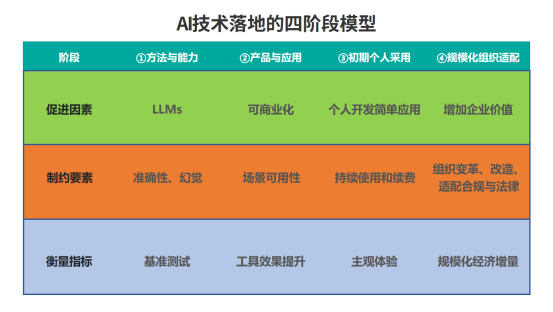
💡A sobering reality check for AI founders on why most startups fail to bridge the gap between LLM hype and enterprise val
⚡ 30-Second TL;DR
What Changed
AI is an iterative 'Normal Technology' rather than a paradigm-shifting revolution that creates new industries overnight.
Why It Matters
This analysis challenges the 'AI-first' hype, urging founders to focus on deep integration into existing business workflows rather than just model capabilities.
What To Do Next
Shift focus from 'AI-native' features to solving specific, high-friction enterprise workflow problems that provide measurable ROI.
Key Points
- •AI is an iterative 'Normal Technology' rather than a paradigm-shifting revolution that creates new industries overnight.
- •AI startups face a high failure rate (under 8% survival) because they skip the necessary stages of commercial integration.
- •67% of AI value realization depends on organizational factors like culture and management, not just model performance.
- •Enterprise-level AI adoption is stalled by the lack of a compatible industry operating system and clear economic incentives.
🧠 Deep Insight
Web-grounded analysis with 22 cited sources.
🔑 Enhanced Key Takeaways
- •AI startup failure rates are exacerbated by a lack of market-problem fit: Beyond integration challenges, a significant portion (38-42%) of AI startups fail because they build technology first and then search for a market, rather than addressing specific customer pain points, a long-standing startup pitfall that venture capital funding models may inadvertently encourage.
- •Organizational readiness extends beyond culture to include structured change management and data foundations: Successful enterprise AI adoption hinges on "organizational readiness," which encompasses not just cultural factors but also robust data foundations, clear leadership vision, and structured change management approaches, with companies investing in these being 1.6 times more likely to exceed AI performance expectations.
- •AI is increasingly recognized as a General Purpose Technology (GPT) requiring complementary innovations and long-term adaptation: The debate positions AI as a General Purpose Technology (GPT), similar to electricity or the internet, which drives profound economic transformation over time but necessitates significant complementary innovations, infrastructure development, and organizational redesign for its full impact to be realized, often with a considerable lag.
- •Governments and enterprises are actively developing economic incentives to accelerate responsible AI adoption: To counter the lack of clear economic incentives, governments (e.g., Singapore with tax deductions for AI expenditure) and leading companies are implementing strategies like tying employee bonuses and promotional opportunities to AI-driven key performance indicators (KPIs) to encourage widespread adoption and value realization.
- •Data quality and readiness are critical, often underestimated, barriers to scaling AI pilots to production: A major technical-organizational hurdle is the quality and readiness of data, with poor data quality and inadequate risk controls leading to the abandonment of up to 30% of generative AI projects after the proof-of-concept stage, highlighting the need for significant investment in data governance and infrastructure.
🛠️ Technical Deep Dive
The concept of an "AI Operating System" (AI OS) is emerging as a software layer designed to support and orchestrate AI workloads, models, and data across various hardware and applications. Unlike traditional operating systems that manage hardware and software resources based on predefined logic, an AI OS focuses on AI-specific complexities.
Key characteristics and functions of an AI OS include:
- Model Orchestration: Efficiently selecting, scheduling, and executing AI models or Large Language Models (LLMs).
- Agent Coordination: Managing multiple autonomous AI agents that may collaborate or compete on complex tasks.
- Context Management: Allowing AI agents to retain memory of past interactions through embeddings or knowledge stores.
- Hardware Acceleration: Handling specialized hardware like GPUs, TPUs, or other AI accelerators for both inference and training.
- Adaptive Intelligence: Continuously learning from user behavior, system performance, and external factors to dynamically optimize workflows and anticipate user needs.
- Self-Optimizing Resource Management: Intelligently distributing computing power, memory, and network resources to maximize efficiency, predict workloads, and prioritize critical applications.
- Enhanced Security and Privacy: Incorporating real-time threat detection and adaptive security protocols by analyzing user behavior and system interactions.
- Integration Capabilities: Designed to integrate with AI-specific tools such as model registries, orchestration engines, and data pipelines.
Companies like Red Hat are exploring open, collaboratively-developed standard AI operating systems to streamline the deployment and management of AI, moving it from isolated experiments to widespread enterprise adoption.
🔮 Future ImplicationsAI analysis grounded in cited sources
📎 Sources (22)
Factual claims are grounded in the sources below. Forward-looking analysis is AI-generated interpretation.
- Google Search Source
- Google Search Source
- Google Search Source
- Google Search Source
- Google Search Source
- Google Search Source
- Google Search Source
- Google Search Source
- Google Search Source
- Google Search Source
- Google Search Source
- Google Search Source
- Google Search Source
- Google Search Source
- Google Search Source
- Google Search Source
- Google Search Source
- Google Search Source
- Google Search Source
- Google Search Source
- Google Search Source
- Google Search Source
Weekly AI Recap
Read this week's curated digest of top AI events →
👉Related Updates

AI-curated news aggregator. All content rights belong to original publishers.
Original source: 虎嗅 ↗