The 0.02% Survival Rate for AI-Generated Apps
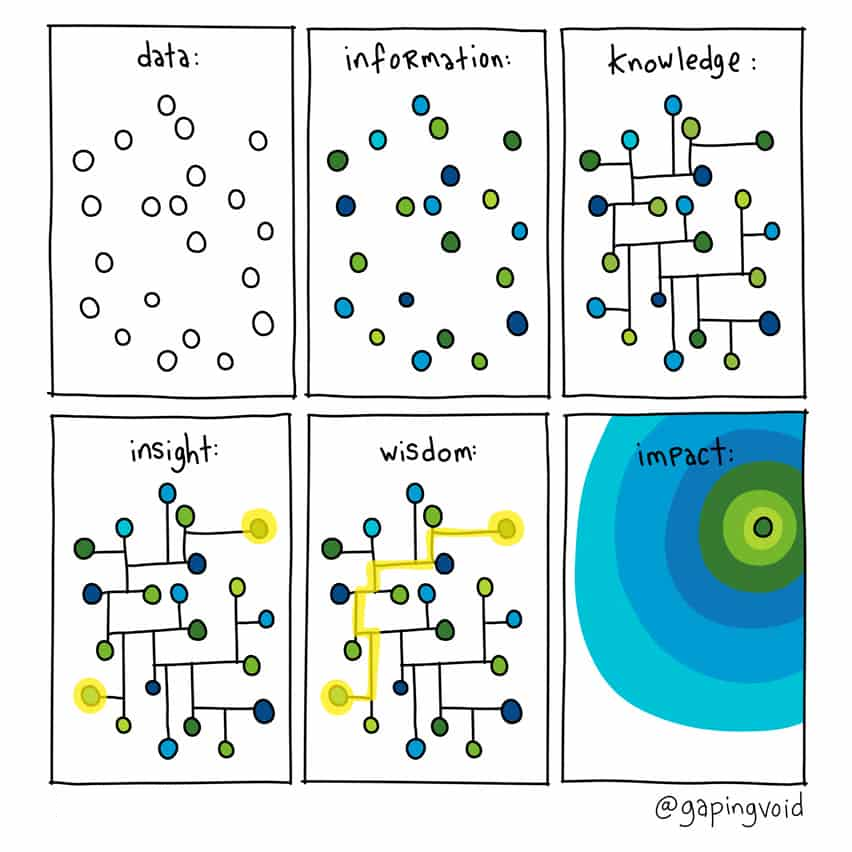
💡Understand why 99.98% of AI apps fail and how to move beyond the 'coding as a commodity' trap.
⚡ 30-Second TL;DR
What Changed
AI has reduced the cost of app creation to near zero, causing a massive supply-side explosion.
Why It Matters
Developers must pivot from 'shipping features' to 'building ecosystems' to survive the AI-driven commoditization of software development.
What To Do Next
Stop focusing on rapid prototyping and start conducting deep user research to identify a specific, non-commoditized problem to solve.
Key Points
- •AI has reduced the cost of app creation to near zero, causing a massive supply-side explosion.
- •Only 0.02% of new apps achieve high traction, highlighting a severe demand-side bottleneck.
- •Coding and basic product creation have become 'infrastructure' (like coal), losing their unique value.
- •Success now depends on building 'railways and cities'—creating unique user experiences that stick.
🧠 Deep Insight
Web-grounded analysis with 31 cited sources.
🔑 Enhanced Key Takeaways
- •Despite high initial adoption and monetization, AI-powered apps face a significant challenge in long-term user retention, with users canceling annual subscriptions 30% faster than non-AI apps and only one in five AI subscribers remaining after a year.
- •The struggle with user retention in AI apps is often linked to superficial personalization, where experiences lack depth and do not evolve with the user, leading to a decline in engagement after the initial novelty.
- •AI-powered development tools, including low-code/no-code platforms, are dramatically accelerating app creation, with new app releases increasing by 60-104% year-over-year in early 2026, and democratizing innovation by enabling non-developers to build applications.
- •The AI market is shifting from focusing on individual AI features to integrated 'agentic workflows' and solutions that deliver measurable business outcomes, driving a consolidation trend where enterprises prefer comprehensive platforms over fragmented point solutions.
- •While the AI app market is experiencing rapid overall growth, projected to reach billions in revenue (e.g., $16.5 billion in 2025, $26.36 billion by 2030, or $135.93 billion by 2035), this coexists with a paradox of poor long-term user stickiness, indicating a need for deeper engagement strategies.
🛠️ Technical Deep Dive
- •AI-powered low-code/no-code platforms leverage Natural Language Processing (NLP) to interpret user instructions and automatically generate code snippets, backend logic, APIs, and UI elements.
- •These platforms incorporate 'Smart App Builders' with predictive design capabilities that suggest user goals and optimize layout, color, and workflow to enhance user experience.
- •AI development tools, such as GitHub Copilot, utilize large language models (e.g., OpenAI's GPT-4o) to provide real-time, contextually relevant code suggestions, accelerating development cycles by up to 55%.
- •The concept of 'vibe coding' allows AI models to interpret plain language descriptions of desired app outcomes to assemble application structures and logic, bypassing traditional drag-and-drop limitations.
- •To improve retention, successful AI apps are advised to implement a 'memory layer' in their architecture to store user preferences and interaction history, allowing the product to feel noticeably smarter and more personalized over time.
- •The evolution towards 'AI agents' involves systems that can move beyond conversational interactions to perform autonomous actions and manage complex workflows within applications.
🔮 Future ImplicationsAI analysis grounded in cited sources
⏳ Timeline
📎 Sources (31)
Factual claims are grounded in the sources below. Forward-looking analysis is AI-generated interpretation.
- Google Search Source
- Google Search Source
- Google Search Source
- Google Search Source
- Google Search Source
- Google Search Source
- Google Search Source
- Google Search Source
- Google Search Source
- Google Search Source
- Google Search Source
- Google Search Source
- Google Search Source
- Google Search Source
- Google Search Source
- Google Search Source
- Google Search Source
- Google Search Source
- Google Search Source
- Google Search Source
- Google Search Source
- Google Search Source
- Google Search Source
- Google Search Source
- Google Search Source
- Google Search Source
- Google Search Source
- Google Search Source
- Google Search Source
- Google Search Source
- Google Search Source
Weekly AI Recap
Read this week's curated digest of top AI events →
👉Related Updates

AI-curated news aggregator. All content rights belong to original publishers.
Original source: 虎嗅 ↗