First principles of game addiction and engagement
Understand the psychological mechanics of engagement that can be applied to AI agent design and user retention.
30-Second TL;DR
What Changed
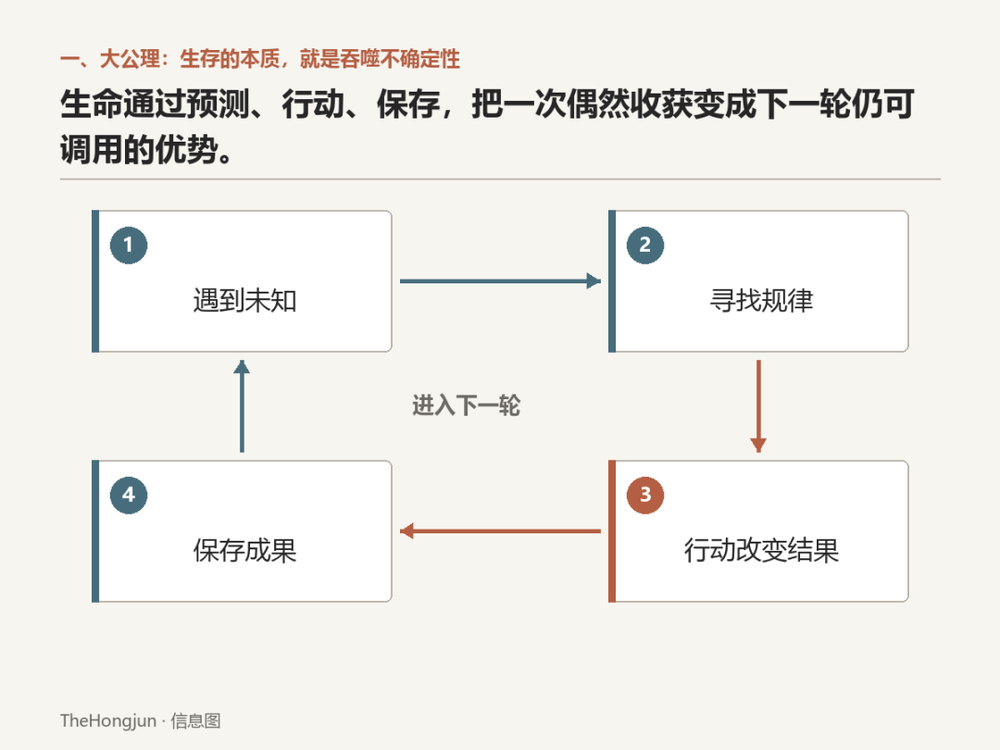
Games function as 'controlled chaos' where players convert uncertainty into certainty.
Why It Matters
Understanding these psychological loops is crucial for AI developers building agents or systems that require high user retention and engagement.
What To Do Next
Incorporate 'controlled chaos' and clear causality loops into your AI agent's user interaction design to improve engagement.
Key Points
- •Games function as 'controlled chaos' where players convert uncertainty into certainty.
- •The core loop involves establishing causality, creating difficulty thresholds, and allowing for progress preservation.
- •Modern game design uses 'season resets' and 'random drops' to prevent stagnation while maintaining engagement.
- •Game addiction is a defensive escape for people seeking a system where effort consistently yields results.
Deep Insight
AI-generated analysis for this event — not the original article.
Enhanced Key Takeaways
- •Neuroscientific research indicates that game engagement often triggers the mesolimbic dopamine system, specifically through 'prediction error' signals where the brain rewards the reduction of uncertainty.
- •The concept of 'Flow State' (Csikszentmihalyi) is a foundational technical requirement in game design, where the difficulty curve must dynamically match the player's skill level to prevent anxiety or boredom.
- •Behavioral economics, specifically the 'Zeigarnik effect' (the tendency to remember uncompleted tasks better than completed ones), is systematically exploited in game design via quest logs and 'to-do' lists to maintain long-term retention.
- •Modern game engines utilize telemetry data to perform A/B testing on 'variable ratio reinforcement schedules,' a psychological mechanism derived from Skinner box experiments to maximize player session length.
- •The 'Sunk Cost Fallacy' is intentionally reinforced in multiplayer games through social capital and digital asset accumulation, making the psychological cost of quitting higher than the cost of continued play.
Technical Deep Dive
- Dynamic Difficulty Adjustment (DDA): Algorithms that monitor player performance metrics (e.g., time-to-kill, accuracy, resource consumption) in real-time to adjust enemy AI behavior or loot drop rates.
- Procedural Content Generation (PCG): Implementation of noise functions (like Perlin or Simplex noise) to create infinite, yet structured, environments that satisfy the human desire for pattern recognition.
- Telemetry-Driven Retention Loops: Backend architectures that aggregate player event logs to trigger automated 're-engagement' notifications or personalized store offers based on predicted churn probability.
Future ImplicationsAI analysis grounded in cited sources
Weekly AI Recap
Read this week's curated digest of top AI events →
AI-curated news aggregator. All content rights belong to original publishers.
Original source: 虎嗅 ↗
This is a summary, not the original. Read the source, or get the weekly briefing.
The weekly digest
One email a week. Unsubscribe anytime.