Tesla Ends Model S/X Era for Robots
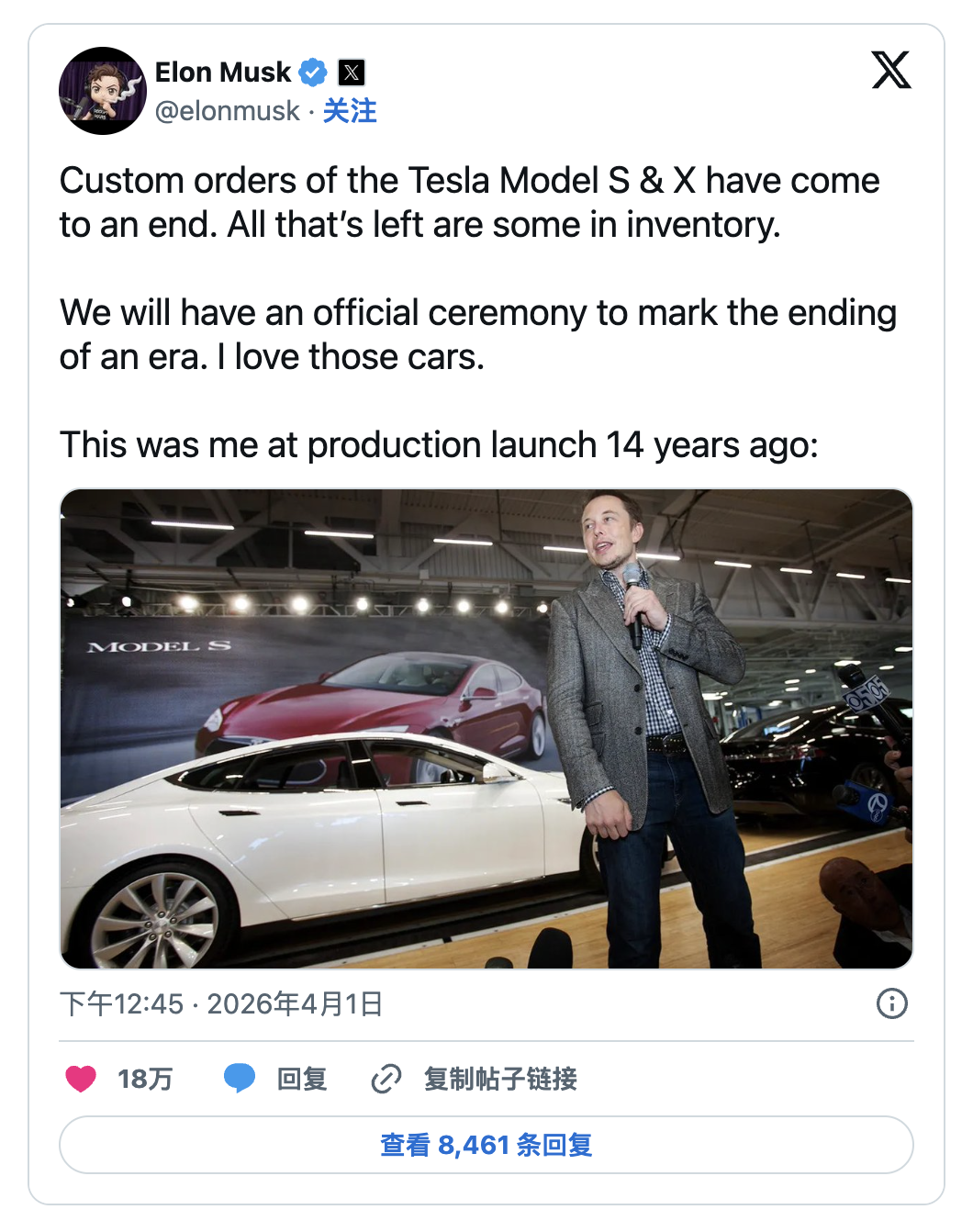
💡Tesla factory pivot to 1M Optimus robots/year reveals AI strategy shift.
⚡ 30-Second TL;DR
What Changed
Custom orders ended April 1, 2026; 600 inventory cars with free perks.
Why It Matters
Accelerates Tesla's AI/robotics shift, boosting valuation on Optimus/FSD promises despite sales woes and delays. Signals embodied AI scaling but execution risks remain high.
What To Do Next
Track Tesla Optimus specs for embodied AI benchmarking against Figure/Unitree.
Key Points
- •Custom orders ended April 1, 2026; 600 inventory cars with free perks.
- •Fremont factory shifts to 1M/year Optimus production from S/X lines.
- •Tesla transforms to AI firm: Cybercab in production, Optimus core growth.
- •2025: sales -16%, S/X ~30k units amid China/EU challenges.
🧠 Deep Insight
AI-generated analysis for this event — not the original article.
🔑 Enhanced Key Takeaways
- •The Fremont factory transition involves a complete decommissioning of the 'GA3' assembly line, which historically produced the Model S and X, to accommodate the high-density robotic assembly cells required for Optimus Gen 3.
- •Tesla's decision follows a strategic shift in capital allocation, where the company reclassified its R&D budget to prioritize 'End-to-End' neural network training for humanoid dexterity over traditional automotive platform refreshes.
- •Supply chain analysts note that the discontinuation of S/X parts will trigger a long-term 'legacy support' program, similar to the Roadster service model, to maintain the existing global fleet of over 600,000 vehicles.
📊 Competitor Analysis▸ Show
| Feature | Tesla Optimus (Gen 3) | Figure AI (Figure 02) | Boston Dynamics (Atlas) |
|---|---|---|---|
| Primary Focus | Mass-market manufacturing | Commercial logistics/warehousing | R&D and specialized mobility |
| Production Scale | Target 1M units/year | Pilot/Small-batch | Low-volume/Custom |
| Architecture | Tesla FSD-derived AI | OpenAI-integrated model | Proprietary control systems |
🛠️ Technical Deep Dive
- •Optimus Gen 3 utilizes a custom-designed 'Tesla Silicon' SoC, integrating transformer-based vision models directly on the robot's edge hardware.
- •The transition to the Fremont line utilizes 'unboxed' manufacturing techniques, where the robot chassis is assembled in parallel sub-assemblies rather than a linear conveyor belt.
- •Actuator density has been increased by 40% compared to Gen 2, utilizing high-torque density planetary gearboxes developed in-house to achieve human-equivalent force output.
🔮 Future ImplicationsAI analysis grounded in cited sources
⏳ Timeline
Weekly AI Recap
Read this week's curated digest of top AI events →
👉Related Updates

AI-curated news aggregator. All content rights belong to original publishers.
Original source: 虎嗅 ↗
This is a summary, not the original. Read the source, or get the weekly briefing.
The weekly digest
One email a week. Unsubscribe anytime.