Tencent’s Agent Factory Strategy
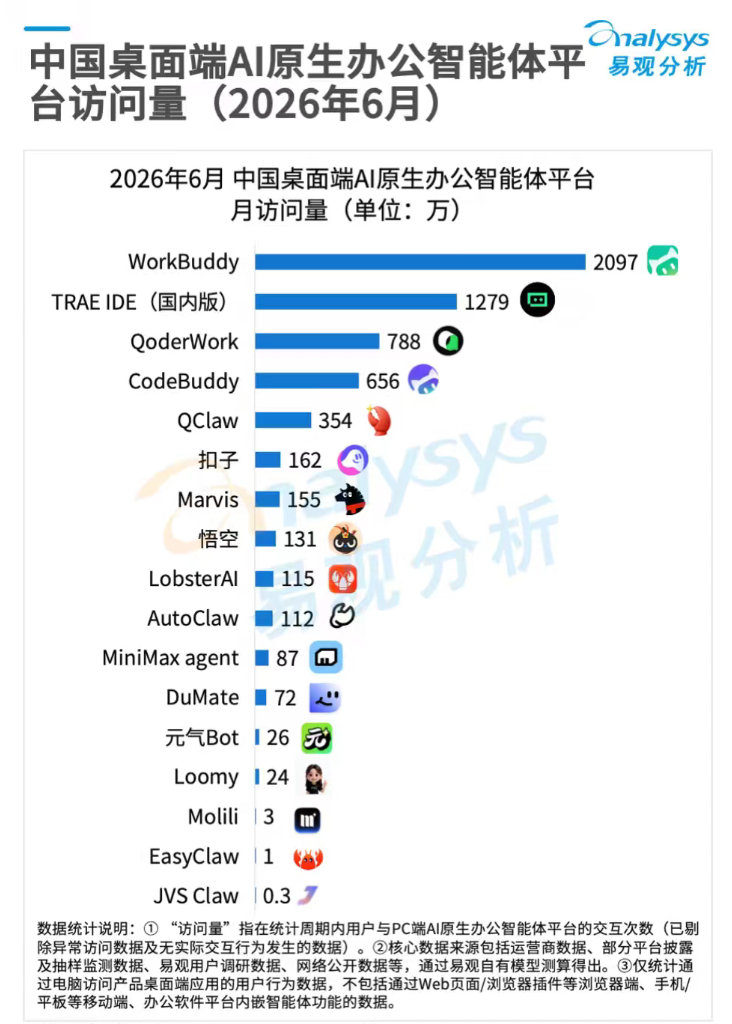
Learn why AI office competition is moving from standalone agents to scalable production systems.
30-Second TL;DR
What Changed
Tencent’s AI strategy is framed as a choice between isolated competition and systematic agent production.
Why It Matters
A scalable agent-production system could help enterprises deploy AI office capabilities faster and across more workflows. For practitioners, this shifts attention from building one impressive agent to establishing reusable processes, tooling, and governance.
What To Do Next
Prototype an internal agent factory with reusable workflow templates, evaluation tests, tool permissions, and deployment monitoring.
Key Points
- •Tencent’s AI strategy is framed as a choice between isolated competition and systematic agent production.
- •AI office products are becoming a major battleground among large technology companies.
- •The competitive focus is shifting from individual features to repeatable AI-agent production systems.
Deep Insight
AI-generated analysis for this event — not the original article.
Enhanced Key Takeaways
- •Tencent has integrated its 'Hunyuan' large language model as the foundational engine for its Agent Factory, enabling cross-platform deployment across WeChat, QQ, and Tencent Meeting.
- •The strategy emphasizes 'low-code' agent development, allowing non-technical enterprise users to build agents by connecting internal APIs and proprietary data silos without extensive programming.
- •Tencent is prioritizing 'Agent-as-a-Service' (AaaS) for the enterprise sector, specifically targeting the automation of complex workflows in finance, logistics, and customer service industries.
- •The company has launched an 'Agent Ecosystem Incentive Program' to attract third-party developers, aiming to create a marketplace similar to the WeChat Mini Program model for AI agents.
- •Tencent's approach distinguishes itself by leveraging its massive social graph and communication infrastructure, allowing agents to operate within existing user interaction loops rather than requiring new standalone applications.
Competitor Analysis
- Tencent (Hunyuan Agent)
- Social/Communication Integration
- Alibaba (Tongyi)
- Cloud/E-commerce Workflow
- ByteDance (Coze)
- Content/Recommendation Engine
- Tencent (Hunyuan Agent)
- WeChat/Tencent Meeting
- Alibaba (Tongyi)
- DingTalk/Cloud Platform
- ByteDance (Coze)
- Douyin/Global Apps
- Tencent (Hunyuan Agent)
- Enterprise/Social Ecosystem
- Alibaba (Tongyi)
- Cloud/SME Clients
- ByteDance (Coze)
- Content Creators/Prosumers
- Tencent (Hunyuan Agent)
- Tiered API/Subscription
- Alibaba (Tongyi)
- Consumption-based
- ByteDance (Coze)
- Freemium/Token-based
| Feature | Tencent (Hunyuan Agent) | Alibaba (Tongyi) | ByteDance (Coze) |
|---|---|---|---|
| Core Strength | Social/Communication Integration | Cloud/E-commerce Workflow | Content/Recommendation Engine |
| Deployment | WeChat/Tencent Meeting | DingTalk/Cloud Platform | Douyin/Global Apps |
| Target User | Enterprise/Social Ecosystem | Cloud/SME Clients | Content Creators/Prosumers |
| Pricing Model | Tiered API/Subscription | Consumption-based | Freemium/Token-based |
Technical Deep Dive
- Architecture: Utilizes a Mixture-of-Experts (MoE) framework within the Hunyuan model to optimize inference costs for specific agent tasks.
- Tool Use: Implements a ReAct (Reasoning and Acting) prompting framework that allows agents to autonomously call external APIs and process structured data.
- Memory Management: Features a multi-layered memory system (short-term context window and long-term vector database storage) to maintain user-specific state across sessions.
- Integration: Supports standard OpenAPI specifications, enabling seamless connectivity with Tencent Cloud's serverless functions for scalable execution.
Future ImplicationsAI analysis grounded in cited sources
Timeline
- 2023-09Tencent officially unveils the Hunyuan large language model.
- 2024-05Tencent launches the 'Hunyuan Agent' platform to facilitate low-code agent creation.
- 2025-02Tencent integrates AI agent capabilities into Tencent Meeting for automated minutes and task tracking.
- 2026-01Tencent expands Agent Factory capabilities to support complex multi-agent orchestration.
Weekly AI Recap
Read this week's curated digest of top AI events →
AI-curated news aggregator. All content rights belong to original publishers.
Original source: 钛媒体 ↗
This is a summary, not the original. Read the source, or get the weekly briefing.
The weekly digest
One email a week. Unsubscribe anytime.