🐯虎嗅•Stalecollected in 27m
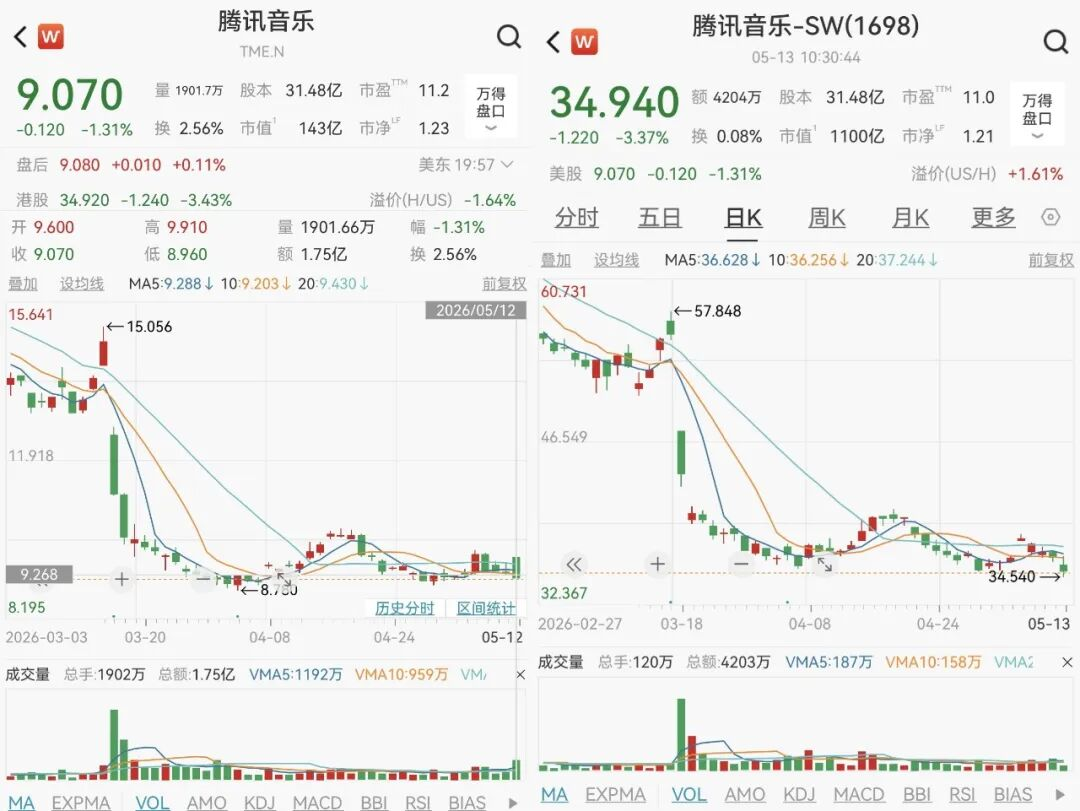
Tencent Music Profits Up, Users Down Amid AI Shift
💡AI audio gen disrupts Tencent dominance – test emerging tools now
⚡ 30-Second TL;DR
What Changed
Revenue 79亿元 +7.3%, adjusted net 23.3亿元 +4.8%
Why It Matters
AI floods music supply, weakening platforms' copyright leverage and forcing monetization pivots. Tencent shifts from growth to efficiency amid competition.
What To Do Next
Benchmark Suno/Udio music gen quality vs Tencent VEMUS for app integration.
Who should care:Founders & Product Leaders
Key Points
- •Revenue 79亿元 +7.3%, adjusted net 23.3亿元 +4.8%
- •MAU 5.28亿, down from 5.92亿 in 2023; stops quarterly disclosure
- •ByteDance Shuichuan Music MAU 1.56亿 +78%
- •AI tools Suno/Udio near-zero cost music erodes scarcity
- •Tencent AI lags: Qimingxing AI Zuoge (2025), VEMUS Weiyin (2026)
🧠 Deep Insight
AI-generated analysis for this event.
🔑 Enhanced Key Takeaways
- •Tencent Music's strategic pivot toward high-ARPU (Average Revenue Per User) subscribers has intentionally deprioritized low-value, ad-supported MAUs to stabilize margins amidst a slowing Chinese internet user growth environment.
- •The rise of ByteDance's Shuichuan Music is attributed to its integration with the Douyin ecosystem, allowing for viral music discovery loops that Tencent's standalone apps struggle to replicate in the short-form video era.
- •Tencent Music is shifting its R&D focus toward 'Music-as-a-Service' (MaaS) and B2B licensing for AI-generated content to offset the potential decline in traditional streaming royalty revenues caused by generative AI democratization.
📊 Competitor Analysis▸ Show
| Feature | Tencent Music (TME) | ByteDance (Shuichuan) | Suno/Udio (AI Native) |
|---|---|---|---|
| Core Model | Subscription/Licensing | Algorithmic Recommendation | Generative Synthesis |
| User Base | 528M (Declining) | 156M (Rapid Growth) | N/A (Platform Agnostic) |
| Monetization | Premium/Ads/Social | Ad-Revenue/Creator Economy | Subscription/API |
| AI Integration | VEMUS (2026) | In-house Recommendation | Core Product Offering |
🔮 Future ImplicationsAI analysis grounded in cited sources
Tencent Music will transition to a B2B-heavy revenue model by 2027.
The erosion of the consumer-facing MAU base forces the company to monetize its massive copyright library through AI-training licensing and enterprise music solutions.
Generative AI will force a restructuring of music copyright royalty distribution.
The proliferation of near-zero cost AI music threatens the traditional per-stream payout model, necessitating a shift toward value-based or subscription-based royalty pools.
⏳ Timeline
2023-01
Tencent Music reports peak MAU growth before beginning strategic shift toward monetization over scale.
2025-06
Launch of Qimingxing AI Zuoge, marking Tencent's first major internal generative music tool release.
2026-02
Official release of VEMUS Weiyin, an advanced AI music generation platform integrated into the TME ecosystem.
📰
Weekly AI Recap
Read this week's curated digest of top AI events →
👉Related Updates
AI-curated news aggregator. All content rights belong to original publishers.
Original source: 虎嗅 ↗