Tencent Increases AI Marketing Spend by 40%
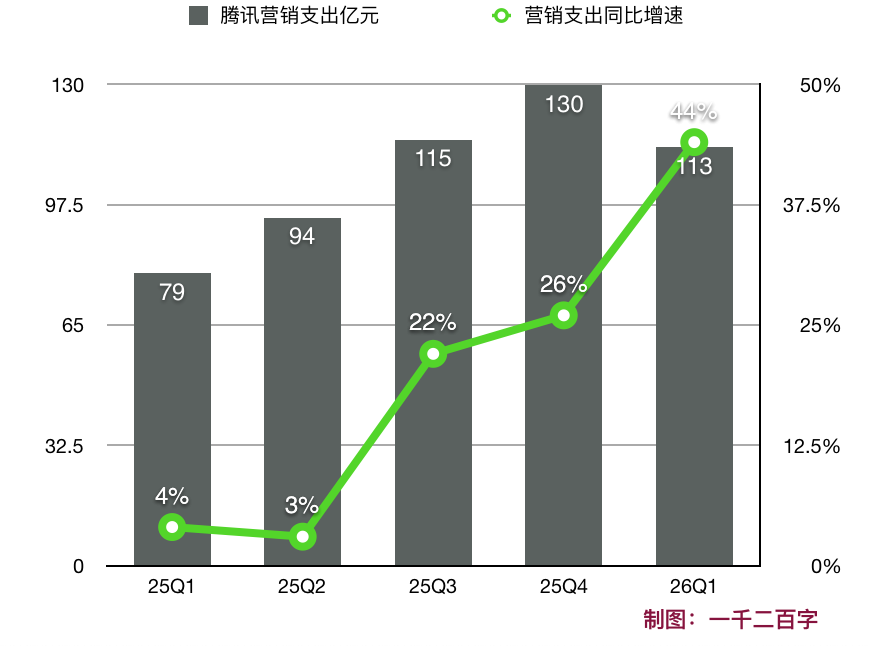
Tencent's 40% marketing boost signals a massive push for AI adoption—see how it impacts the competitive landscape.
30-Second TL;DR
What Changed
Marketing budget for AI products increased by over 40%.
Why It Matters
Increased marketing spend indicates a major push for user adoption of Tencent's AI models, likely leading to more competitive pricing and feature updates.
What To Do Next
Monitor Tencent's AI service pricing and API availability as they scale their market presence.
Key Points
- •Marketing budget for AI products increased by over 40%.
- •Pony Ma confirms a strategic shift toward AI-first growth.
- •Aggressive push to capture market share in the AI application space.
Deep Insight
Background and context from public sources — not the original article. 24 sources cited.
Enhanced Key Takeaways
- •Tencent plans to more than double its AI spending in 2026, allocating over $5 billion (36 billion yuan) primarily towards its HunYuan foundation models and Yuanbao AI assistant.
- •The substantial increase in AI investment is being financed by the company's robust core businesses, including gaming and advertising, and by a strategic reduction in share buybacks.
- •Tencent has restructured its AI R&D system, shifting from a 'product-driven' to an 'infrastructure + engineering + scenario implementation' strategy, which includes establishing new departments for AI infrastructure, data, and computing platforms.
- •The company is aggressively developing AI agents, particularly for its WeChat super app, aiming to enable task execution for its 1.4 billion users, and has launched an international beta of its QClaw consumer agent.
- •Tencent recently unveiled Hunyuan 3.0, its most advanced large language model, which utilizes a Mixture of Experts (MoE) architecture, and has open-sourced its Hy 3D World Model 2.0.
Competitor Analysis
- Key AI Offerings
- Ernie models (Ernie X1, Ernie 4.5)
- Noted Features/Strengths
- Strong in generative AI, search-adjacent ads, autonomous driving; Ernie X1 claims performance on par with DeepSeek R1.
- Pricing/Benchmarks (if available)
- Ernie X1 claimed to be half the price of DeepSeek R1.
- Key AI Offerings
- Qwen models (Qwen-32B, Qwen V4), Alibaba Cloud AI
- Noted Features/Strengths
- Open-source models popular for customization; strong in fintech and cloud services; Qwen chatbot mobile app had over 200 million MAU in January 2026.
- Pricing/Benchmarks (if available)
- Alibaba Cloud competes with Tencent Cloud for enterprise clients.
- Key AI Offerings
- Doubao, Douyin AI content creation
- Noted Features/Strengths
- Powers over 70 million monthly active chatbot users; Douyin's AI handles over 1 billion daily content creation tasks.
- Pricing/Benchmarks (if available)
- Key AI Offerings
- R1, V4 models
- Noted Features/Strengths
- Known for low-cost, high-performance models; R1 model shook up global AI scene in January 2025.
- Pricing/Benchmarks (if available)
- R1 costs under $20 million to train; V4 promises performance similar to leading closed-source models at lower cost.
- Key AI Offerings
- GLM-5 model
- Noted Features/Strengths
- Strong focus on computing research; major provider of chatbot tools to Chinese businesses.
- Pricing/Benchmarks (if available)
- GLM-5 impressed developer communities.
- Key AI Offerings
- Hunyuan models (Lite, Standard, Pro, Vision, 3.0), Yuanbao AI assistant, QClaw agent, Tencent Cloud AI services
- Noted Features/Strengths
- Strong Chinese understanding, long context, image generation; Hunyuan 3.0 MoE architecture focuses on cost-to-performance ratio.
- Pricing/Benchmarks (if available)
- Token-based pricing competitive with Alibaba Cloud Bailian and OpenAI tiers.
| Competitor | Key AI Offerings | Noted Features/Strengths | Pricing/Benchmarks (if available) |
|---|---|---|---|
| Baidu | Ernie models (Ernie X1, Ernie 4.5) | Strong in generative AI, search-adjacent ads, autonomous driving; Ernie X1 claims performance on par with DeepSeek R1. | Ernie X1 claimed to be half the price of DeepSeek R1. |
| Alibaba | Qwen models (Qwen-32B, Qwen V4), Alibaba Cloud AI | Open-source models popular for customization; strong in fintech and cloud services; Qwen chatbot mobile app had over 200 million MAU in January 2026. | Alibaba Cloud competes with Tencent Cloud for enterprise clients. |
| ByteDance | Doubao, Douyin AI content creation | Powers over 70 million monthly active chatbot users; Douyin's AI handles over 1 billion daily content creation tasks. | |
| DeepSeek | R1, V4 models | Known for low-cost, high-performance models; R1 model shook up global AI scene in January 2025. | R1 costs under $20 million to train; V4 promises performance similar to leading closed-source models at lower cost. |
| Zhipu AI | GLM-5 model | Strong focus on computing research; major provider of chatbot tools to Chinese businesses. | GLM-5 impressed developer communities. |
| Tencent | Hunyuan models (Lite, Standard, Pro, Vision, 3.0), Yuanbao AI assistant, QClaw agent, Tencent Cloud AI services | Strong Chinese understanding, long context, image generation; Hunyuan 3.0 MoE architecture focuses on cost-to-performance ratio. | Token-based pricing competitive with Alibaba Cloud Bailian and OpenAI tiers. |
Technical Deep Dive
- Hunyuan Model Family: Tencent's proprietary large language model (LLM) ecosystem, including Lite, Standard, Pro, and Vision variants.
- Hunyuan 3.0 (Hy 3.0 preview): Features a Mixture of Experts (MoE) architecture with 295 billion total parameters and 21 billion activated parameters, supporting a maximum context length of 256K. It is optimized for a strong cost-to-performance ratio, particularly in coding and agent capabilities.
- Hunyuan Turbo: An MoE-based model service that has doubled training efficiency and reduced inference costs by 50%.
- Hunyuan 3D World Model 2.0: A multimodal model capable of generating interactive 3D scenes, with outputs directly importable into mainstream engines like Unity and Unreal.
- Tencent Yuanqi: A C-to-C AI Agent development platform that enables code-free creation of AI Agents through interface configuration, integrating knowledge bases and tools, and supporting Hunyuan or DeepSeek as underlying models.
- Tencent Cloud Intelligent Agent Development Platform (ADP): A B-to-B focused platform that helps enterprises build stable, secure, and compliant AI agents by integrating exclusive knowledge and offering LLM+RAG, Multi-agent, and Workflow frameworks.
- AI Infrastructure: Tencent is significantly investing in and restructuring its AI infrastructure to strengthen full-stack capabilities, including distributed training, high-performance inference services, and an intelligent computing platform integrating big data and machine learning.
- AI Chips: The company is developing its own AI chips and expects increased capital spending in the latter half of 2026 as Chinese-designed chip output improves, addressing US export restrictions.
- AI in WeChat: Tencent is actively developing AI agents within its WeChat super app, leveraging its extensive ecosystem of mini-programs, content, commerce, social, and payments.
- Tencent Cloud TI Platform: A comprehensive, one-stop machine learning service platform for AI engineers, supporting the entire AI development lifecycle from data preprocessing to model deployment, and compatible with various frameworks like PySpark, Spark, PyTorch, and TensorFlow.
- AI-powered Advertising: Tencent utilizes AI-driven ad recommendation models and the AIM+ automated campaign solution to enhance advertising returns and efficiency.
Future ImplicationsAI analysis grounded in cited sources
Timeline
- 1998-11Tencent founded in Shenzhen, China.
- 2011WeChat (Weixin) social media app launched.
- 2013-12Tencent Cloud services officially launched.
- 2021-07Pony Ma announces 'star exploration plan' with NAOC, leveraging Tencent AI for pulsar search.
- 2025-01Pentagon designates Tencent a 'Chinese military company' (disputed by Tencent).
- 2025-03Tencent's AI chatbot Yuanbao tops China's iOS App Store.
- 2025-12Tencent fully reconstructs its AI architecture, establishing new departments and releasing Hunyuan 2.0 and Hunyuan World Model 1.5.
- 2026-03Tencent pledges to more than double AI investment in 2026, targeting over $5 billion (36 billion yuan).
- 2026-04Tencent unveils Hunyuan 3.0, open-sources Hy 3D World Model 2.0, and launches international beta of QClaw consumer agent.
Sources (24)
Factual claims are grounded in the sources below. Forward-looking analysis is AI-generated interpretation.
Weekly AI Recap
Read this week's curated digest of top AI events →
AI-curated news aggregator. All content rights belong to original publishers.
Original source: 钛媒体 ↗
This is a summary, not the original. Read the source, or get the weekly briefing.
The weekly digest
One email a week. Unsubscribe anytime.