Tencent Cloud's decline in the AI and MaaS era
A cautionary tale on how late AI adoption and resource constraints can derail a top-tier cloud provider.
30-Second TL;DR
What Changed
Tencent Cloud's IaaS market share dropped to 8%, ranking fifth in China.
Why It Matters
Tencent's struggle highlights the critical importance of early AI infrastructure investment and the difficulty of pivoting business models in a saturated cloud market.
What To Do Next
Evaluate Tencent Cloud's current GPU availability and model performance benchmarks before committing to long-term enterprise AI infrastructure.
Key Points
- •Tencent Cloud's IaaS market share dropped to 8%, ranking fifth in China.
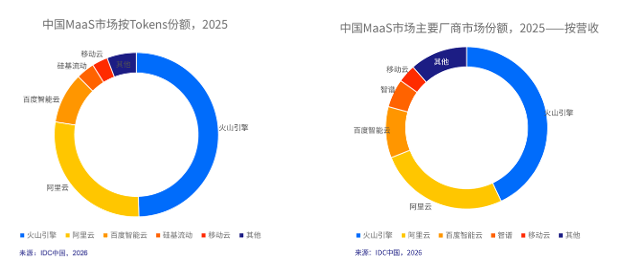
- •The Hunyuan model's late launch and limited GPU resources hindered MaaS adoption.
- •Strategic shift from low-margin 'project-based' revenue to sustainable, self-developed product growth.
- •Heavy reliance on internet-sector clients makes the transition to traditional enterprise and government markets difficult.
Deep Insight
Background and context from public sources — not the original article. 16 sources cited.
Enhanced Key Takeaways
- •While the article states an 8% IaaS market share, Tencent Cloud's position in China's public cloud market has fluctuated, holding 16% and ranking third in Q1 2024, and 10% in Q1 2025, indicating a dynamic competitive landscape.
- •Tencent's Hunyuan model, initially launched in 2023, underwent a significant "reconstruction" with version 3.0 released in April 2026, now led by former OpenAI researcher Shunyu Yao, focusing on enhanced reasoning and intelligent agent capabilities with a relatively compact 295 billion parameters.
- •Tencent has committed substantial resources to AI, with a record 857.5 billion yuan (~$124.8 billion) in R&D expenditure in 2025 and 31.94 billion yuan in capital expenditures in Q1 2026, specifically to address GPU resource limitations and bolster its AI infrastructure.
- •Tencent Cloud is strategically evolving its MaaS platform to "TokenHub" and open-sourcing "Cube" to foster full-stack AI Agent development, leveraging its extensive ecosystem, including WeChat and Mini Programs, as a rich skill library for these agents.
- •Tencent Cloud is aggressively pursuing international expansion, doubling its overseas client base in 2025 and achieving over 40% year-on-year growth in international business revenue in Q1 2026, with a focus on sovereign cloud offerings for financial and government institutions.
Competitor Analysis
A Markdown table comparing this with competitors (Feature/Pricing/Benchmarks). Return null if not applicable (e.g. op-ed, interview, single-product announcement with no clear competitors).
Technical Deep Dive
Detailed technical specs, model architecture, or implementation details found via web search. Use Markdown bullet points (- item). Never use HTML tags. Return null if insufficient technical data exists.
Future ImplicationsAI analysis grounded in cited sources
Timeline
- 2013-09Tencent Cloud founded as Tencent's cloud computing division.
- 2023-06Tencent Cloud launches its Model-as-a-Service (MaaS) solution and the flagship Hunyuan Large Language Model series.
- 2025Tencent Cloud achieves profitability in its business-to-business (ToB) operations, driven by AI-driven enterprise services.
- 2025-11Tencent's Hunyuan 3D creation engine launches globally, with open-sourced 3D models gaining significant community downloads.
- 2025-12Shunyu Yao, a former OpenAI researcher, is appointed chief AI scientist for Tencent's Hunyuan model, signaling a strategic leadership change.
- 2026-04Tencent officially releases Hunyuan large model version 3.0, focusing on enhanced reasoning and intelligent agent capabilities.
Sources (16)
Factual claims are grounded in the sources below. Forward-looking analysis is AI-generated interpretation.
Weekly AI Recap
Read this week's curated digest of top AI events →
AI-curated news aggregator. All content rights belong to original publishers.
Original source: 虎嗅 ↗
This is a summary, not the original. Read the source, or get the weekly briefing.
The weekly digest
One email a week. Unsubscribe anytime.