Tech giants race into embodied intelligence market
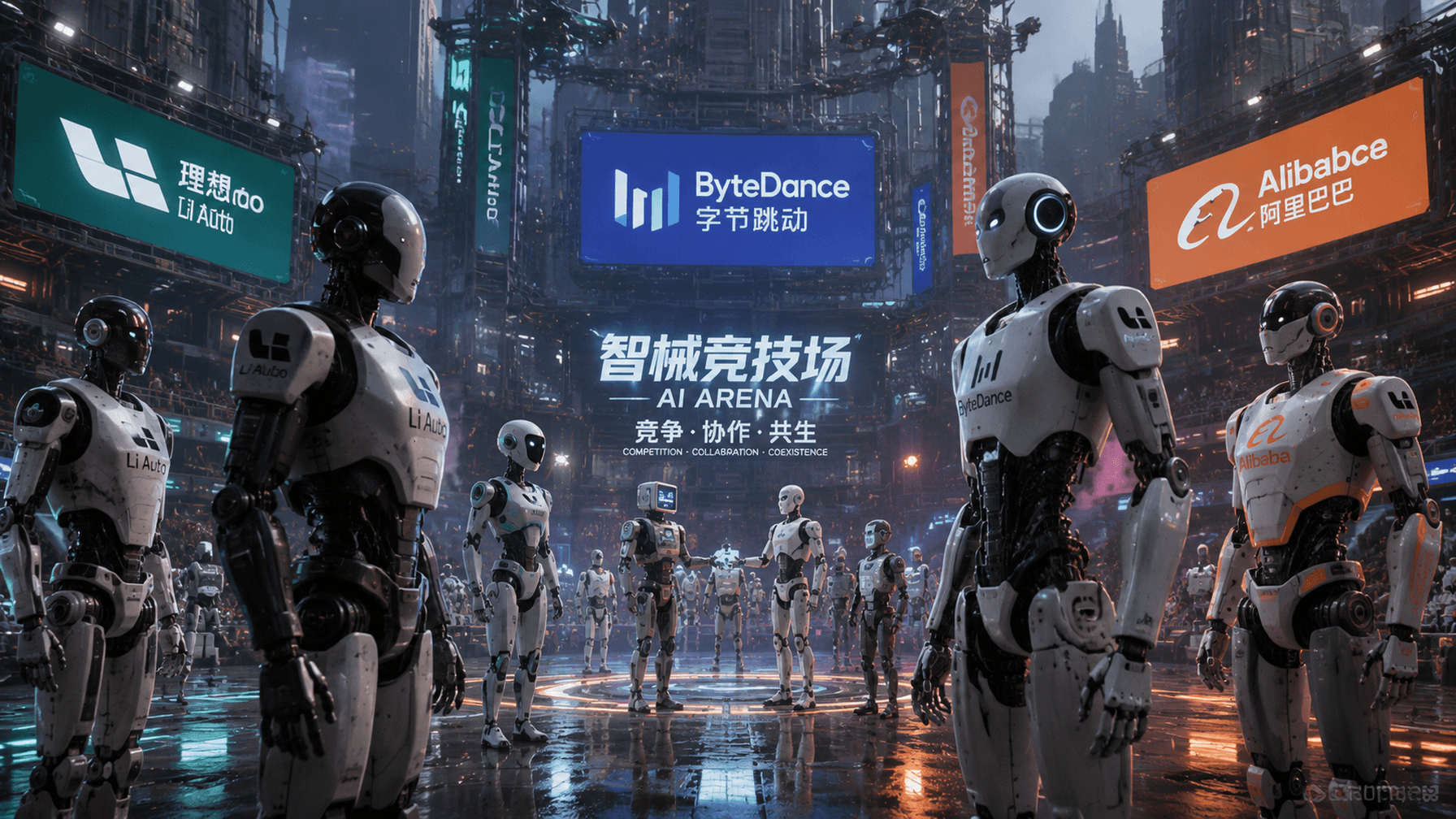
💡Major shift as top tech firms pivot to embodied AI, with massive projected growth in humanoid robotics by 2026.
⚡ 30-Second TL;DR
What Changed
Major players entering the humanoid robotics race
Why It Matters
The influx of capital and software expertise from tech giants is expected to rapidly accelerate the commercialization of humanoid robots. This shift will likely create new demand for embodied AI software stacks.
What To Do Next
Explore integration opportunities for your existing LLM agents with robotics simulation environments like NVIDIA Isaac or similar platforms.
Key Points
- •Major players entering the humanoid robotics race
- •Morgan Stanley projects 2.8 million unit sales by 2026
- •Convergence of LLMs and physical robotics hardware
🧠 Deep Insight
AI-generated analysis for this event — not the original article.
🔑 Enhanced Key Takeaways
- •The Chinese government has integrated embodied intelligence into its 'New Quality Productive Forces' policy, providing significant state subsidies and tax incentives for humanoid R&D.
- •Li Auto is leveraging its proprietary 'Mind GPT' architecture to serve as the cognitive engine for its robotic manipulators, aiming to bridge the gap between autonomous driving and household robotics.
- •ByteDance has shifted its focus from purely generative AI to 'Physical AI,' utilizing its massive video dataset from TikTok to train spatial-temporal reasoning models for robot navigation.
- •Alibaba's Cloud division is offering 'Embodied-as-a-Service' (EaaS) platforms, allowing third-party hardware manufacturers to integrate Alibaba's Qwen-based vision-language models into their robots.
- •Supply chain localization efforts in China have reduced the cost of core humanoid components, such as harmonic drives and force sensors, by approximately 40% since 2024.
📊 Competitor Analysis▸ Show
| Feature | Li Auto (Embodied) | ByteDance (Physical AI) | Alibaba (EaaS) | Tesla (Optimus) |
|---|---|---|---|---|
| Primary Focus | Household/Service | Spatial Reasoning | Cloud Integration | Industrial/General |
| Core Model | Mind GPT | Video-to-Action | Qwen-VL | FSD-based End-to-End |
| Market Strategy | Vertical Integration | Data-driven Learning | Platform/Ecosystem | Mass Manufacturing |
🛠️ Technical Deep Dive
- Architecture: Transition from modular robotics to end-to-end neural networks where vision, language, and action (VLA) models map sensor input directly to motor control commands.
- Training Data: Utilization of synthetic data generation via high-fidelity physics engines (e.g., NVIDIA Isaac Sim) to overcome the scarcity of real-world physical interaction data.
- Hardware Integration: Adoption of high-torque density actuators and tactile sensing skins that utilize capacitive and resistive arrays to mimic human-like touch sensitivity.
- Latency Optimization: Implementation of edge-cloud hybrid computing where low-level motor control occurs on-device (sub-10ms latency) while high-level reasoning is offloaded to cloud clusters.
🔮 Future ImplicationsAI analysis grounded in cited sources
⏳ Timeline
Weekly AI Recap
Read this week's curated digest of top AI events →
👉Related Updates

AI-curated news aggregator. All content rights belong to original publishers.
Original source: Pandaily ↗
This is a summary, not the original. Read the source, or get the weekly briefing.
Weekly AI briefing
One email a week. Unsubscribe anytime.