BYD's shift: From automaker to AI-driven tech giant
💡Understand the shift in valuation logic for hardware companies building their own AI and silicon stacks.
⚡ 30-Second TL;DR
What Changed
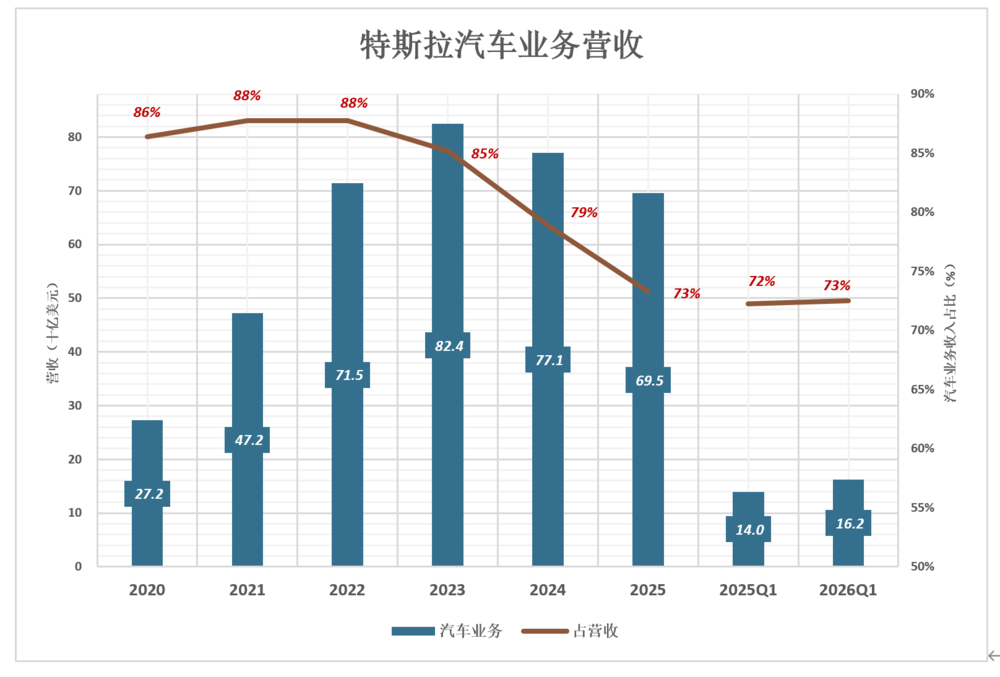
Tesla's valuation is driven by AI/FSD potential, not just vehicle sales.
Why It Matters
The convergence of automotive and AI sectors suggests that hardware manufacturers with deep software/chip stacks will command higher valuations than traditional OEMs.
What To Do Next
Monitor BYD's proprietary 4nm chip performance and integration with their ADAS stack to identify potential shifts in the autonomous driving hardware landscape.
Key Points
- •Tesla's valuation is driven by AI/FSD potential, not just vehicle sales.
- •BYD is increasingly recognized for its R&D in power semiconductors and 4nm intelligent driving chips.
- •Tesla's 'Robotaxi' and 'Optimus' face significant operational and safety hurdles compared to BYD's mass-deployed ADAS.
- •The market is expected to re-evaluate BYD's valuation based on its technological capabilities rather than traditional automotive metrics.
🧠 Deep Insight
AI-generated analysis for this event.
🔑 Enhanced Key Takeaways
- •BYD has integrated its 'Xuanji' (璇玑) intelligent architecture, a centralized electronic and electrical architecture that unifies vehicle control, smart cockpit, and intelligent driving systems.
- •The company has aggressively expanded its semiconductor division, BYD Semiconductor, which is a leading supplier of IGBTs and SiC (Silicon Carbide) power modules, critical for EV efficiency.
- •BYD's 'DiPilot' intelligent driving system has transitioned from third-party hardware reliance to a proprietary stack, incorporating end-to-end large model technology for urban navigation.
- •BYD has established a massive internal R&D workforce exceeding 100,000 engineers, focusing on vertical integration that spans from battery chemistry to AI algorithm training.
- •The company is leveraging its 'e-Platform 3.0' to standardize AI-ready hardware across its mass-market vehicle lineup, enabling rapid deployment of OTA (Over-the-Air) updates.
📊 Competitor Analysis▸ Show
| Feature | BYD (Xuanji/DiPilot) | Tesla (FSD/Optimus) | Huawei (ADS 3.0) |
|---|---|---|---|
| Core Strategy | Vertical Integration | AI/Software-First | Tier 1 Supplier/Partner |
| Chip Strategy | In-house/Hybrid | In-house (Dojo/FSD) | Partnered (Ascend) |
| Market Focus | Mass Market/Global | Premium/Robotaxi | Premium/Tech-focused |
🛠️ Technical Deep Dive
- Xuanji Architecture: A centralized computing platform that decouples software from hardware, allowing for real-time data fusion across chassis, powertrain, and cockpit domains.
- 4nm Chip Implementation: Utilization of advanced process nodes for high-performance computing units to handle complex sensor fusion from LiDAR, cameras, and ultrasonic sensors.
- End-to-End Large Models: Deployment of transformer-based neural networks for perception and decision-making, reducing reliance on traditional rule-based coding for autonomous driving.
- SiC Power Modules: Proprietary Silicon Carbide MOSFETs that improve thermal management and power density, directly contributing to the efficiency of the 800V high-voltage platforms.
🔮 Future ImplicationsAI analysis grounded in cited sources
⏳ Timeline
Weekly AI Recap
Read this week's curated digest of top AI events →
👉Related Updates

AI-curated news aggregator. All content rights belong to original publishers.
Original source: 虎嗅 ↗