Sugon Opens 100,000-Card AI Supercluster
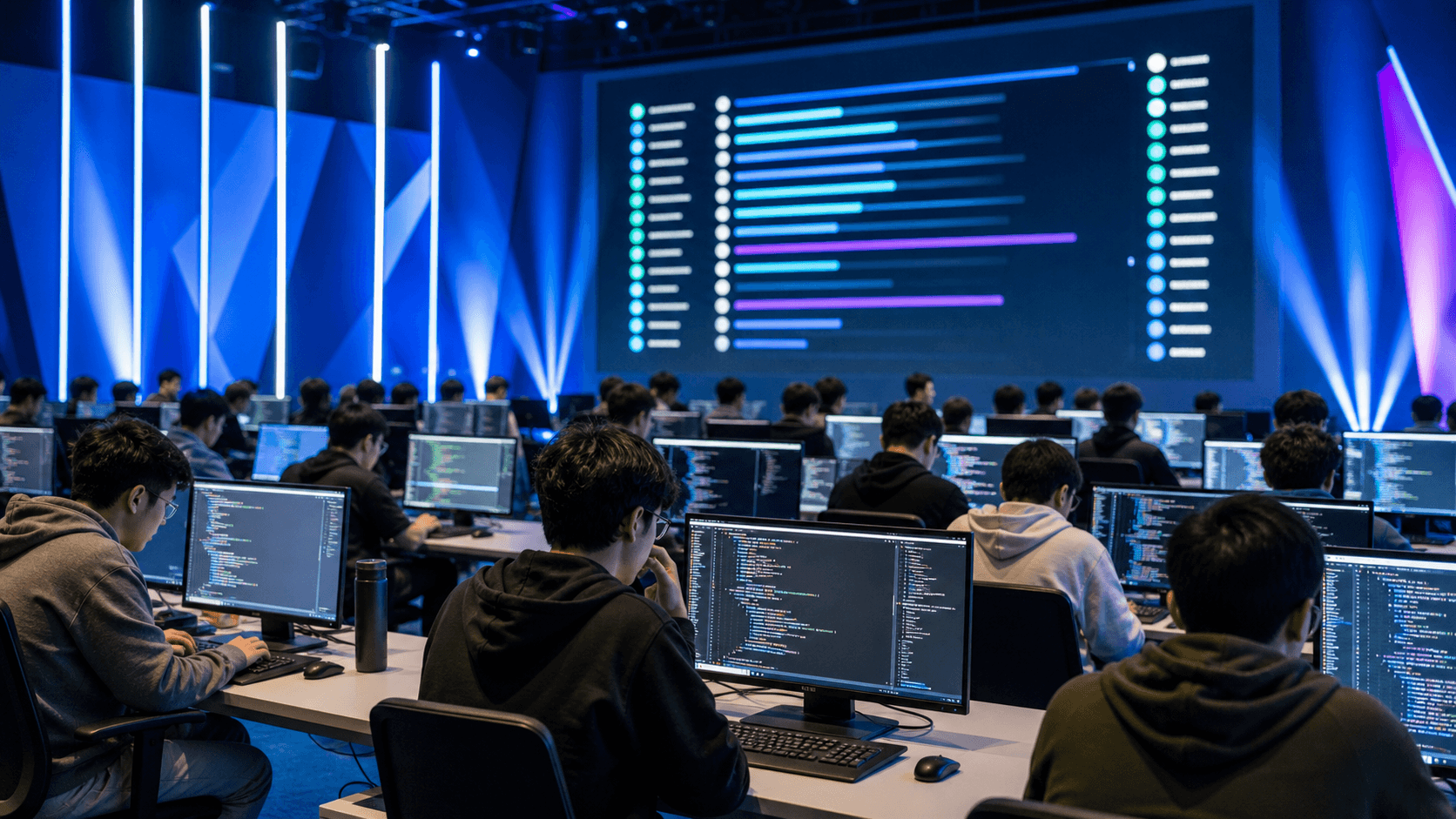
💡Learn how a 100,000-card domestic cluster is turning Qwen optimization into hands-on systems training.
⚡ 30-Second TL;DR
What Changed
The XianDao Cup attracted more than 500 teams and 1,900 students from 160 universities.
Why It Matters
Putting a very large domestic AI cluster into student hands can expand practical systems talent and create new optimization techniques for local hardware. It also gives Qwen and scientific-model workloads a high-profile training ground.
What To Do Next
Use the competition topics as a practical checklist: profile Qwen inference on your available accelerator stack and measure latency, throughput, and memory usage before optimizing.
Key Points
- •The XianDao Cup attracted more than 500 teams and 1,900 students from 160 universities.
- •Sugon provided access to China's first fully domestic 100,000-card AI supercluster.
- •Competition tracks focus on Qwen inference optimization and weather model deployment.
- •The cluster is accessible through the National Supercomputing Internet.
🧠 Deep Insight
AI-generated analysis for this event.
🔑 Enhanced Key Takeaways
- •The supercluster utilizes Sugon's proprietary DCU (Deep Computing Unit) architecture, which is designed to provide a domestic alternative to NVIDIA's GPU ecosystem for large-scale AI training and inference.
- •The National Supercomputing Internet project, which hosts this cluster, is a strategic Chinese government initiative aimed at integrating disparate supercomputing resources across the country into a unified, cloud-accessible network.
- •Sugon's 'XianDao' (or 'Advanced') brand has historically been associated with the company's high-performance computing (HPC) servers, which frequently appear on the TOP500 list of the world's most powerful supercomputers.
- •The deployment of this 100,000-card cluster represents a significant milestone in China's 'Xinchuang' (IT innovation) strategy, which mandates the replacement of foreign hardware with domestic technology in critical infrastructure.
- •The competition's focus on Qwen (Alibaba's open-source LLM) and weather modeling highlights a dual-purpose strategy: fostering domestic AI software ecosystems while simultaneously addressing high-demand scientific computing needs.
📊 Competitor Analysis▸ Show
| Feature | Sugon (Domestic Cluster) | NVIDIA (H100/B200 Clusters) | Huawei (Ascend Clusters) |
|---|---|---|---|
| Primary Architecture | DCU (Proprietary) | Hopper/Blackwell GPU | Ascend NPU |
| Ecosystem | DTK (Domestic) | CUDA (Global Standard) | CANN (Domestic) |
| Availability | Restricted (China-only) | Global (Export-controlled) | Restricted (China-only) |
| Primary Use Case | Sovereign AI/HPC | General Purpose AI | Sovereign AI/HPC |
🛠️ Technical Deep Dive
- The cluster is built upon Sugon's high-density server nodes, likely utilizing the Sugon 5000 series or equivalent high-performance computing architecture.
- Interconnect technology relies on Sugon's proprietary high-speed networking fabric, designed to minimize latency across the 100,000-card scale.
- The software stack is built on the DTK (Deep Computing Toolkit), which provides compatibility layers for mainstream AI frameworks like PyTorch and TensorFlow to run on domestic DCUs.
- The system architecture emphasizes heterogeneous computing, allowing for the orchestration of both traditional HPC workloads (weather modeling) and AI-specific inference tasks (Qwen optimization).
🔮 Future ImplicationsAI analysis grounded in cited sources
⏳ Timeline
Weekly AI Recap
Read this week's curated digest of top AI events →
👉Related Updates



AI-curated news aggregator. All content rights belong to original publishers.
Original source: Pandaily ↗