JD Opens Full-Stack Physical AI
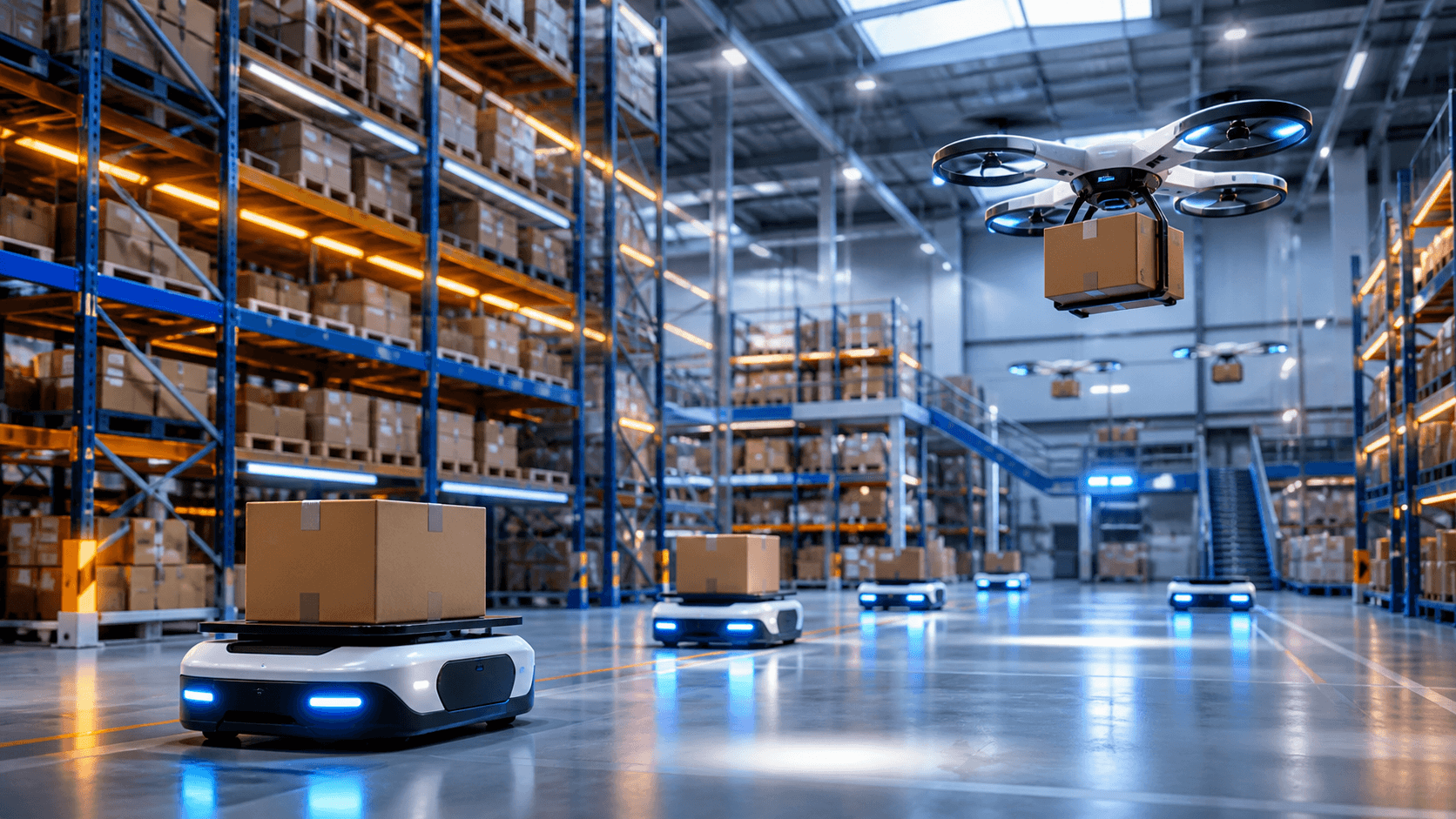
💡See how JD.com is combining open models, embodied data, and logistics robots into one physical AI stack.
⚡ 30-Second TL;DR
What Changed
JD.com is opening its full-stack AI technologies to global partners.
Why It Matters
An open physical AI stack could lower entry barriers for robotics developers and accelerate experimentation with embodied data. JD.com’s logistics operations may also provide a substantial real-world test environment for autonomous systems.
What To Do Next
Review the open-source EgoLive and JoyAI repositories when available, then benchmark them on a small warehouse-robot perception or control task.
Key Points
- •JD.com is opening its full-stack AI technologies to global partners.
- •EgoLive data and JoyAI models are being open-sourced for broader development.
- •The company plans a major embodied data collection center and robot deployments across logistics.
- •H1 R&D spending increased 53.2%, signaling a significant commitment to AI industrialization.
🧠 Deep Insight
AI-generated analysis for this event.
🔑 Enhanced Key Takeaways
- •JD.com's embodied AI strategy leverages its massive proprietary logistics dataset, which includes over 10 years of real-world warehouse operational data, to train models on edge cases that synthetic data often misses.
- •The EgoLive platform utilizes a 'human-in-the-loop' teleoperation system that allows remote operators to guide robots in complex, unstructured environments to generate high-quality training data.
- •JoyAI is specifically optimized for multi-modal reasoning, enabling robots to interpret natural language instructions alongside visual sensor data to perform non-repetitive tasks like sorting irregular parcels.
- •The new embodied data collection center is designed to simulate extreme warehouse conditions, including varying lighting, floor friction, and obstacle density, to improve robot generalization.
- •JD.com is positioning its full-stack offering as a 'Robot-as-a-Service' (RaaS) model, allowing third-party logistics providers to integrate JD's AI stack without needing to build their own hardware infrastructure.
📊 Competitor Analysis▸ Show
| Feature | JD.com (JoyAI/EgoLive) | Amazon (Robotics/AI) | Tesla (Optimus) |
|---|---|---|---|
| Primary Focus | Logistics & Supply Chain | E-commerce Fulfillment | General Purpose Humanoid |
| Data Source | Proprietary Logistics Data | Warehouse Operations | Real-world Video/FSD Data |
| Deployment | Open-Stack/RaaS | Internal/Closed Ecosystem | Internal/Future Commercial |
| Key Strength | High-density warehouse optimization | Massive scale automation | Advanced motor control/AI |
🛠️ Technical Deep Dive
- JoyAI Architecture: Employs a transformer-based multi-modal foundation model capable of processing simultaneous inputs from LiDAR, RGB-D cameras, and IMU sensors.
- EgoLive Data Pipeline: Uses a proprietary compression algorithm to stream high-fidelity teleoperation data from remote sites to the central training cluster with sub-50ms latency.
- Robot Deployment: Utilizes a modular middleware layer compatible with ROS 2, allowing for rapid integration with various robotic form factors including AMRs (Autonomous Mobile Robots) and articulated robotic arms.
- Training Infrastructure: Leverages a distributed GPU cluster specifically tuned for reinforcement learning from human feedback (RLHF) applied to physical motion planning.
🔮 Future ImplicationsAI analysis grounded in cited sources
⏳ Timeline
Weekly AI Recap
Read this week's curated digest of top AI events →
👉Related Updates


AI-curated news aggregator. All content rights belong to original publishers.
Original source: Pandaily ↗