Students Use AI for Homework, Teachers Struggle
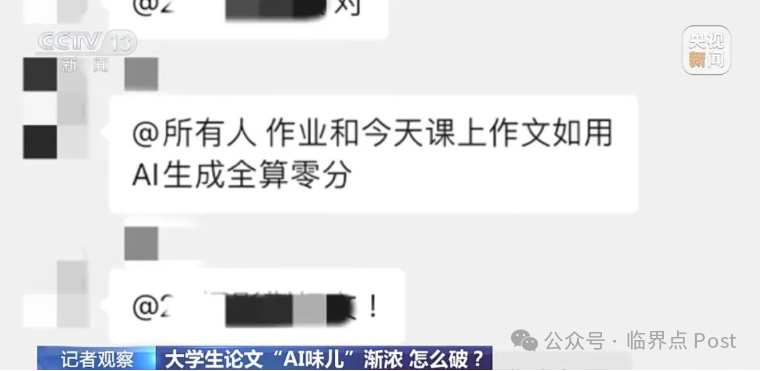
💡AI cheating in universities signals need for new edtech defenses
⚡ 30-Second TL;DR
What Changed
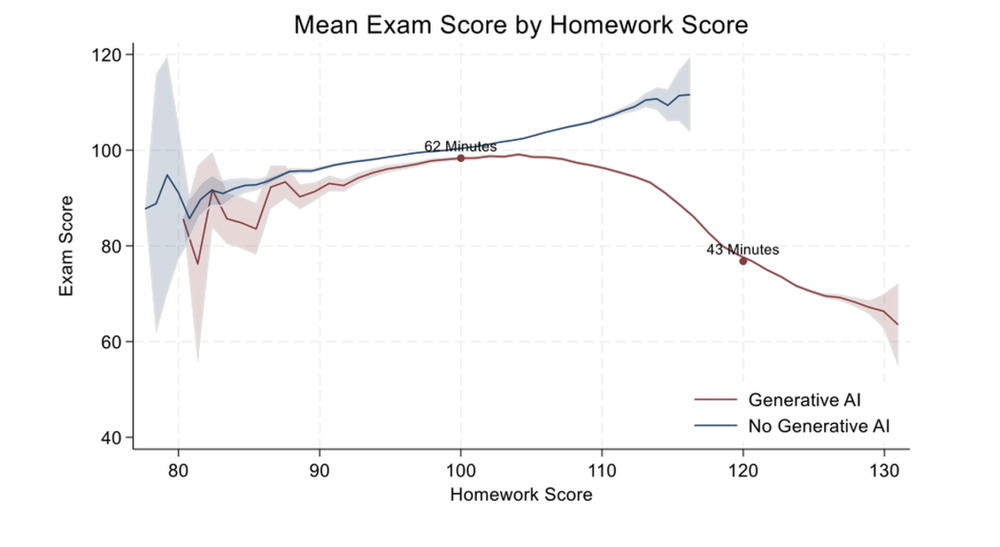
Students rely on AI for assignments, viewing it as essential for university life
Why It Matters
This trend pressures educators to adapt teaching methods and develop AI detection tools, potentially reshaping assessment practices in academia.
What To Do Next
Test AI detection tools like Originality.ai on sample student submissions.
Key Points
- •Students rely on AI for assignments, viewing it as essential for university life
- •Teachers face challenges detecting AI-generated work
- •Emerging 'cat-and-mouse' dynamic in higher education classrooms
🧠 Deep Insight
Background and context from public sources — not the original article. 7 sources cited.
🔑 Enhanced Key Takeaways
- •AI detection tools have reached 96% accuracy (Originality.ai) but maintain 2-7% false positive rates, disproportionately affecting ESL and non-native speakers, creating institutional liability concerns[2][3]
- •Turnitin dominates with 16,000+ global institutions, but Copyleaks and GPTZero serve as secondary verification tools, with Copyleaks specifically designed to detect paraphrased AI content and AI-generated code in STEM fields[1][2]
- •Process-based grading and assignment redesign are emerging as more reliable alternatives to detection tools, as detector performance degrades under real-world conditions and adversarial edits[6]
- •Teachers increasingly adopt sentence-level detection and batch processing workflows (via tools like Pangram) to assess AI-assisted versus AI-generated work, enabling nuanced conversations about acceptable AI use rather than binary flagging[4]
📊 Competitor Analysis▸ Show
| Tool | Accuracy | False Positive Rate | Pricing | Key Strength | Limitation | Integration |
|---|---|---|---|---|---|---|
| Originality.ai | 96% | 2% | Paid | Highest precision | Enterprise-focused | LMS |
| Copyleaks | 94% | ~5% | Paid | Paraphrase & code detection | Stricter flagging | STEM departments |
| Turnitin | 92% | 7% | Institutional | Ubiquitous, plagiarism combo | Higher FPR for ESL | Canvas, Blackboard, Moodle |
| GPTZero | 90% | 6% | Free tier + $10/mo | Sentence-level breakdown | Inconsistent on hybrid text | Google Docs, API |
| Sapling | 89% | 5% | Free + $25/mo | Quick entry, simple UI | Lower accuracy on long texts | Web, API |
🛠️ Technical Deep Dive
- •Perplexity & Burstiness Analysis: AI detectors measure text predictability (perplexity) and uniformity of sentence length variation (burstiness), comparing against human writing baselines to flag overly consistent patterns[3]
- •AI Fingerprinting: Advanced tools attempt to match text patterns to specific language models (GPT-3, GPT-4, Claude) rather than generic AI detection, enabling model-specific identification[3]
- •Modification Detection: Unicheck analyzes 'invisible' formatting artifacts left by AI tools, including irregular text spacing, hidden characters, and metadata anomalies that survive paraphrasing[1]
- •Hybrid Detection: 2026 improvements in Turnitin and competitors now detect AI-assisted (human + AI mixed) writing, not just fully generated content, using sentence-level classification behavior analysis[2][6]
🔮 Future ImplicationsAI analysis grounded in cited sources
⏳ Timeline
📎 Sources (7)
Factual claims are grounded in the sources below. Forward-looking analysis is AI-generated interpretation.
- lynote.ai — What AI Detector Do Colleges Use
- hub.paper-checker.com — Most Accurate AI Detectors 2026 Comparison
- walterwrites.ai — How Do AI Detectors Work
- teachthought.com — Features for AI Detectors for Teacher
- researcher.life — 7 Best Free AI Detectors for Students
- thesify.ai — How Professors Detect AI Writing 2026 Guide
- youtube.com — Watch
Weekly AI Recap
Read this week's curated digest of top AI events →
👉Related Updates

AI-curated news aggregator. All content rights belong to original publishers.
Original source: cnBeta (Full RSS) ↗
This is a summary, not the original. Read the source, or get the weekly briefing.
Weekly AI briefing
One email a week. Unsubscribe anytime.