🐯Freshcollected in 60m

Strategic Systems for Navigating Complex Competitive Landscapes
Strategic Systems for Navigating Complex Competitive Landscapes
PostLinkedIn
🐯Read original on 虎嗅
#strategy#managementstrategic-management-systemmao zedongclausewitz

💡Learn how to build a strategic system that allows your AI startup to maintain initiative in a rapidly shifting market.

⚡ 30-Second TL;DR

What Changed

Strategy is a dynamic system of information, decision-making, and execution, not a fixed roadmap.

Why It Matters

For AI founders, this framework highlights the importance of building 'strategic agility'—the ability to pivot resource allocation based on real-time market feedback rather than rigid long-term roadmaps.

What To Do Next

Audit your current product roadmap to identify which features are 'sunk costs' and which are critical for long-term competitive advantage.

Who should care:Founders & Product Leaders

Key Points

  • Strategy is a dynamic system of information, decision-making, and execution, not a fixed roadmap.
  • Effective strategy requires prioritizing the preservation of core organizational capabilities over short-term gains.
  • Competitive advantage is gained by controlling the tempo and forcing opponents to respond to an outdated reality.
  • Decision-making power must be decentralized to those with the latest information to ensure high-speed execution.

🧠 Deep Insight

AI-generated analysis for this event.

🔑 Enhanced Key Takeaways

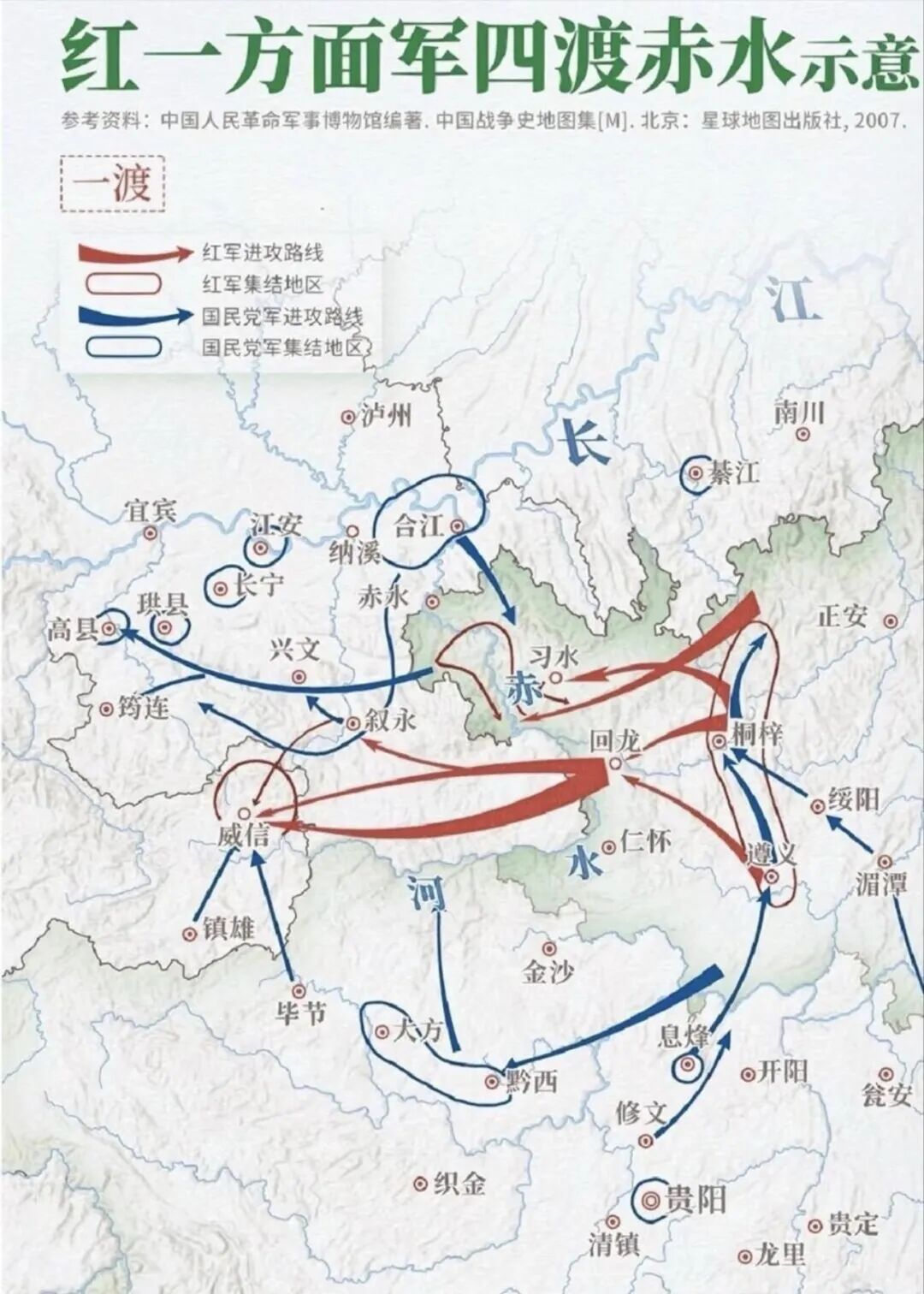
  • The 'Four Crossings of the Chishui River' is frequently cited in Chinese management literature as a case study for 'OODA loop' (Observe, Orient, Decide, Act) application in non-military business environments.
  • Modern strategic frameworks inspired by this campaign emphasize 'asymmetric mobility,' where firms utilize digital transformation to lower the cost of shifting resources faster than competitors can reallocate capital.
  • Research indicates that organizations adopting this 'dynamic system' approach often shift from traditional KPI-based management to OKR (Objectives and Key Results) systems to support decentralized decision-making.
  • The metaphor highlights the 'maneuver warfare' doctrine in business, which prioritizes disrupting the competitor's decision cycle rather than engaging in direct resource-heavy attrition.
  • Implementation of these systems often requires a 'dual-operating system' structure, where a stable core handles efficiency while a peripheral, agile unit manages high-volatility market signals.

🔮 Future ImplicationsAI analysis grounded in cited sources

Decentralized autonomous decision-making will become the primary differentiator for market leaders by 2028.
As market volatility increases, the latency inherent in centralized hierarchies will render traditional strategic planning obsolete.
Strategic systems will increasingly integrate real-time AI-driven signal processing to replace manual market analysis.
The speed required to maintain the 'initiative' in competitive landscapes exceeds human cognitive processing limits.
📰

Weekly AI Recap

Read this week's curated digest of top AI events →

👉Related Updates

AI-curated news aggregator. All content rights belong to original publishers.
Original source: 虎嗅