Starship Technologies robots expand UK delivery operations
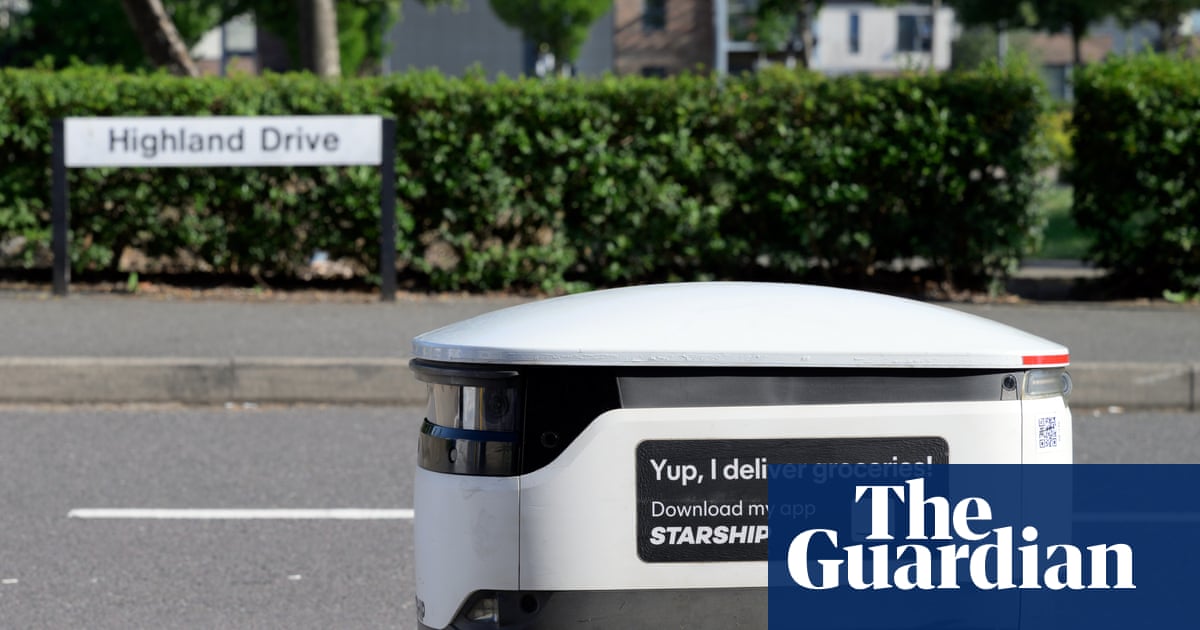
💡See how autonomous navigation is scaling in real-world urban environments through legislative support.
⚡ 30-Second TL;DR
What Changed
Starship Technologies has successfully deployed autonomous delivery robots in Milton Keynes since 2018.
Why It Matters
The expansion of autonomous delivery robots signals a shift in last-mile logistics, requiring developers to focus on robust edge-case handling and navigation in public spaces.
What To Do Next
Research the regulatory framework for autonomous mobile robots (AMR) in your target region to understand deployment compliance requirements.
Key Points
- •Starship Technologies has successfully deployed autonomous delivery robots in Milton Keynes since 2018.
- •The robots utilize advanced navigation to maneuver through urban environments and obstacles.
- •New UK legislation is paving the way for wider adoption of autonomous delivery fleets nationwide.
🧠 Deep Insight
AI-generated analysis for this event — not the original article.
🔑 Enhanced Key Takeaways
- •Starship Technologies was founded in 2014 by Ahti Heinla and Janus Friis, the co-founders of Skype, aiming to reduce the cost and inconvenience of local delivery.
- •The company has established partnerships with major retailers and grocery chains, including Co-op and Tesco, to facilitate last-mile grocery deliveries in the UK.
- •Starship robots utilize a combination of computer vision, GPS, and ultrasonic sensors to achieve 99% autonomous operation, with human supervisors intervening only in complex edge cases.
- •The robots are designed with a 'lock and unlock' mechanism controlled via a mobile app, ensuring that only the intended recipient can access the cargo compartment.
- •Beyond the UK, Starship has expanded its footprint significantly across university campuses in the United States, operating fleets at dozens of institutions to deliver food and convenience items.
📊 Competitor Analysis▸ Show
| Feature | Starship Technologies | Serve Robotics | Kiwibot |
|---|---|---|---|
| Primary Market | UK/US Campuses/Suburbs | US Urban Centers | US Campuses |
| Navigation | Computer Vision/GPS | LiDAR/AI-driven | GPS/Camera-based |
| Partnerships | Co-op, Tesco, Grubhub | Uber Eats | Sodexo, Local Merchants |
| Pricing Model | Per-delivery fee | Per-delivery fee | Subscription/Per-delivery |
🛠️ Technical Deep Dive
- Navigation System: Employs a suite of 12 cameras, ultrasonic sensors, and radar to create a 360-degree view of the environment.
- Connectivity: Utilizes 4G/5G cellular networks to maintain constant communication with the remote monitoring center.
- Power: Battery-electric propulsion system capable of operating for up to 18 hours on a single charge depending on terrain and load.
- Security: Features an onboard alarm system, GPS tracking, and a tamper-proof cargo bay that remains locked until the customer authenticates via the app.
- Weight and Speed: Robots weigh approximately 25-35kg and are speed-limited to 4mph (6.4km/h) to ensure pedestrian safety.
🔮 Future ImplicationsAI analysis grounded in cited sources
⏳ Timeline
Weekly AI Recap
Read this week's curated digest of top AI events →
👉Related Updates



AI-curated news aggregator. All content rights belong to original publishers.
Original source: The Guardian Technology ↗
This is a summary, not the original. Read the source, or get the weekly briefing.
Weekly AI briefing
One email a week. Unsubscribe anytime.