Starlink may expand into mobile carrier services
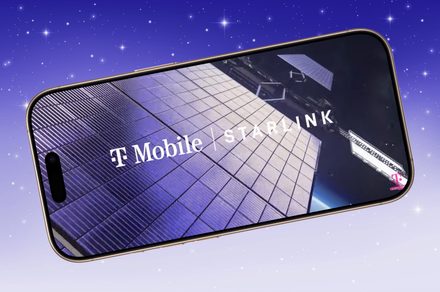
Starlink's move into mobile carrier space could redefine edge-AI connectivity and remote data transmission.
30-Second TL;DR
What Changed
Starlink is exploring a transition to becoming a US mobile carrier
Why It Matters
If successful, this could decentralize mobile connectivity and provide new edge-computing opportunities for AI applications in remote areas.
What To Do Next
Monitor Starlink's API and coverage expansion if you are building edge-AI applications that require remote connectivity.
Key Points
- •Starlink is exploring a transition to becoming a US mobile carrier
- •Potential to disrupt traditional wireless industry business models
- •Expansion beyond current satellite-to-mobile carrier partnerships
Deep Insight
AI-generated analysis for this event — not the original article.
Enhanced Key Takeaways
- •SpaceX has been actively deploying 'Direct to Cell' satellites equipped with advanced eNodeB modem technology to enable standard LTE connectivity without requiring specialized hardware.
- •The FCC has granted SpaceX experimental licenses to test satellite-to-smartphone connectivity in collaboration with T-Mobile, marking a shift toward regulatory integration.
- •Starlink's potential move into mobile carrier services leverages its massive low-Earth orbit (LEO) constellation to eliminate cellular dead zones in rural and remote areas.
- •Industry analysts note that SpaceX is building a 'network-as-a-service' model, potentially allowing them to act as a Mobile Virtual Network Operator (MVNO) or a full facilities-based carrier.
- •The integration of Starlink's satellite backhaul with terrestrial mobile infrastructure aims to provide seamless handovers between satellite and ground-based cellular towers.
Competitor Analysis
- Starlink (Direct to Cell)
- LEO Satellite-to-LTE
- T-Mobile/SpaceX Partnership
- Satellite-to-Cellular
- AST SpaceMobile
- LEO Satellite-to-Cellular
- Lynk Global
- LEO Satellite-to-Cellular
- Starlink (Direct to Cell)
- Global/Remote
- T-Mobile/SpaceX Partnership
- US/Rural Coverage
- AST SpaceMobile
- Global/Enterprise
- Lynk Global
- Global/Remote
- Starlink (Direct to Cell)
- Standard LTE Phones
- T-Mobile/SpaceX Partnership
- Standard LTE Phones
- AST SpaceMobile
- Standard LTE Phones
- Lynk Global
- Standard LTE Phones
- Starlink (Direct to Cell)
- Testing/Deployment
- T-Mobile/SpaceX Partnership
- Active Partnership
- AST SpaceMobile
- Commercial Rollout
- Lynk Global
- Testing/Deployment
| Feature | Starlink (Direct to Cell) | T-Mobile/SpaceX Partnership | AST SpaceMobile | Lynk Global |
|---|---|---|---|---|
| Technology | LEO Satellite-to-LTE | Satellite-to-Cellular | LEO Satellite-to-Cellular | LEO Satellite-to-Cellular |
| Primary Market | Global/Remote | US/Rural Coverage | Global/Enterprise | Global/Remote |
| Hardware | Standard LTE Phones | Standard LTE Phones | Standard LTE Phones | Standard LTE Phones |
| Status | Testing/Deployment | Active Partnership | Commercial Rollout | Testing/Deployment |
Technical Deep Dive
- Direct to Cell satellites utilize custom silicon and large phased-array antennas to communicate with standard mobile devices.
- The system operates using existing LTE/4G spectrum, allowing phones to treat the satellite as a roaming partner tower.
- Implementation relies on the 3GPP Release 17 standard for Non-Terrestrial Networks (NTN) to facilitate satellite-to-device communication.
- SpaceX utilizes its Starship launch vehicle to deploy 'V2 Mini' and larger 'V2' satellites, which carry the necessary hardware for mobile connectivity at scale.
Future ImplicationsAI analysis grounded in cited sources
Timeline
- 2022-08SpaceX and T-Mobile announce the 'Coverage Above and Beyond' partnership.
- 2024-01SpaceX launches the first batch of Starlink satellites with Direct to Cell capabilities.
- 2024-03SpaceX successfully completes the first text message transmission via satellite to an unmodified smartphone.
- 2025-05FCC grants expanded authorization for SpaceX to conduct commercial Direct to Cell testing.
Event Coverage
Weekly AI Recap
Read this week's curated digest of top AI events →
AI-curated news aggregator. All content rights belong to original publishers.
Original source: Digital Trends ↗
This is a summary, not the original. Read the source, or get the weekly briefing.
The weekly digest
One email a week. Unsubscribe anytime.