Stanford’s 37,000-Agent Virtual Biotech
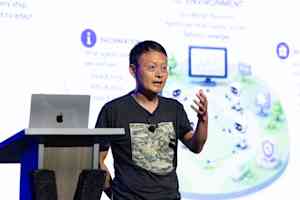
See how Stanford orchestrates 37,000 agents into a virtual biotech—and validates their drug designs.
30-Second TL;DR
What Changed
The Virtual Biotech uses a Chief Scientific Officer agent to coordinate specialized divisions for target discovery, molecule design, safety, and clinical trials.
Why It Matters
The work suggests that scaling AI research may depend as much on organizational design and agent coordination as on building larger foundation models. For biotech and enterprise AI teams, specialized agents could enable parallel discovery workflows, but validation, supervision, and system reliability remain essential.
What To Do Next
Prototype a LangGraph supervisor workflow with separate agents for data analysis, molecule design, and validation, then benchmark it against a single-agent baseline.
Key Points
- •The Virtual Biotech uses a Chief Scientific Officer agent to coordinate specialized divisions for target discovery, molecule design, safety, and clinical trials.
- •The initial Virtual Lab used five to eight role-based agents, including an AI professor and specialized AI students, with supervised fine-tuning in an agent school.
- •AI-designed nanobody proteins showed stronger binding against recent COVID variants than previous human-designed nanobodies in wet-lab validation.
- •The project demonstrates an orchestration pattern for connecting legacy scientific databases with large-scale collaborative agent systems.
Deep Insight
AI-generated analysis for this event — not the original article.
Enhanced Key Takeaways
- •The system utilizes a hierarchical multi-agent framework known as 'Agent-based Scientific Discovery' (ASD), which leverages Large Language Models (LLMs) to simulate the entire drug development lifecycle.
- •The platform incorporates a 'Self-Correction' mechanism where agents evaluate each other's outputs against established biochemical constraints before proceeding to wet-lab validation.
- •Researchers integrated the system with the Protein Data Bank (PDB) and other proprietary pharmaceutical databases to ensure the AI agents operate within the bounds of known molecular physics.
- •The 'Agent School' training methodology involves reinforcement learning from human feedback (RLHF) specifically tailored to scientific reasoning rather than general-purpose conversational ability.
- •The project's scalability to 37,000 agents was achieved through a distributed computing architecture that allows agents to operate in parallel across different scientific domains, significantly reducing the time-to-design for complex proteins.
Competitor Analysis
- Stanford Virtual Biotech
- Multi-agent autonomous orchestration
- Insilico Medicine
- End-to-end AI drug discovery platform
- Exscientia
- AI-driven precision medicine
- Stanford Virtual Biotech
- High (Autonomous specialized agents)
- Insilico Medicine
- Moderate (Human-in-the-loop)
- Exscientia
- Moderate (Human-in-the-loop)
- Stanford Virtual Biotech
- Research/Academic Framework
- Insilico Medicine
- Commercial Drug Pipeline
- Exscientia
- Clinical Development
- Stanford Virtual Biotech
- Nanobody binding affinity
- Insilico Medicine
- Clinical trial phase success
- Exscientia
- Molecule optimization speed
| Feature | Stanford Virtual Biotech | Insilico Medicine | Exscientia |
|---|---|---|---|
| Core Approach | Multi-agent autonomous orchestration | End-to-end AI drug discovery platform | AI-driven precision medicine |
| Agent Autonomy | High (Autonomous specialized agents) | Moderate (Human-in-the-loop) | Moderate (Human-in-the-loop) |
| Primary Focus | Research/Academic Framework | Commercial Drug Pipeline | Clinical Development |
| Benchmarks | Nanobody binding affinity | Clinical trial phase success | Molecule optimization speed |
Technical Deep Dive
- Architecture: Hierarchical Multi-Agent System (HMAS) utilizing specialized LLM instances for distinct scientific roles (e.g., chemist, toxicologist, clinical trial designer).
- Communication Protocol: Asynchronous message-passing interface (MPI) allowing agents to exchange data, critique proposals, and reach consensus on drug candidates.
- Integration: Connects to external scientific APIs and legacy databases via a RAG (Retrieval-Augmented Generation) layer that enforces domain-specific constraints.
- Validation Loop: Employs a closed-loop feedback system where simulation results are fed back into the agent's context window to refine subsequent design iterations.
- Scalability: Distributed agent management system capable of handling thousands of concurrent processes without significant latency in decision-making.
Future ImplicationsAI analysis grounded in cited sources
Timeline
- 2024-05Initial development of the multi-agent virtual lab framework with 5-8 agents.
- 2025-02Implementation of the 'Agent School' for supervised fine-tuning of scientific reasoning.
- 2025-11Successful wet-lab validation of AI-designed nanobodies against COVID variants.
- 2026-04Scaling the system to 37,000 agents and achieving independent validation by Merck.
Weekly AI Recap
Read this week's curated digest of top AI events →
AI-curated news aggregator. All content rights belong to original publishers.
Original source: VentureBeat ↗
This is a summary, not the original. Read the source, or get the weekly briefing.
The weekly digest
One email a week. Unsubscribe anytime.