Stanford Prof Eyes $1B AI Biotech Valuation
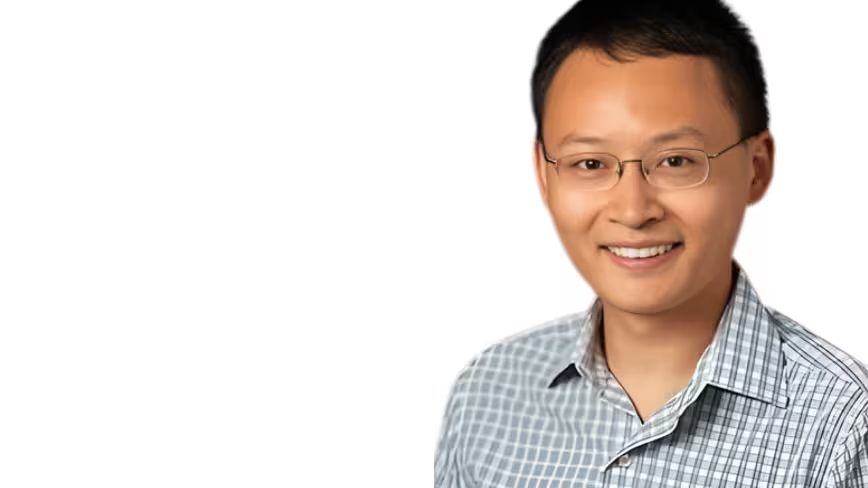
💡Stanford AI prof's $1B biotech startup: FDA-cleared tools + nanobody breakthroughs
⚡ 30-Second TL;DR
What Changed
Raising $100M at $1B valuation
Why It Matters
Boosts AI in biotech funding, validating multimodal AI for drug discovery and medical imaging. Attracts talent to AI-health intersection amid rising investor interest.
What To Do Next
Test EchoNet's open-source cardiac AI models on your ultrasound datasets.
Key Points
- •Raising $100M at $1B valuation
- •AI for human body research applications
- •FDA-cleared EchoNet cardiac AI
- •Nature-published Virtual Lab for nanobodies
- •Virtual Biotech platform advancements
🧠 Deep Insight
AI-generated analysis for this event — not the original article.
🔑 Enhanced Key Takeaways
- •Human Intelligence focuses on 'digital twins' of human biology, utilizing generative AI to simulate clinical trial outcomes and drug responses before physical testing.
- •The startup leverages proprietary foundational models trained on multi-modal datasets, including single-cell sequencing and longitudinal electronic health records (EHR).
- •James Zou’s research group at Stanford previously developed 'BioGPT' and other LLM-based frameworks for biomedical literature synthesis, which serve as the underlying knowledge base for the company's reasoning engine.
📊 Competitor Analysis▸ Show
| Competitor | Core Focus | Key Benchmark | Pricing Model |
|---|---|---|---|
| Insilico Medicine | Generative AI for drug discovery | Phase 2 clinical trial success | SaaS/Licensing |
| Recursion Pharmaceuticals | AI-driven phenomics | High-throughput lab automation | Partnership/Milestone |
| Exscientia | AI-designed drug molecules | Clinical candidate speed | Milestone-based |
🔮 Future ImplicationsAI analysis grounded in cited sources
⏳ Timeline
📰 Event Coverage
Weekly AI Recap
Read this week's curated digest of top AI events →
👉Related Updates

AI-curated news aggregator. All content rights belong to original publishers.
Original source: The Next Web (TNW) ↗
This is a summary, not the original. Read the source, or get the weekly briefing.
The weekly digest
One email a week. Unsubscribe anytime.