Spotify Tests Artist Shield vs AI Slop
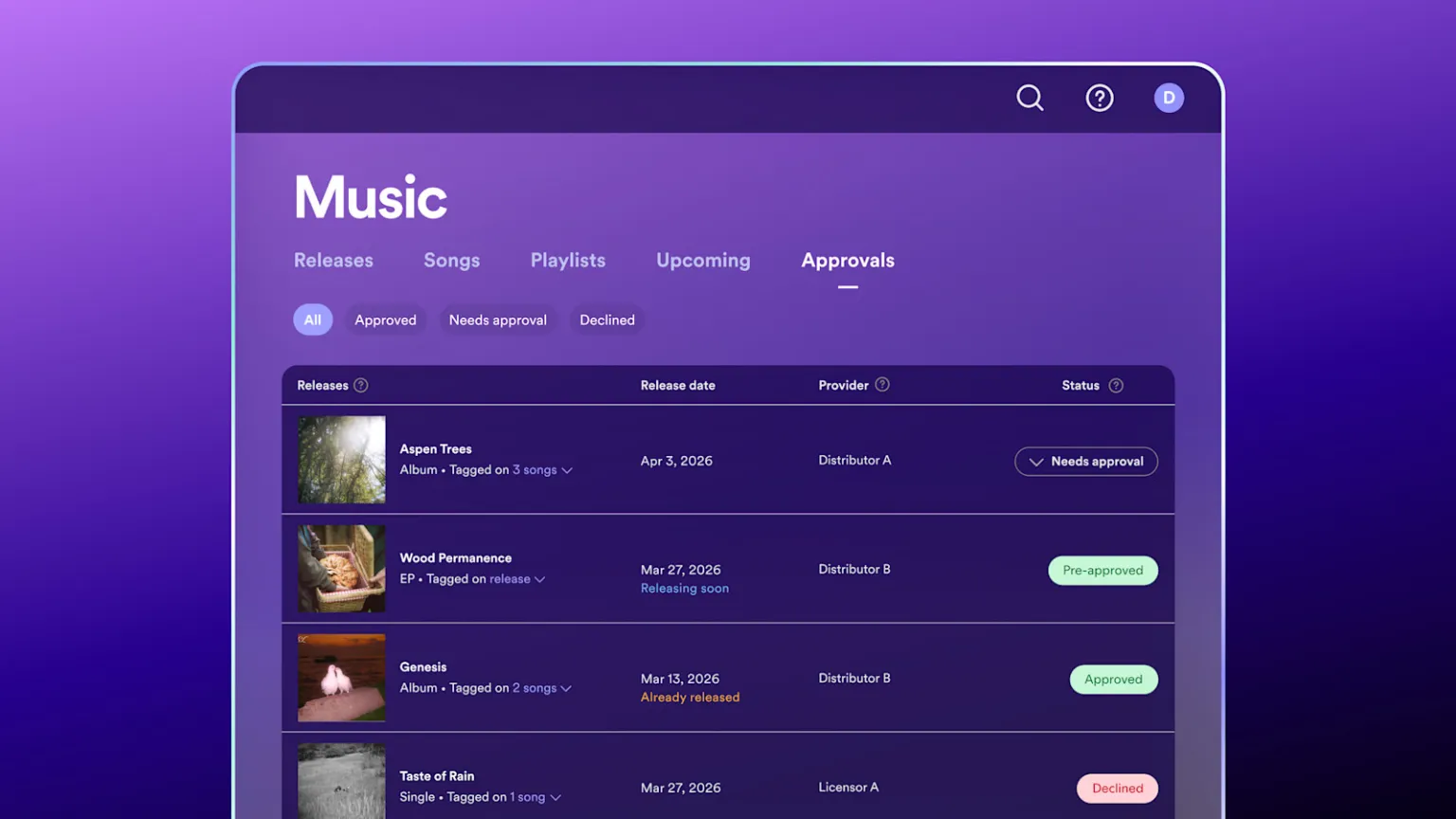
💡Spotify blocks AI fakes on artist pages—critical for audio AI builders facing platform crackdowns
⚡ 30-Second TL;DR
What Changed
Testing Artist Profile Protection feature on Spotify
Why It Matters
This empowers artists against AI misuse, potentially pressuring generative audio tools to improve quality or face delisting. It signals platforms prioritizing human creators amid AI content explosion.
What To Do Next
Integrate artist verification APIs like Spotify's into your AI music generators to prevent profile bans.
Key Points
- •Testing Artist Profile Protection feature on Spotify
- •Artists manually review tracks before profile association
- •Combats surge of AI slop impersonating real musicians
- •Response to generative AI music flooding streaming platforms
🧠 Deep Insight
AI-generated analysis for this event — not the original article.
🔑 Enhanced Key Takeaways
- •The feature utilizes a combination of Spotify's proprietary 'Content ID' style audio fingerprinting and metadata cross-referencing to flag potential unauthorized uploads before they reach the artist's profile.
- •This initiative is part of a broader 'Trust and Safety' framework Spotify has been developing to comply with the EU's AI Act, specifically regarding transparency and the labeling of AI-generated content.
- •Spotify is reportedly integrating this review tool with its 'Spotify for Artists' dashboard, allowing for automated alerts when a track with high acoustic similarity to an artist's catalog is uploaded by an unverified distributor.
📊 Competitor Analysis▸ Show
| Feature | Spotify (Artist Shield) | Apple Music (Artist Connect) | SoundCloud (Premier) |
|---|---|---|---|
| AI Impersonation Control | Proactive review/block | Reactive takedown requests | Reactive takedown requests |
| Metadata Verification | High (Automated) | Medium | Low |
| Artist Dashboard Integration | Native/Deep | Limited | Basic |
🛠️ Technical Deep Dive
- •Implementation relies on a Siamese Neural Network architecture for acoustic fingerprinting to detect 'voice clones' even when melody and lyrics differ from the original artist's work.
- •The system employs a threshold-based similarity score; tracks exceeding a specific cosine similarity in latent space are automatically routed to a 'Pending Review' queue.
- •API integration with major distributors (DistroKid, TuneCore) allows for real-time metadata validation against the artist's official ISRC (International Standard Recording Code) database.
🔮 Future ImplicationsAI analysis grounded in cited sources
⏳ Timeline
Weekly AI Recap
Read this week's curated digest of top AI events →
👉Related Updates
AI-curated news aggregator. All content rights belong to original publishers.
Original source: cnBeta (Full RSS) ↗
This is a summary, not the original. Read the source, or get the weekly briefing.
The weekly digest
One email a week. Unsubscribe anytime.