Spotify adds granular filters to Release Radar playlist
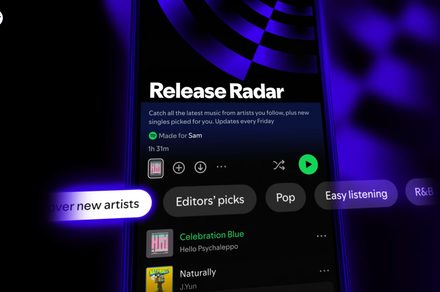
💡See how Spotify uses user-controlled filters to improve the feedback loop for its music recommendation AI.
⚡ 30-Second TL;DR
What Changed
Users can now filter Release Radar by genre, new artists, or editor picks.
Why It Matters
By allowing user-defined filters, Spotify is collecting valuable preference data that can refine its recommendation models. This human-in-the-loop approach improves the accuracy of future music suggestions.
What To Do Next
Study how Spotify balances algorithmic discovery with user-controlled filters to improve retention.
Key Points
- •Users can now filter Release Radar by genre, new artists, or editor picks.
- •The update is rolling out globally to all users.
- •These controls allow for more personalized music discovery sessions.
🧠 Deep Insight
AI-generated analysis for this event — not the original article.
🔑 Enhanced Key Takeaways
- •The update utilizes Spotify's 'Personalization Engine' to dynamically re-rank the Release Radar queue based on the selected filter parameters in real-time.
- •Data indicates that this feature was developed as a direct response to user feedback regarding 'discovery fatigue' caused by the inclusion of non-preferred genres in the weekly playlist.
- •The granular filters are powered by Spotify's 'Audio Intelligence Lab' metadata, which categorizes tracks based on acoustic features, mood, and artist popularity metrics.
- •This rollout is part of a broader 'User Agency Initiative' aimed at reducing the reliance on 'black box' algorithms by providing transparent control toggles.
- •The feature includes a 'Reset' functionality that allows users to revert to the default algorithmic feed, ensuring the original discovery experience remains accessible.
📊 Competitor Analysis▸ Show
| Feature | Spotify (Release Radar) | Apple Music (New Music Mix) | YouTube Music (New Release Mix) |
|---|---|---|---|
| Granular Filtering | Yes (Genre/Status/Editorial) | No | No |
| Personalization | High (Algorithmic) | Medium (Curated/Algorithmic) | High (Context-Aware) |
| Update Frequency | Weekly | Weekly | Daily/Weekly |
🛠️ Technical Deep Dive
- The filtering mechanism operates on a client-side layer that interacts with the Spotify Recommendation API to re-sort the existing playlist payload.
- It leverages vector embeddings of user listening history to ensure that even within filtered subsets, the most relevant tracks appear at the top of the queue.
- The implementation uses a state-management system that caches filter preferences locally, allowing the playlist to persist the user's chosen view across sessions.
- The system architecture integrates with the existing 'Discovery Weekly' and 'Release Radar' backend infrastructure without requiring a full re-indexing of the user's music library.
🔮 Future ImplicationsAI analysis grounded in cited sources
⏳ Timeline
Weekly AI Recap
Read this week's curated digest of top AI events →
👉Related Updates
AI-curated news aggregator. All content rights belong to original publishers.
Original source: Digital Trends ↗
This is a summary, not the original. Read the source, or get the weekly briefing.
The weekly digest
One email a week. Unsubscribe anytime.