Spotify adds narrated long-form articles to audiobook library
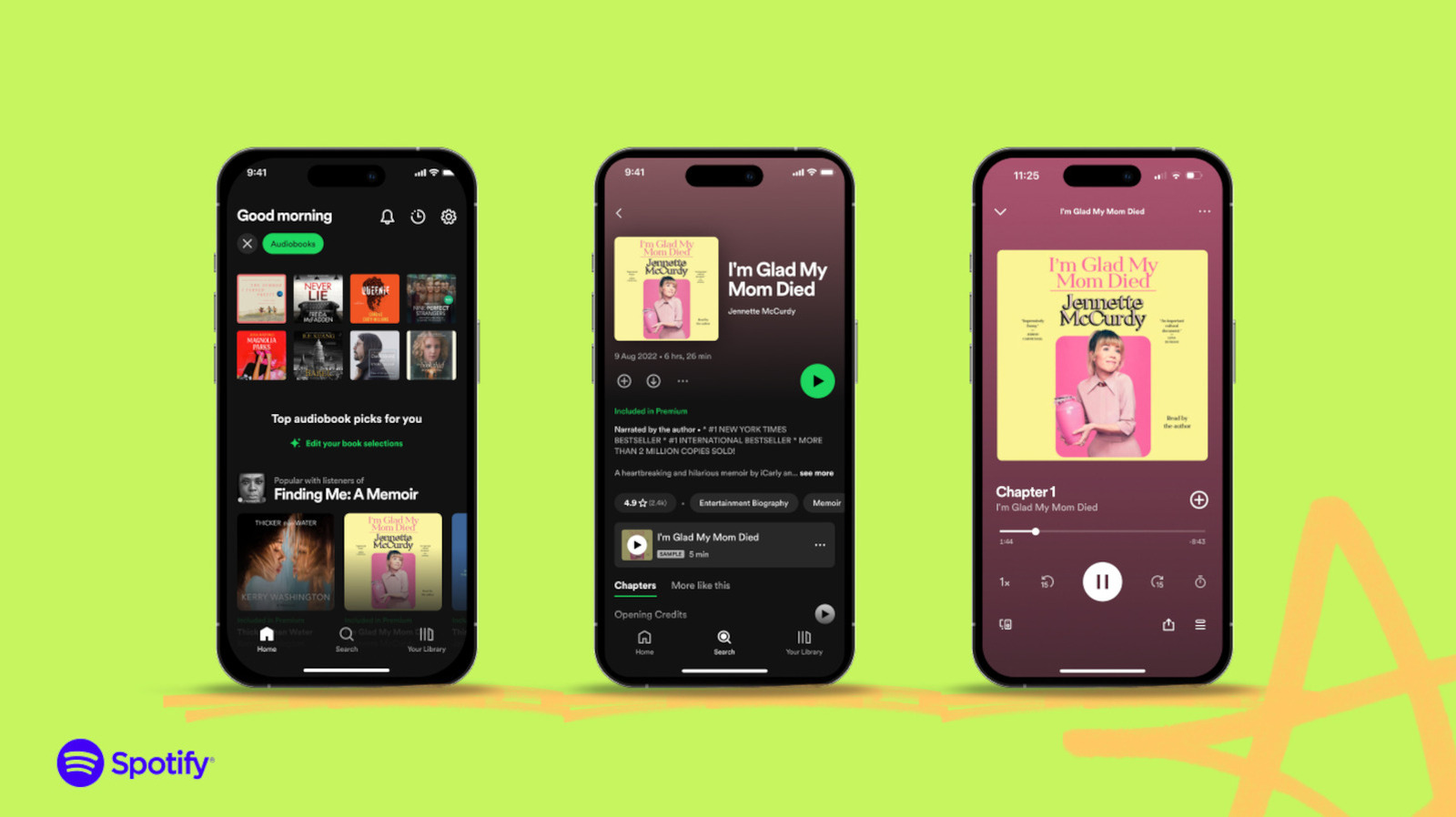
💡Learn how Spotify is leveraging audio-first strategies to expand its content ecosystem beyond music.
⚡ 30-Second TL;DR
What Changed
Spotify integrates long-form journalism into its existing audiobook platform.
Why It Matters
This move signals a broader strategy to dominate the audio-first content space by diversifying beyond music and podcasts. It creates a new distribution channel for publishers to monetize long-form content through audio.
What To Do Next
If you are building an audio-content platform, evaluate the feasibility of integrating TTS (Text-to-Speech) or human-narrated pipelines to repurpose your text-based assets.
Key Points
- •Spotify integrates long-form journalism into its existing audiobook platform.
- •Partnerships include major media outlets like Rolling Stone, Variety, and WIRED.
- •The feature leverages audio narration to increase engagement with text-based content.
🧠 Deep Insight
Web-grounded analysis with 18 cited sources.
🔑 Enhanced Key Takeaways
- •The narrated long-form articles are produced by Spotify's in-house Audiobooks team, with an initial collection of over 650 English-language pieces, each under two hours.
- •Spotify Premium subscribers can access these narrated articles as part of their existing 15-hour monthly audiobook allowance, while free users have the option to purchase individual articles for $1.99.
- •This initiative is a strategic move by Spotify to further diversify its content library, boost daily user engagement, and strengthen its competitive position against both AI music startups like Suno and Udio, and larger podcast/video platforms such as YouTube and Netflix.
- •Spotify views these shorter, narrated articles as a way to cultivate 'healthy listening habits' among its users, aiming to serve as a less intimidating entry point that could ultimately encourage greater engagement with longer-form audiobooks over time.
- •The expansion builds on Spotify's recent growth in audiobooks, having expanded into 22 markets and seen listening hours increase by 60% year-over-year since launching its audiobook offering.
📊 Competitor Analysis▸ Show
| Feature/Platform | Spotify (Narrated Articles) | Audm (NYT Audio) | Curio | Noa (News Over Audio) | Audible |
|---|---|---|---|---|---|
| Content Focus | Narrated long-form articles from major publications (e.g., Rolling Stone, WIRED, The Atlantic), integrated with music, podcasts, audiobooks. | Narrative-rich, long-form journalism, primarily from The New York Times and other top-tier publications. | Curated articles from renowned publishers (e.g., Financial Times, Bloomberg, Guardian), also experimented with podcast-style shows. | High-quality opinion, analysis, and feature articles from top-tier publications. | Massive library of full-length audiobooks, exclusive titles, podcasts. |
| Narration Type | Produced by Spotify's in-house Audiobooks team (likely human for this launch, but Spotify has AI voice tech). | Professionally narrated by human voice actors. | Professionally narrated by human voice actors, experimented with AI. | Professionally narrated by human voice actors. | Human narration. |
| Pricing Model | Premium: 15 hours/month included in audiobook allowance; Free: $1.99 per article. | Subscription-based, acquired by NYT, now part of NYT Audio (iOS-only). | Paid subscription, experimented with a sister AI app 'Rio'. | Paid subscription, offers a free tier (5 articles/week from some publishers). | Subscription tiers (e.g., £7.99/month for unlimited streaming of selected titles, £14.85 for unlimited + 1 credit). |
| Platform Integration | Integrated within the main Spotify app alongside music, podcasts, and audiobooks. | iOS-only app (NYT Audio). | Standalone app (iOS, Android, web). | Standalone app (iOS, Mac, Android, web). | Standalone app, syncs across devices, supports offline listening. |
| Key Differentiators | Leverages Spotify's personalization engine, aims to bridge shorter content to longer audiobooks. | Strong focus on New York Times content, high-quality narration. | Data-driven content production, high completion rates, strong curation. | Feature-rich app (read-along, custom queues, casting), liberal free tier. | Market leader, vast catalog, credit-based ownership model. |
🛠️ Technical Deep Dive
- Spotify acquired Sonantic, an AI voice platform, in September 2022, indicating a strong internal capability in synthetic voice technology.
- In October 2023, Spotify launched an AI-powered Voice Translation tool for podcasts, utilizing OpenAI's technology to translate content into multiple languages while preserving the original podcaster's voice and style.
- Spotify Research published a paper in August 2025 on "Scaling Transformer-based Text-to-Speech with Knowledge Distillation," detailing methods to reduce model size by half, double inference speed, and remove the need for Classifier-Free Guidance (CFG) without compromising voice quality in LLM-based TTS models.
- The company is developing a "Large Taste Model" trained on 3.4 trillion daily signals from user activity across music, podcasts, and audiobooks to power AI-driven personalization and generative audio experiences.
- Spotify is set to launch an invite-only beta in June 2026 for an AI audiobook creation feature within its Spotify for Authors platform, leveraging voice technology from ElevenLabs to enable authors to generate narrations directly.
🔮 Future ImplicationsAI analysis grounded in cited sources
⏳ Timeline
📎 Sources (18)
Factual claims are grounded in the sources below. Forward-looking analysis is AI-generated interpretation.
Weekly AI Recap
Read this week's curated digest of top AI events →
👉Related Updates


AI-curated news aggregator. All content rights belong to original publishers.
Original source: Engadget ↗