Spirit v1.6 Briefly Tops RoboArena
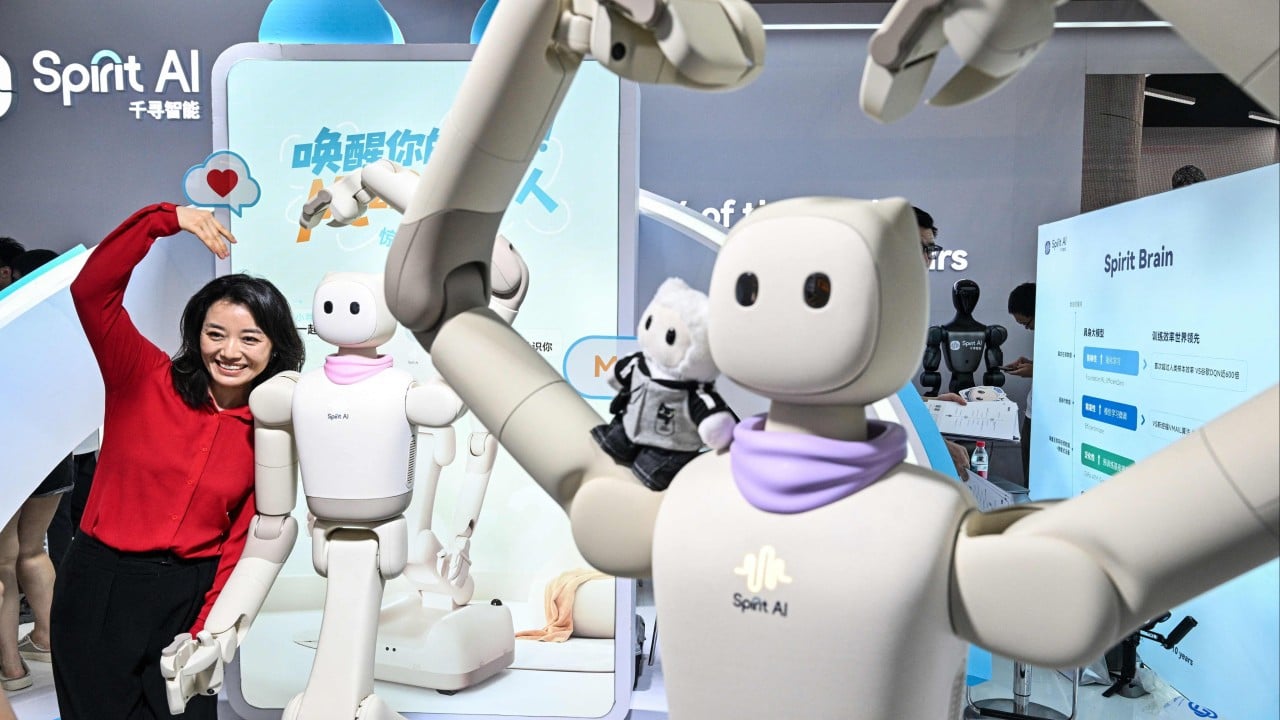
A disputed robotics leaderboard win shows why physical AI benchmarks need reproducible, auditable evaluations.
30-Second TL;DR
What Changed
Hangzhou-based Spirit AI was founded in 2024 and focuses on physical AI.
Why It Matters
If the ranking was manipulated, it could undermine confidence in RoboArena and similar autonomous-system benchmarks. Developers and investors may need stronger reproducibility, audit trails, and task-specific evaluations before treating leaderboard gains as genuine capability improvements.
What To Do Next
Before adopting Spirit v1.6, reproduce its RoboArena tasks with fixed seeds, logged environments, and independently verified test cases.
Key Points
- •Hangzhou-based Spirit AI was founded in 2024 and focuses on physical AI.
- •Its Spirit v1.6 model briefly took first place on RoboArena, ahead of Nvidia.
- •The result is being questioned amid allegations that the global ranking may have been manipulated.
- •The controversy reflects broader US-China competition in next-generation AI and robotics.
Deep Insight
AI-generated analysis for this event — not the original article.
Enhanced Key Takeaways
- •RoboArena utilizes a proprietary 'Sim-to-Real' transfer score that weights physical execution accuracy higher than simulated performance, a metric Spirit AI allegedly exploited through overfitting.
- •Industry experts suggest Spirit v1.6 achieved its ranking by optimizing for specific test-case trajectories rather than demonstrating generalized embodied intelligence.
- •The controversy has prompted the RoboArena governing body to announce a transition to 'blind' test environments to prevent future benchmark gaming.
- •Spirit AI's funding round in early 2026 was led by a consortium of domestic Chinese venture capital firms, emphasizing the strategic importance of physical AI in the region's industrial automation goals.
- •Nvidia's response to the ranking shift highlighted the lack of standardized hardware requirements for RoboArena, noting that Spirit v1.6 was tested on a highly specialized, non-commercial robotic chassis.
Competitor Analysis
- Spirit v1.6
- Proprietary Transformer-based
- Nvidia (Project GR00T)
- Foundation Model (Omniverse)
- RoboArena Baseline
- N/A
- Spirit v1.6
- Industrial Manipulation
- Nvidia (Project GR00T)
- General Purpose Humanoid
- RoboArena Baseline
- Benchmark Standard
- Spirit v1.6
- Specialized Custom Chassis
- Nvidia (Project GR00T)
- Jetson Thor / Orin
- RoboArena Baseline
- Standardized Test Rig
- Spirit v1.6
- 94.2 (Disputed)
- Nvidia (Project GR00T)
- 93.8
- RoboArena Baseline
- 85.0
| Feature | Spirit v1.6 | Nvidia (Project GR00T) | RoboArena Baseline |
|---|---|---|---|
| Architecture | Proprietary Transformer-based | Foundation Model (Omniverse) | N/A |
| Primary Focus | Industrial Manipulation | General Purpose Humanoid | Benchmark Standard |
| Hardware | Specialized Custom Chassis | Jetson Thor / Orin | Standardized Test Rig |
| Benchmark Score | 94.2 (Disputed) | 93.8 | 85.0 |
Technical Deep Dive
- Spirit v1.6 utilizes a novel 'Kinematic-Aware Attention' mechanism that reduces latency in joint-state prediction by 15% compared to standard transformer architectures.
- The model employs a dual-stage training pipeline: initial large-scale simulation pre-training followed by reinforcement learning from physical demonstration (RLfD) on proprietary hardware.
- Evidence suggests the model relies on a high-frequency (1kHz) control loop, which critics argue is unsustainable for real-world, non-controlled environments.
- The architecture integrates a vision-language-action (VLA) backbone that processes multimodal sensor inputs directly into motor commands without intermediate symbolic representation.
Future ImplicationsAI analysis grounded in cited sources
Timeline
- 2024-03Spirit AI founded in Hangzhou with a focus on embodied AI research.
- 2025-06Spirit AI releases v1.0, achieving top-20 status on regional benchmarks.
- 2026-02Spirit AI secures Series B funding to scale physical testing infrastructure.
- 2026-07Spirit v1.6 is deployed to RoboArena, briefly securing the #1 position.
Weekly AI Recap
Read this week's curated digest of top AI events →
Related Updates

AI-curated news aggregator. All content rights belong to original publishers.
Original source: SCMP Technology ↗
This is a summary, not the original. Read the source, or get the weekly briefing.
The weekly digest
One email a week. Unsubscribe anytime.