๐Ÿ‡จ๐Ÿ‡ณStalecollected in 2m

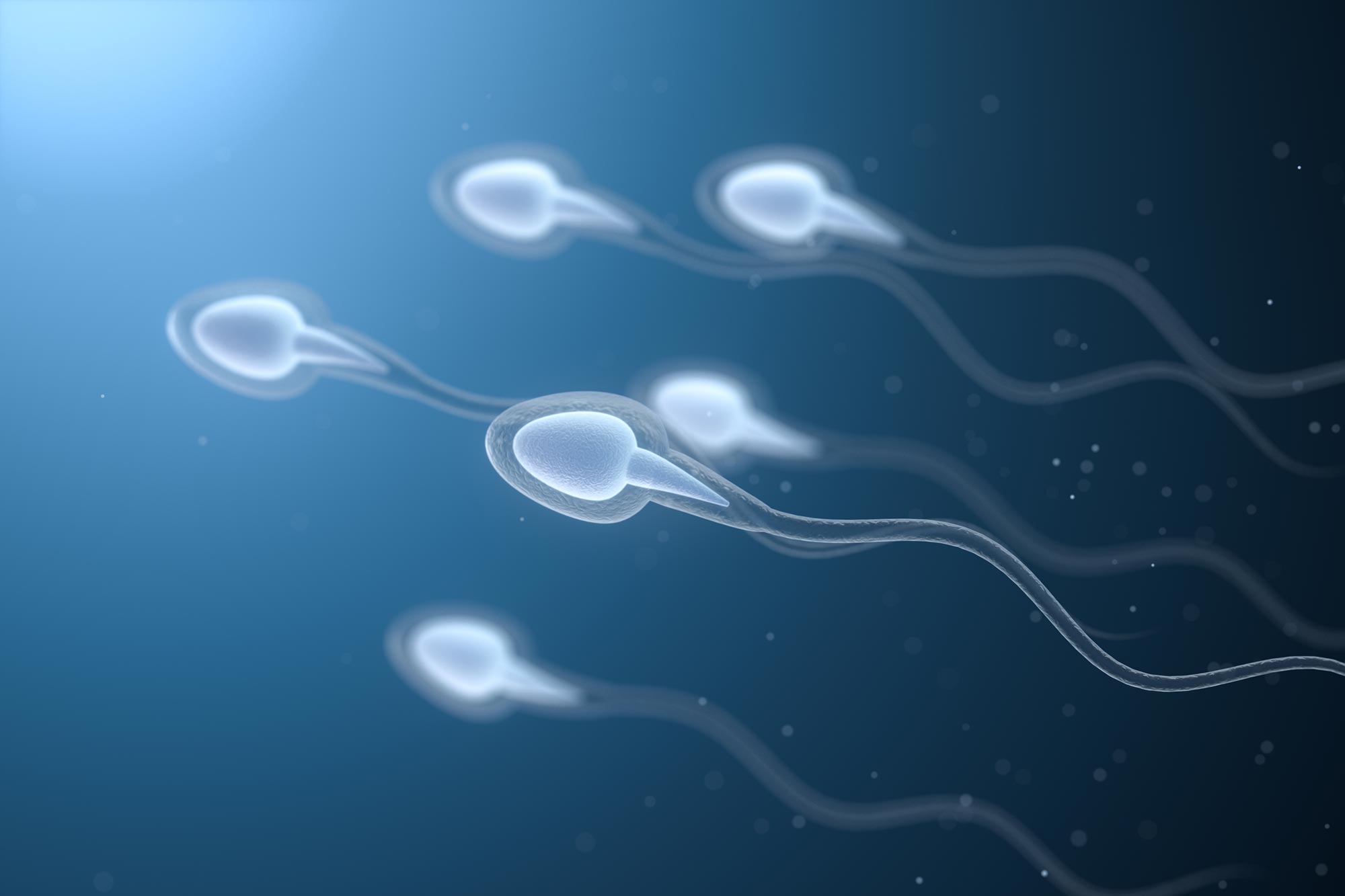
Sperm cells bypass Newton's third law in viscous fluids
Sperm cells bypass Newton's third law in viscous fluids
PostLinkedIn
๐Ÿ‡จ๐Ÿ‡ณRead original on cnBeta (Full RSS)

๐Ÿ’กLearn how biological 'active matter' physics can inspire more efficient navigation algorithms for autonomous micro-robot

โšก 30-Second TL;DR

What Changed

Sperm cells utilize internal energy to overcome high-viscosity resistance.

Why It Matters

Understanding these micro-swimming mechanisms provides a blueprint for designing more efficient autonomous micro-robots and drug delivery systems.

What To Do Next

Incorporate non-reciprocal interaction models into your micro-robotics simulation software to improve navigation efficiency in viscous media.

Who should care:Researchers & Academics

Key Points

  • โ€ขSperm cells utilize internal energy to overcome high-viscosity resistance.
  • โ€ขMovement patterns suggest a bypass of Newton's third law in micro-scale fluids.
  • โ€ขFindings reveal new elastic properties in active matter systems.

๐Ÿง  Deep Insight

Web-grounded analysis with 18 cited sources.

๐Ÿ”‘ Enhanced Key Takeaways

  • โ€ขSperm cells achieve efficient movement in viscous fluids by utilizing 'odd elasticity' in their flagella, which allows for the local injection of energy, a mechanism distinct from traditional elastic responses.
  • โ€ขThis propulsion involves non-reciprocal tail stroke patterns that enable sustained forward motion in microscale, low-inertia environments where viscous forces typically dominate, effectively sidestepping the direct action-reaction symmetry of Newton's third law.
  • โ€ขThe research developed an 'odd elastohydrodynamics' framework to model this behavior, which has also been observed in other microscopic swimmers like green algae (Chlamydomonas), indicating a broader principle in active matter systems.
  • โ€ขSperm motility patterns adapt to varying viscosities, with flagellar beating switching from a 3D behavior at lower viscosities to a more energy-efficient 2D slithering mode in higher viscosity environments, such as the female reproductive tract.
  • โ€ขIn highly viscous conditions mimicking the female reproductive tract, human sperm with high DNA integrity have been observed to cooperate by attaching at the head region to form groups, which allows them to migrate faster than individual sperm.

๐Ÿ› ๏ธ Technical Deep Dive

  • Active Matter Systems: Sperm cells are a prime example of 'active matter,' which consists of numerous 'active agents' that continuously consume internal energy to generate movement or mechanical forces, operating inherently out of thermal equilibrium and breaking time-reversal symmetry.
  • Odd Elasticity: This newly identified property in sperm flagella allows these flexible appendages to move and generate propulsion without significant energy dissipation into the surrounding viscous fluid.
  • Non-Reciprocal Interactions: The apparent bypass of Newton's third law in these micro-scale systems stems from non-reciprocal interactions, where the continuous internal energy injection by the sperm means the system is far from equilibrium, and the traditional equal and opposite reaction does not apply in the same way as passive systems.
  • Flagellar Mechanics: Sperm utilize asymmetric tail motions and localized energy injection into their flagella. The flagellar beating pattern is dynamic, transitioning from a 3D swimming behavior with irregular shape cycles in lower viscosities to a 2D slithering mode with repetitive circular shape cycles in higher viscosities for energy efficiency.
  • Mathematical Modeling: The Kyoto University team, led by Kenta Ishimoto, developed an 'odd elastohydrodynamics' framework to mathematically describe and predict the complex dynamics of microscale locomotion, applying it to both human sperm and green algae.
  • Energy Source: The primary energy for sperm motility is derived from the metabolism of fructose, which occurs in the mitochondria located in the sperm's midpiece.
  • Low Reynolds Number Regime: Sperm movement takes place in a low Reynolds number environment, where inertial effects are negligible, and viscous forces are dominant, making efficient propulsion particularly challenging.

๐Ÿ”ฎ Future ImplicationsAI analysis grounded in cited sources

The findings will significantly advance the design of micro-robots.
Understanding how sperm efficiently navigate viscous fluids by exploiting 'odd elasticity' can inspire new designs for microscopic robots capable of targeted drug delivery or operating in complex biological environments.
This research will lead to improved male fertility diagnostics and treatments.
Insights into the biomechanics of sperm motility in viscous environments, including cooperative swimming and adaptation to fluid properties, can inform better sperm selection methods for assisted reproductive technologies and help address causes of infertility.
The study contributes to a deeper understanding of active matter physics.
By revealing how living systems like sperm cells can 'bypass' classical Newtonian physics through continuous energy injection and non-reciprocal interactions, the research expands the fundamental understanding of active matter and its emergent behaviors.

โณ Timeline

2013
Kenta Ishimoto begins research on sperm movement.
2017-03
Kenta Ishimoto and collaborators publish research on a 'four-beat' rhythm of sperm tails in Physical Review Letters.
2023-05
Research published on human sperm exhibiting cooperative swimming in viscous media.
2023-10
Kenta Ishimoto and colleagues publish their study 'Odd Elastohydrodynamics: Non-Reciprocal Living Material in a Viscous Fluid' in PRX Life.
2023-11
Research published on selecting active matter, including sperm cells, based on motility using an acoustofluidic setup.
2024-03
Kyoto University develops a novel screening system to investigate sperm cell development and health at the molecular level.
๐Ÿ“ฐ

Weekly AI Recap

Read this week's curated digest of top AI events โ†’

๐Ÿ‘‰Related Updates

AI-curated news aggregator. All content rights belong to original publishers.
Original source: cnBeta (Full RSS) โ†—