SpaceX value driven by AI, Bitcoin, and Starship
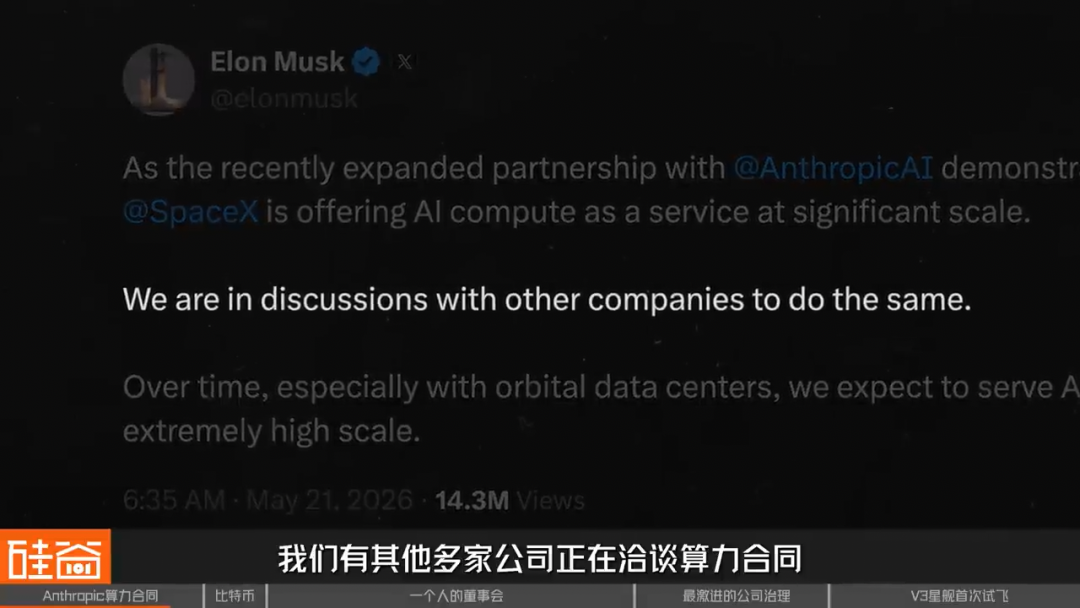
💡Discover how SpaceX is integrating AI and new tech to justify its massive valuation.
⚡ 30-Second TL;DR
What Changed
SpaceX is leveraging AI to optimize launch and operational efficiency
Why It Matters
SpaceX's shift suggests that aerospace companies are becoming critical nodes in the AI and data infrastructure ecosystem. This could redefine how investors value space-tech firms.
What To Do Next
Study how SpaceX uses AI for autonomous landing and flight optimization to apply similar reinforcement learning patterns in your own robotics projects.
Key Points
- •SpaceX is leveraging AI to optimize launch and operational efficiency
- •Integration of Starship as a platform for future tech infrastructure
- •Diversification of business model beyond traditional aerospace
- •Strategic alignment with emerging tech trends like AI and crypto
🧠 Deep Insight
Background and context from public sources — not the original article. 29 sources cited.
🔑 Enhanced Key Takeaways
- •SpaceX has integrated xAI, including the Grok generative AI chatbot and the Colossus supercomputer, into a new SpaceXAI division, aiming to develop orbital data centers with Starlink V3 satellites equipped with Tesla AI chips.
- •SpaceX holds approximately 18,712 Bitcoin, valued at around $1.45 billion as of May 2026, which was disclosed in its IPO filing and is considered a portfolio hedge rather than a core business strategy.
- •Starship's design for full reusability and massive payload capacity (100-150 metric tons to LEO in reusable configuration) is intended to enable the deployment of large-scale satellite constellations, lunar bases, and point-to-point transport on Earth, significantly reducing marginal launch costs.
- •Starlink has evolved SpaceX into a vertically integrated space infrastructure business, generating substantial recurring revenue from satellite internet services and expanding into maritime, aviation, and government defense markets.
🛠️ Technical Deep Dive
- Starship Specifications: The Starship system, including the Super Heavy booster, stands up to 121.3 meters tall (Block 1) and has a diameter of 9 meters. It is designed to deliver 100 to 150 metric tons to Low Earth Orbit (LEO) in a fully reusable configuration, with an expendable mode potentially carrying up to 250 metric tons. Both stages are powered by Raptor engines, which use liquid methane and liquid oxygen as propellants; the Super Heavy booster has 33 Raptor engines, while the Starship upper stage has six (three sea-level optimized and three vacuum optimized). The payload fairing has a diameter of 9 meters and a height of approximately 18 meters, offering the largest usable payload volume of any current or near-future launch vehicle.
- AI Implementation: SpaceX utilizes AI for autonomous rocket landings, specifically the Falcon 9 boosters, which employ a fuel-optimal guidance algorithm called G-FOLD during descent. The Crew Dragon capsule navigates autonomously to the International Space Station using machine vision and laser ranging. Starlink satellites use onboard AI systems for collision avoidance, processing tracking data from the U.S. Department of Defense and autonomously firing krypton-powered ion thrusters to maneuver. The newly formed SpaceXAI division includes the Colossus supercomputer, which comprises over 220,000 Nvidia GPUs and has more than 300 megawatts of compute capacity. Starlink V3 satellites are planned to be equipped with Tesla AI chips to form a decentralized supercomputer network in orbit.
🔮 Future ImplicationsAI analysis grounded in cited sources
⏳ Timeline
📎 Sources (29)
Factual claims are grounded in the sources below. Forward-looking analysis is AI-generated interpretation.
- wikipedia.org
- youtube.com
- lpl.com
- cryptobriefing.com
- spacex.com
- fifthrow.com
- kraneshares.com
- benzinga.com
- businessinsider.com
- stocktwits.com
- kucoin.com
- grayscale.com
- youtube.com
- uchicago.edu
- spacex.com
- morningstar.com
- techi.com
- medium.com
- startupfortune.com
- wikipedia.org
- seekingalpha.com
- businessmodelcanvastemplate.com
- matrixbcg.com
- builtin.com
- wikipedia.org
- mexicobusiness.news
- sentisight.ai
- prnewswire.com
- spacex.com
Weekly AI Recap
Read this week's curated digest of top AI events →
👉Related Updates



AI-curated news aggregator. All content rights belong to original publishers.
Original source: 钛媒体 ↗
This is a summary, not the original. Read the source, or get the weekly briefing.
The weekly digest
One email a week. Unsubscribe anytime.