SpaceX Starship V3 launch scrubbed due to ground issue
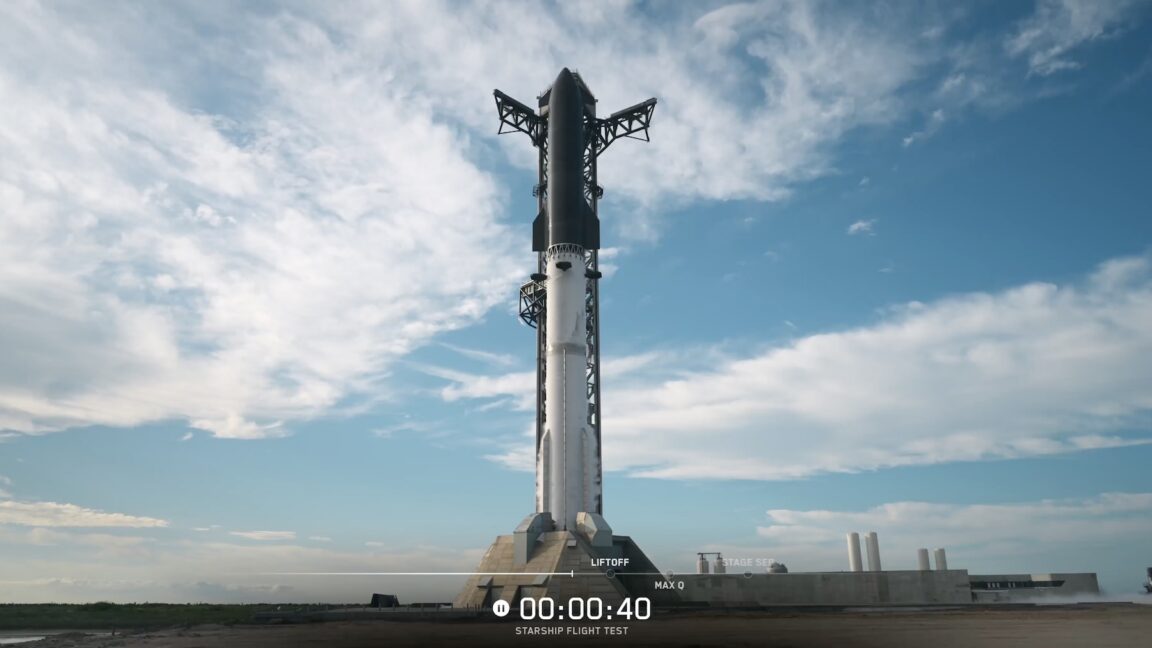
Starship's rapid iteration is vital for the future of space-based data centers and global AI infrastructure scaling.
30-Second TL;DR
What Changed
The inaugural launch of Starship V3 was scrubbed shortly before liftoff.
Why It Matters
Delays in Starship development directly affect the cadence of satellite deployment and the long-term viability of low-cost orbital transport, which is critical for scaling large-scale AI infrastructure and global connectivity.
What To Do Next
Monitor SpaceX's official channels for the updated T-zero time to observe how the team handles rapid-turnaround launch recovery.
Key Points
- •The inaugural launch of Starship V3 was scrubbed shortly before liftoff.
- •The delay was attributed to a specific malfunction within the ground support equipment.
- •SpaceX engineers are targeting a rapid turnaround for a potential launch on Friday evening.
Deep Insight
Background and context from public sources — not the original article. 25 sources cited.
Enhanced Key Takeaways
- •The scrub of Starship V3's inaugural launch was specifically caused by a hydraulic pin on the launch tower's 'chopsticks' arm failing to retract properly.
- •Starship V3 is approximately 124 meters tall, about 1.5 meters taller than V2, and is powered by upgraded Raptor 3 engines, which deliver 280tf of thrust, roughly 50% more than Raptor 1.
- •This version of Starship aims to carry 100 tons of payload to Low Earth Orbit (LEO) in a fully reusable configuration, a significant increase over previous versions.
- •The mission, designated Flight 12, was planned to deploy 22 dummy Starlink V3 satellites, including two inspector spacecraft designed to scan the rocket's heat shield during flight.
- •SpaceX has invested over $15 billion in the development of the Starship program, highlighting the scale of the project.
Competitor Analysis
- SpaceX Starship V3
- Super Heavy-lift launch vehicle
- NASA Space Launch System (SLS)
- Super Heavy-lift launch vehicle
- Blue Origin New Glenn
- Heavy-lift launch vehicle
- ULA Vulcan Centaur
- Heavy-lift launch vehicle
- SpaceX Starship V3
- Fully reusable (goal)
- NASA Space Launch System (SLS)
- Expendable
- Blue Origin New Glenn
- Partially reusable (first stage)
- ULA Vulcan Centaur
- Expendable (currently)
- SpaceX Starship V3
- ~124.4 m (408 ft)
- NASA Space Launch System (SLS)
- ~98 m (321 ft)
- Blue Origin New Glenn
- ~98 m (322 ft)
- ULA Vulcan Centaur
- ~62 m (202 ft)
- SpaceX Starship V3
- 9 m (30 ft)
- NASA Space Launch System (SLS)
- 8.4 m (27.6 ft) (Core Stage)
- Blue Origin New Glenn
- 7 m (23 ft)
- ULA Vulcan Centaur
- 5.4 m (17.7 ft)
- SpaceX Starship V3
- 100+ tons (reusable), up to 200 tons (expendable)
- NASA Space Launch System (SLS)
- 95-130 tons (Block 1)
- Blue Origin New Glenn
- 45 tons (7x2 config)
- ULA Vulcan Centaur
- 27.2 tons
- SpaceX Starship V3
- Raptor 3 (methalox)
- NASA Space Launch System (SLS)
- RS-25 (LH2/LOX) for Core, Solid Rocket Boosters
- Blue Origin New Glenn
- BE-4 (methalox) for first stage, BE-3U (LH2/LOX) for second
- ULA Vulcan Centaur
- BE-4 (methalox) for first stage
- SpaceX Starship V3
- ~72 MN (Super Heavy)
- NASA Space Launch System (SLS)
- ~39 MN (Block 1)
- Blue Origin New Glenn
- ~20 MN (7x2 config)
- ULA Vulcan Centaur
- ~10 MN (with 6 SRBs)
- SpaceX Starship V3
- ~$40M (estimated for customers), eventually $2-3M
- NASA Space Launch System (SLS)
- ~$4.2B - $5.2B (for Artemis missions)
- Blue Origin New Glenn
- ~$68-110M
- ULA Vulcan Centaur
- TBD (competitive with Falcon Heavy)
- SpaceX Starship V3
- May 2026 (V3 attempt)
- NASA Space Launch System (SLS)
- November 16, 2022 (Artemis I)
- Blue Origin New Glenn
- January 2025
- ULA Vulcan Centaur
- January 2024
- SpaceX Starship V3
- Mars, Moon, Starlink deployment, general heavy-lift
- NASA Space Launch System (SLS)
- Artemis Moon missions
- Blue Origin New Glenn
- Commercial satellite launches, Moon missions
- ULA Vulcan Centaur
- Commercial, national security payloads
| Feature/Aspect | SpaceX Starship V3 | NASA Space Launch System (SLS) | Blue Origin New Glenn | ULA Vulcan Centaur |
|---|---|---|---|---|
| Classification | Super Heavy-lift launch vehicle | Super Heavy-lift launch vehicle | Heavy-lift launch vehicle | Heavy-lift launch vehicle |
| Reusability | Fully reusable (goal) | Expendable | Partially reusable (first stage) | Expendable (currently) |
| Height | ~124.4 m (408 ft) | ~98 m (321 ft) | ~98 m (322 ft) | ~62 m (202 ft) |
| Diameter | 9 m (30 ft) | 8.4 m (27.6 ft) (Core Stage) | 7 m (23 ft) | 5.4 m (17.7 ft) |
| Payload to LEO | 100+ tons (reusable), up to 200 tons (expendable) | 95-130 tons (Block 1) | 45 tons (7x2 config) | 27.2 tons |
| Engines | Raptor 3 (methalox) | RS-25 (LH2/LOX) for Core, Solid Rocket Boosters | BE-4 (methalox) for first stage, BE-3U (LH2/LOX) for second | BE-4 (methalox) for first stage |
| Thrust (Liftoff) | ~72 MN (Super Heavy) | ~39 MN (Block 1) | ~20 MN (7x2 config) | ~10 MN (with 6 SRBs) |
| Cost per Launch | ~$40M (estimated for customers), eventually $2-3M | ~$4.2B - $5.2B (for Artemis missions) | ~$68-110M | TBD (competitive with Falcon Heavy) |
| First Launch | May 2026 (V3 attempt) | November 16, 2022 (Artemis I) | January 2025 | January 2024 |
| Primary Mission | Mars, Moon, Starlink deployment, general heavy-lift | Artemis Moon missions | Commercial satellite launches, Moon missions | Commercial, national security payloads |
Technical Deep Dive
- Overall Dimensions: The Starship V3 full stack stands approximately 124.4 meters (408 ft) tall with a diameter of 9 meters (30 ft).
- Propulsion System: It is powered by upgraded Raptor 3 engines, which provide 280 tf (tons-force) of thrust, representing a roughly 50% increase over Raptor 1 engines. Both the Super Heavy booster and the Starship upper stage utilize Raptor 3 engines, running on sub-cooled liquid methane and liquid oxygen (methalox) propellant.
- Payload Capacity: Starship V3 is designed to deliver over 100 metric tons of payload to Low Earth Orbit (LEO) in a fully reusable configuration, with potential for up to 200 tons in expendable mode.
- Super Heavy V3 Booster Upgrades: The booster features a reduced number of grid fins, from four to three, with each fin being 50% larger and significantly stronger. These fins are repositioned and lowered to mitigate heat exposure during hot-staging, and their internal mechanisms (shaft, actuator, fixed structure) are now housed inside the booster's main fuel tank for enhanced protection.
- Integrated Hot-Staging: V3 incorporates an integrated hot-stage design where the forward dome of the booster's fuel tank is directly exposed to the Starship upper stage's engine ignition. This dome is protected by the booster's internal fuel tank pressure and a non-structural layer of steel. The interstage actuators, connecting the ship and booster, retract after separation to shield them from exhaust.
- Fuel Transfer System: A redesigned fuel propellant transfer tube, comparable in size to a Falcon 9 rocket, supports rapid refueling and simultaneous startup of all 33 Raptor engines on the Super Heavy booster.
- Ground Support Equipment (GSE) Enhancements: The launch tower's 'chopstick' catch arms have been shortened for faster vehicle tracking during catch operations, and their main actuators have transitioned from hydraulic to more reliable electromechanical systems. The quick disconnect arm for propellant loading has also been strengthened and repackaged.
- Avionics and Communications: Starship V3 is equipped with 60 custom avionics units, integrated batteries, inverters, and high-voltage systems (9 MW peak power). It features new multi-sensor navigation for autonomous flight, RF sensors for microgravity propellant measurement, approximately 50 onboard camera views, and 480 Mbps redundant Starlink connectivity for low-latency communications.
- Heat Shielding: The vehicle includes enhanced heat shielding, with SpaceX boosting production of heat shield tiles to support quicker flight turnarounds, aiming for up to 7,000 tiles per day.
- In-Space Refueling Capability: Starship V3 will feature SpaceX's docking adapters and dedicated propellant transfer connections to facilitate in-space fuel transfer, a crucial step for longer-duration missions.
Future ImplicationsAI analysis grounded in cited sources
Timeline
- 2018Starship's current design and name introduced
- 2023-04-20First integrated flight test of a full Starship vehicle, ending in explosion
- 2024-06-06Fourth orbital flight successfully completed ascent, landing burn, and soft ocean splashdown
- 2024-10-13Fifth orbital flight achieved the first successful Super Heavy booster catch by the launch tower
- 2025-10-13Final launch of Starship V2 (Flight 11), testing heat shield and booster landing enhancements
- 2026-05-21First launch attempt for Starship V3 (Flight 12) scrubbed due to a hydraulic pin issue on the launch tower
Sources (25)
Factual claims are grounded in the sources below. Forward-looking analysis is AI-generated interpretation.
Weekly AI Recap
Read this week's curated digest of top AI events →
AI-curated news aggregator. All content rights belong to original publishers.
Original source: Ars Technica ↗
This is a summary, not the original. Read the source, or get the weekly briefing.
The weekly digest
One email a week. Unsubscribe anytime.