SpaceX Starlink Satellite Deployment Hits New Record Pace
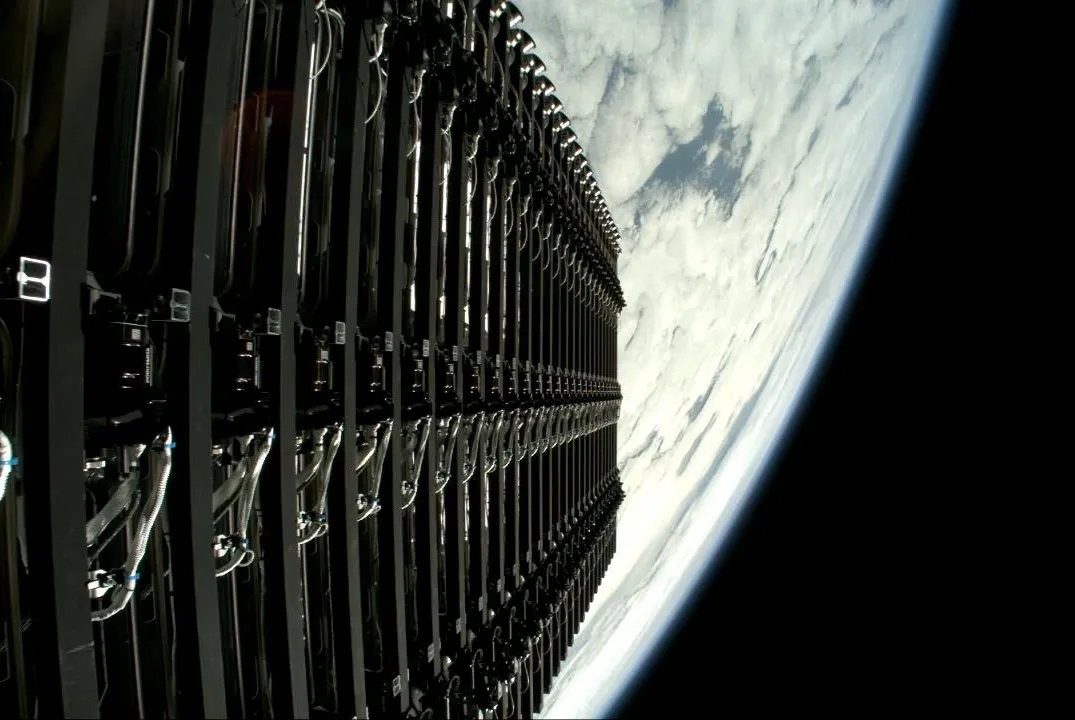
💡Starlink's record-breaking expansion is critical infrastructure for future global-scale edge AI deployments.
⚡ 30-Second TL;DR
What Changed
SpaceX deployed 1,589 Starlink satellites in H1 2026.
Why It Matters
The rapid expansion of the Starlink constellation provides the necessary infrastructure for global low-latency AI edge computing and remote data processing.
What To Do Next
Monitor Starlink's expansion if you are building edge AI applications that require global connectivity in remote areas.
Key Points
- •SpaceX deployed 1,589 Starlink satellites in H1 2026.
- •Deployment rate is currently trending higher than the 2025 record pace.
- •Data provided by satellite tracker Jonathan McDowell confirms the growth trend.
🧠 Deep Insight
AI-generated analysis for this event — not the original article.
🔑 Enhanced Key Takeaways
- •SpaceX has transitioned to utilizing the Starship launch vehicle for a significant portion of its V3 satellite deployments, allowing for higher mass-to-orbit capacity compared to Falcon 9.
- •The FCC has granted SpaceX authorization to operate up to 7,500 Gen2 satellites, a critical regulatory milestone enabling the current acceleration in deployment density.
- •Starlink's direct-to-cell (DTC) satellite constellation is being integrated into the H1 2026 deployment batches to support global mobile network operator partnerships.
- •SpaceX has achieved a turnaround time of less than 48 hours between Falcon 9 launches at Cape Canaveral, facilitating the increased cadence required for the 2026 deployment surge.
- •The average orbital altitude for the new V3 satellites has been optimized to reduce latency to sub-20ms levels for terrestrial users.
📊 Competitor Analysis▸ Show
| Feature | SpaceX Starlink | Amazon Project Kuiper | OneWeb (Eutelsat) |
|---|---|---|---|
| Constellation Status | Operational (Global) | Prototype/Early Deployment | Operational (Global) |
| Launch Vehicle | Falcon 9 / Starship | Vulcan Centaur / New Glenn | Ariane 6 / Falcon 9 |
| Target Market | Consumer/Enterprise/Gov | Enterprise/Gov/Backhaul | Enterprise/Gov/Maritime |
| Latency | <25ms | Targeted <30ms | 70-100ms |
🛠️ Technical Deep Dive
- Starlink V3 satellites utilize E-band and V-band frequencies to increase throughput capacity per satellite compared to V2 Mini units.
- Implementation of inter-satellite laser links (ISLL) across the entire 2026 fleet ensures data routing without reliance on local ground stations.
- Deployment utilizes a proprietary dispenser system on Starship capable of releasing 40+ satellites per mission.
- Integration of advanced ion thrusters using Krypton/Argon propellant for station-keeping and de-orbiting maneuvers.
🔮 Future ImplicationsAI analysis grounded in cited sources
⏳ Timeline
Weekly AI Recap
Read this week's curated digest of top AI events →
👉Related Updates
AI-curated news aggregator. All content rights belong to original publishers.
Original source: cnBeta (Full RSS) ↗
This is a summary, not the original. Read the source, or get the weekly briefing.
The weekly digest
One email a week. Unsubscribe anytime.