SpaceX Starlink: The core of AI strategy funding
💡Learn how SpaceX uses satellite revenue to fuel its massive AI and autonomous systems strategy.
⚡ 30-Second TL;DR
What Changed
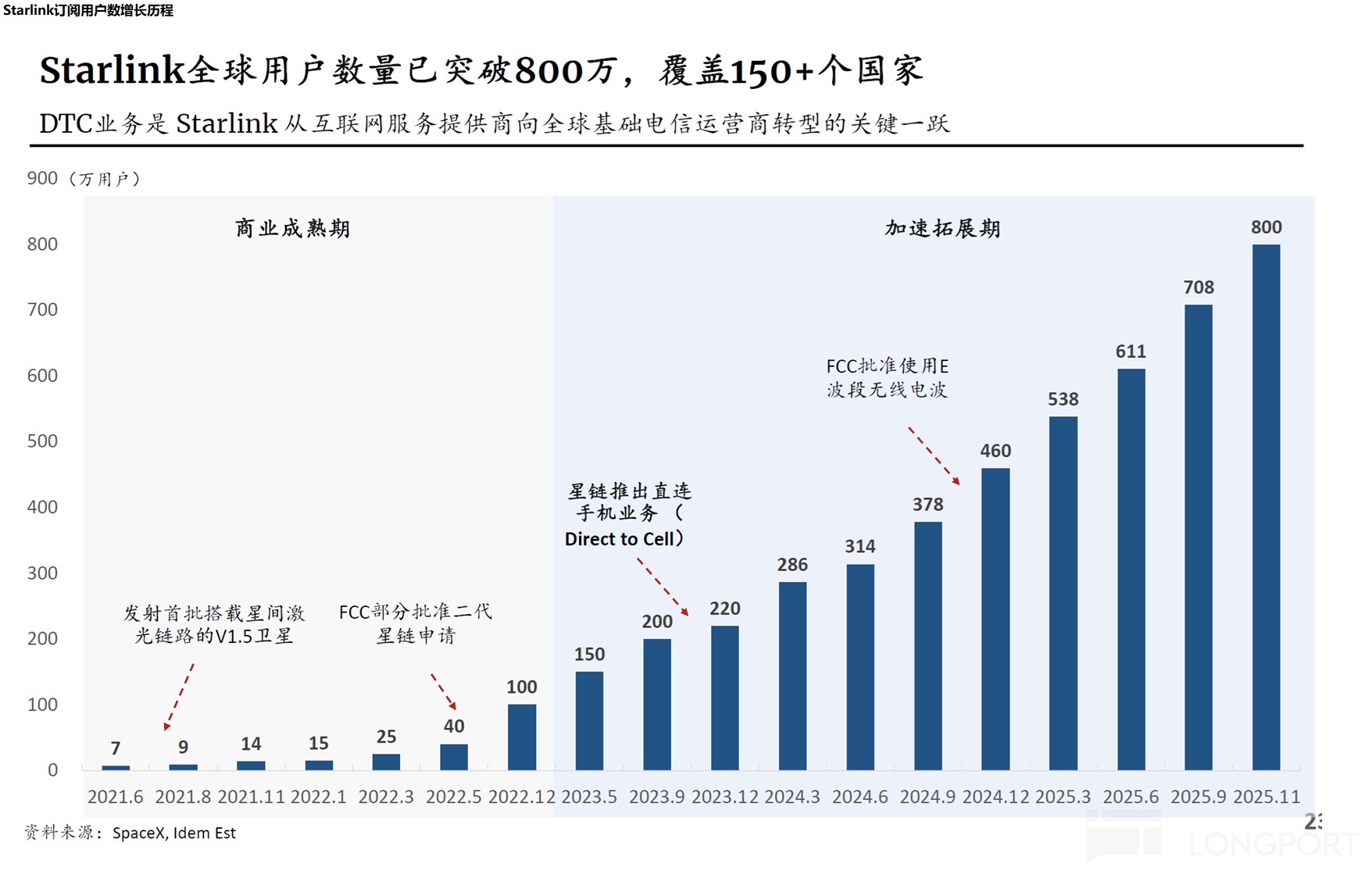
Starlink is the core pillar of SpaceX's financial performance
Why It Matters
The financial success of Starlink ensures that SpaceX can continue investing heavily in autonomous systems and AI-driven space exploration.
What To Do Next
Analyze how satellite-based edge connectivity can support your distributed AI inference models.
Key Points
- •Starlink is the core pillar of SpaceX's financial performance
- •Revenue from satellite internet is funding AI development
- •SpaceX is leveraging its infrastructure to support long-term AI goals
🧠 Deep Insight
Background and context from public sources — not the original article. 39 sources cited.
🔑 Enhanced Key Takeaways
- •Starlink generated $11.4 billion in revenue in 2025, constituting 61% of SpaceX's total revenue and establishing itself as the company's sole profitable segment.
- •SpaceX's AI segment, including xAI, has incurred significant operating losses, reporting $6.35 billion in 2025 and $7.72 billion in capital expenditures during Q1 2026, primarily allocated to AI data centers and GPU clusters.
- •SpaceX plans to deploy 'AI compute satellites' in sun-synchronous orbit, leveraging existing Starlink technology, with initial launches projected for no earlier than 2028, aiming for a constellation of up to one million such satellites.
- •SpaceX has secured a compute services agreement with Anthropic, under which Anthropic will pay $1.25 billion per month through May 2029 for leasing computing capacity at SpaceX's Colossus facilities.
- •Starlink's average revenue per user (ARPU) experienced a decline from $99 in 2023 to $66 in Q1 2026 due to aggressive expansion into price-sensitive global markets, although SpaceX implemented price increases in May 2026.
📊 Competitor Analysis▸ Show
| Feature/Provider | Starlink (SpaceX) | Viasat | HughesNet | Amazon Leo (formerly Project Kuiper) |
|---|---|---|---|---|
| Orbit Type | Low Earth Orbit (LEO) | Geostationary Orbit (GEO) | Geostationary Orbit (GEO) | Low Earth Orbit (LEO) |
| Latency | Low (around 25 ms) | High (600+ ms) | High | Low |
| Typical Download Speed | 45-280 Mbps (majority > 200 Mbps) | Up to 150 Mbps (Viasat Unleashed) | 50-100 Mbps | Up to 400 Mbps (residential), 1 Gbps (enterprise) |
| Data Policy | Unlimited (subject to fair use) | Unlimited (Viasat Unleashed), others with soft caps | Capped data (e.g., 100-200GB/month) | Likely unlimited |
| Monthly Cost (approx.) | $120 (as of Jan 2026, with recent increases) | $69.99 - $119.99+ | $39.99 - $94.99+ | Not yet publicly detailed, projected sub-$400 terminals |
| Equipment Cost (approx.) | $599 | $299 purchase or $14.99/month rental | Varies, often bundled/leased | Projected sub-$400 terminals |
| Key Differentiator | Global coverage, high speed, low latency, direct-to-cell capabilities | Established leader, reliable rural connectivity, no-contract options | Lower initial cost, reliable rural connectivity | AWS integration, ambitious LEO constellation, ease-of-use hardware |
🛠️ Technical Deep Dive
- Satellite Orbit: Low Earth Orbit (LEO) at approximately 550 kilometers (340 miles), typically ranging between 340 and 570 kilometers above Earth.
- Satellite Design: Compact, flat-panel design, measuring approximately 2.8 meters (9.2 feet) in length, 1.4 meters (4.6 feet) in width, and 0.2 meters (0.7 feet) in thickness.
- Satellite Weight: Older versions weigh around 260 kilograms (573 pounds), while the current V2 Starlink satellites weigh approximately 800 kilograms (1,760 pounds) at launch.
- Propulsion System: Utilizes efficient argon thrusters, making Starlink the first argon-propelled spacecraft flown in space, or krypton-powered ion thrusters for maneuvering.
- Antenna Systems: Each satellite features five advanced Ku-band phased array antennas and three dual-band (Ka-band and E-band) antennas for high-bandwidth connectivity.
- Inter-Satellite Links (ISLs): Equipped with three space lasers (Optical Intersatellite Links or OISLs) operating at up to 200 Gbps, forming a global internet mesh using near-infrared laser communications (~1550 nm wavelength).
- Power System: Features a dual solar array and high-capacity battery, with aero-neutral solar arrays enabling faster on-orbit maneuvers.
- Navigation: Custom-built navigation sensors survey stars for precise location, altitude, and orientation.
- Frequencies: Uses Ku-band for user terminal-to-satellite communication, and Ka-band (uplink 27.5–30.0 GHz, downlink 17.8–18.6 GHz, 18.8–19.3 GHz) and V-band for ground station-to-satellite communication.
- Direct Satellite-to-Device (DS2D): Starlink's DS2D architecture incorporates an LTE eNodeB payload onboard, enabling direct connections with standard smartphones using terrestrial mobile standards. The first DS2D constellation was completed in December 2024.
- AI Compute Satellites: Planned orbital data centers are described as 20 meters tall with a 70-meter wingspan, comprising racks of AI chips, large solar panels, and liquid radiators, leveraging existing Starlink technology.
🔮 Future ImplicationsAI analysis grounded in cited sources
⏳ Timeline
📎 Sources (39)
Factual claims are grounded in the sources below. Forward-looking analysis is AI-generated interpretation.
- techjacksolutions.com
- tradingkey.com
- intellectia.ai
- mexc.com
- futuriom.com
- inc.com
- futurumgroup.com
- kucoin.com
- morningstar.com
- constellationr.com
- space.com
- techtarget.com
- cryptobriefing.com
- businessinsider.com
- forbes.com
- thenextweb.com
- starlink.com
- pcmag.com
- thenetworkinstallers.com
- quora.com
- satelliteinternet.com
- starlink.com
- starvmount.com
- wikipedia.org
- arxiv.org
- techplayon.com
- sprintwave.co.uk
- space.com
- installpros.io
- mobilesystems.nz
- rvmobileinternet.com
- aibusiness.com
- w.media
- itiger.com
- progressiverobot.com
- valueaddvc.com
- quiltyspace.com
- ca.gov
- weex.com
Weekly AI Recap
Read this week's curated digest of top AI events →
👉Related Updates


AI-curated news aggregator. All content rights belong to original publishers.
Original source: 钛媒体 ↗
This is a summary, not the original. Read the source, or get the weekly briefing.
Weekly AI briefing
One email a week. Unsubscribe anytime.