SpaceX Rents Out AI Compute Due to Hardware Bottlenecks
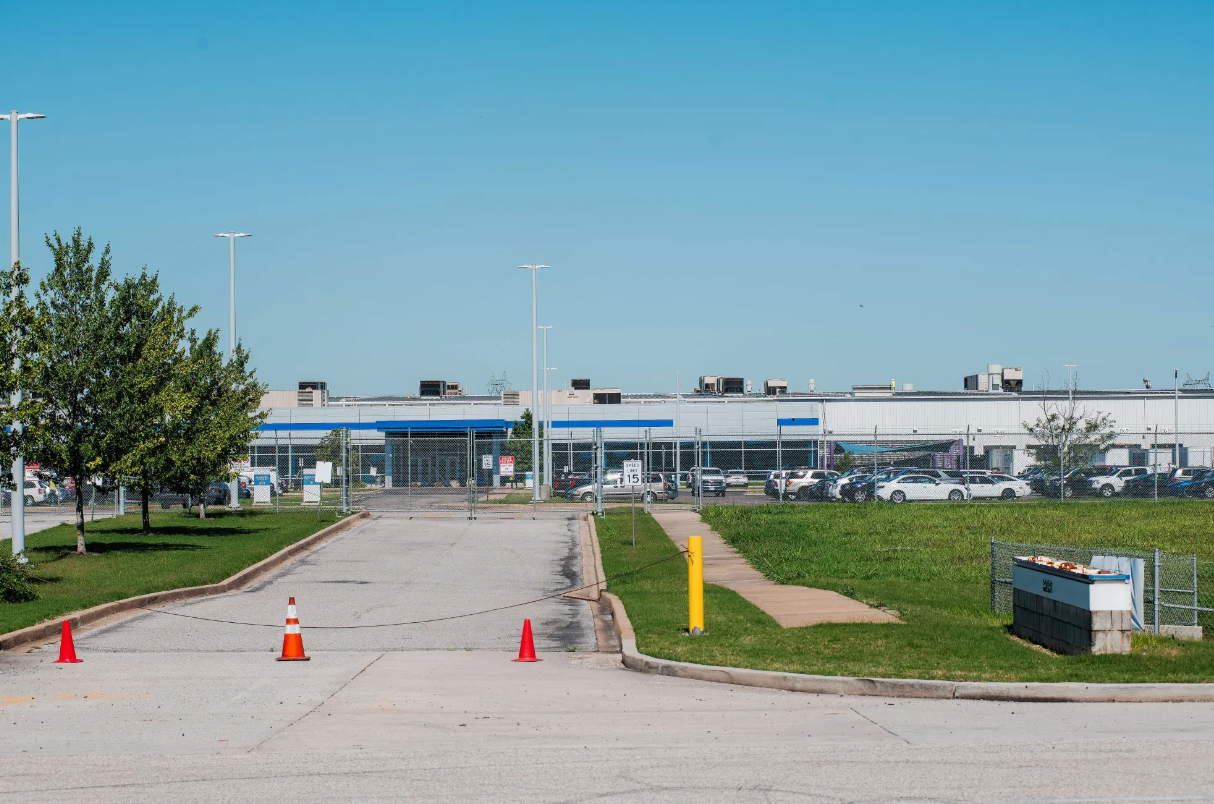
💡Learn how hardware bottlenecks are forcing major AI players to pivot their infrastructure strategies.
⚡ 30-Second TL;DR
What Changed
SpaceX faced hardware bottlenecks while training the Grok AI model.
Why It Matters
This highlights the extreme scarcity of high-end GPU compute and the strategic trade-offs companies make between internal training and infrastructure monetization.
What To Do Next
Evaluate your infrastructure scalability and consider cloud-agnostic training pipelines to avoid hardware-dependent bottlenecks.
Key Points
- •SpaceX faced hardware bottlenecks while training the Grok AI model.
- •The Colossus 1 data center capacity was fully leased to Anthropic.
- •Infrastructure limitations are impacting internal AI development timelines for xAI/SpaceX.
🧠 Deep Insight
Background and context from public sources — not the original article. 33 sources cited.
🔑 Enhanced Key Takeaways
- •SpaceX's Colossus 1 data center in Memphis, Tennessee, was leased to Anthropic for $1.25 billion per month through May 2029, totaling approximately $45 billion over three years, providing Anthropic with access to over 300 megawatts of compute capacity and more than 220,000 Nvidia GPUs.
- •The primary reasons for SpaceX leasing Colossus 1 were latency issues when attempting to connect it to two other data center campuses located over 10 miles away, coupled with older networking infrastructure and a heterogeneous mix of Nvidia chip generations (including Hopper, Blackwell, and older accelerators) within Colossus 1, which collectively created significant bottlenecks for large-scale AI training.
- •In addition to the Anthropic deal, SpaceX also secured an agreement with Google, under which Google will pay $920 million per month for access to approximately 110,000 Nvidia GPUs at the Colossus 2 data center from October 2026 through June 2029.
- •The strategic decision to lease out compute capacity has transformed SpaceX into a significant AI infrastructure provider, generating substantial revenue that is projected to rival its Starlink and launch services, particularly as the company made its Nasdaq debut.
- •xAI, the artificial intelligence division responsible for the Grok model, was formally merged into SpaceX in February 2026, a move that consolidated assets and talent and signaled SpaceX's pivot towards becoming a major player in AI infrastructure.
📊 Competitor Analysis▸ Show
| Company/Model | Key AI Models | Compute Strategy / Scale | Market Position / Noteworthy |
|---|---|---|---|
| xAI (Grok) | Grok 1.0, Grok 1.5, Grok 3, Grok 4 | Colossus 1 (220k H100 GPUs), Colossus 2, Colossus 3; aims for 50M H100-equivalent GPUs in 5 years. | Mixture-of-Experts (MoE) architecture; focus on real-time search integration and "truth-seeking." |
| Anthropic (Claude) | Claude Opus, Sonnet, Haiku, Mythos Preview | Leased Colossus 1 (300MW, 220k H100 GPUs) from SpaceX. | Held 40% market share in enterprise LLM market by end of 2025; advocates for independent safety tests for powerful AI models. |
| OpenAI (ChatGPT/GPT series) | GPT-4, GPT-5.2, GPT-5.3 | Utilizes massive compute, often via Microsoft Azure. | Held 27% market share in enterprise LLM market by end of 2025. |
| Google DeepMind (Gemini/PaLM) | Gemini, PaLM | Leased Colossus 2 capacity (110k Nvidia GPUs) from SpaceX; develops custom TPUs. | Held 21% market share in enterprise LLM market by end of 2025; strong in custom silicon development. |
| Meta | (Various internal models) | Plans to acquire 350,000 Nvidia H100s. | Heavy investment in GPU acquisition for AI development. |
🛠️ Technical Deep Dive
- Colossus Data Centers: Colossus 1, located in Memphis, Tennessee, became operational in July 2024 and was initially equipped with 100,000 Nvidia GPUs, later expanding to 200,000 GPUs. It was constructed in a rapid 122 days. Colossus 2 and 3 are also part of SpaceX's planned AI infrastructure.
- Hardware Bottlenecks: The issues at Colossus 1 stemmed from latency problems when connecting it to other data centers over 10 miles away, exacerbated by older networking infrastructure. Furthermore, Colossus 1 contained a mix of Nvidia chip generations, including Hopper, Blackwell, and older accelerators, which created performance bottlenecks as faster accelerators were forced to wait for slower ones in a distributed training cluster. In contrast, Colossus 2 and 3 were built more uniformly around Nvidia's Blackwell chips.
- Grok Model Architecture: Grok 1.0 employs a Mixture-of-Experts (MoE) decoder-only transformer architecture, featuring 314 billion parameters, 64 layers, and an 8,000-token context length. Grok 1.5 extended the context length significantly to 128,000 tokens. Grok 3 is rumored to scale up to 2.7 trillion parameters with a 1 million-token context window. The training stack for Grok includes a JAX-based modeling and training layer, a Rust control plane for orchestration, and a Kubernetes substrate for managing GPU clusters.
- Training Methodology: Grok 3 utilizes Reinforcement Learning from Human Feedback (RL-HF) specifically tuned on reasoning traces rather than just final answers. It also incorporates a 'DeepSearch' agent for real-time citations from the web and X (formerly Twitter) and features dynamic compute allocation, known as "Big Brain Mode," to manage GPU resources for complex tasks.
- Compute Capacity: Colossus 1 houses over 220,000 Nvidia H100 GPUs. xAI has an ambitious goal to achieve compute capacity equivalent to 50 million H100 GPUs within five years.
🔮 Future ImplicationsAI analysis grounded in cited sources
⏳ Timeline
📎 Sources (33)
Factual claims are grounded in the sources below. Forward-looking analysis is AI-generated interpretation.
- stocktwits.com
- tradingview.com
- intellectia.ai
- forbes.com
- thenextweb.com
- indexbox.io
- wikipedia.org
- techzine.eu
- investing.com
- youtube.com
- intellizence.com
- fifthrow.com
- tomshardware.com
- stocktwits.com
- apxml.com
- grok.md
- reddit.com
- mindstudio.ai
- guptadeepak.com
- medium.com
- grokmountain.com
- digitalapplied.com
- qz.com
- brookings.edu
- anthropic.com
- ccianet.org
- yahoo.com
- techbible.ai
- grokmountain.com
- medium.com
- techrepublic.com
- gitconnected.com
- mindset.ai
Weekly AI Recap
Read this week's curated digest of top AI events →
👉Related Updates
AI-curated news aggregator. All content rights belong to original publishers.
Original source: cnBeta (Full RSS) ↗
This is a summary, not the original. Read the source, or get the weekly briefing.
The weekly digest
One email a week. Unsubscribe anytime.