SpaceX market debut success amid Mars mission uncertainty
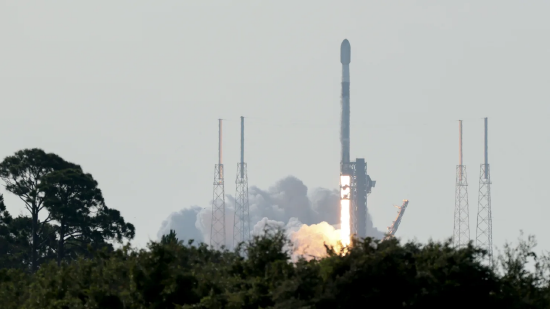
💡SpaceX's $2T valuation sets a new benchmark for space-tech, but technical milestones for Mars remain the real challenge.
⚡ 30-Second TL;DR
What Changed
SpaceX completed its Nasdaq IPO with a 19% first-day gain.
Why It Matters
The massive valuation reflects high investor confidence in SpaceX's infrastructure, though long-term R&D goals face significant public scrutiny.
What To Do Next
Monitor SpaceX's public filings and technical updates for shifts in Starship's flight cadence, which serves as a proxy for heavy-lift space infrastructure progress.
Key Points
- •SpaceX completed its Nasdaq IPO with a 19% first-day gain.
- •Market valuation has surpassed the $2 trillion milestone.
- •Traders on prediction markets like Kalshi doubt a Mars mission within this decade.
🧠 Deep Insight
Background and context from public sources — not the original article. 24 sources cited.
🔑 Enhanced Key Takeaways
- •SpaceX's IPO was the largest in history, targeting a valuation between $1.75 and $2 trillion and aiming to raise over $75 billion, significantly surpassing the previous record set by Saudi Aramco.
- •The successful market debut propelled Elon Musk to become the world's first trillionaire, with his net worth estimated at $1.1 trillion due to his majority stake in SpaceX.
- •With a market capitalization exceeding $2.1 trillion, SpaceX now ranks as the sixth most valuable public company in the U.S., trailing only tech giants like Apple, Microsoft, Alphabet, Amazon, and Nvidia, despite having a comparatively smaller revenue profile.
- •Prediction market traders on platforms like Kalshi assign a low probability (18-21%) to a crewed Starship mission landing on Mars before the end of 2029, and only a slightly higher chance (29-31%) for any uncrewed or crewed landing on Mars before 2030.
- •The IPO was nearly five times oversubscribed, with retail investor demand alone reaching $70 billion, almost enough to cover the entire $75 billion offering, and SpaceX sold just over 4% of its total shares, a smaller float than typical IPOs.
📊 Competitor Analysis▸ Show
| Company/Service | Focus | Key Features | Status/Benchmarks |
|---|---|---|---|
| SpaceX Starlink | Satellite Internet | LEO constellation, low latency (~25ms), optical intersatellite links (lasers), argon thrusters, flat-panel satellites | ~10,413 operational satellites (June 2026), 12M+ subscribers (June 2026), 1 Tbps downlink (V3) |
| Amazon Leo (Project Kuiper) | Satellite Internet | LEO constellation, comparable technology to Starlink, potential Prime bundling | Plans thousands of satellites, ~300 launched (May 2026), slower deployment than Starlink |
| Blue Origin TeraWave | Satellite Internet | LEO constellation, targets high-end enterprise and backhaul markets | Newly announced, distinct market approach |
| AST SpaceMobile | Satellite Cellular Broadband | Direct-to-smartphone connectivity (no special hardware), LEO satellites | Aims for 45 satellites by end of 2026, revenue from mobile network partners & US gov. |
| Rocket Lab | Launch Services | Electron rocket for small payloads (cubesats) | 88 launches, 260+ satellites deployed (May 2026), 2nd most-frequently launched US rocket (2025) |
| United Launch Alliance (ULA) | Launch Services | Traditional heavy-lift launch vehicles (Atlas V, Delta IV, Vulcan) | Legacy provider, higher costs than reusable rockets |
| Blue Origin (Launch) | Launch Services | New Glenn heavy-lift rocket | In development, aims for reusability |
🛠️ Technical Deep Dive
- Starship System:
- Fully reusable transportation system designed for Earth orbit, Moon, and Mars missions.
- Stacked height: 121.3 meters (398 ft) with Super Heavy booster.
- Diameter: 9 meters (30 ft).
- Propellant: Supercooled liquid methane (CH4) and liquid oxygen (LOX).
- Engines: Raptor engines (sea-level and vacuum optimized). Super Heavy booster uses 33 Raptor engines (20 outer fixed, 10 inner, 3 center gimbaled). Starship upper stage uses 3 sea-level and 3 vacuum Raptor engines.
- Payload Capacity: 100-150 metric tons (220,000-331,000 lb) to Low Earth Orbit (LEO), 150,000 kg to Geostationary Transfer Orbit (GTO) or Mars with orbital refueling.
- Construction: Bodies made from stainless steel cylinders.
- Heat Shield: Windward side protected by 18,000 hexagonal black tiles capable of withstanding 1,400 °C (2,600 °F).
- Control: Cold gas thrusters for unpowered flight in orbit; gimbaled engines for propulsive landings.
- Gimbaling system for engines switched from hydraulic to electric after initial flight tests.
- Starlink Satellite Constellation:
- Operates a constellation of thousands of satellites in Low Earth Orbit (LEO) at approximately 550 km altitude.
- Network size: Approximately 10,413 operational satellites as of June 2026.
- Provides low-latency internet, typically around 25 ms.
- Satellite Design: Compact, flat-panel design for dense launch stacks on Falcon 9 rockets.
- Propulsion: Utilizes efficient argon thrusters for orbit raising, maneuvering, and deorbiting.
- Optical Intersatellite Links (ISLs): Each satellite contains 3 space lasers operating up to 200 Gbps, forming a global internet mesh. V3 satellites aim for 1 Tbps downlink and 160 Gbps uplink capacity.
- Antennas: Features 5 advanced Ku-band phased array antennas and 3 dual-band (Ka-band and E-band) antennas.
- Navigation: Custom-built navigation sensors survey stars for precise location, altitude, and orientation.
- Collision Avoidance: Satellites autonomously maneuver to avoid debris and other spacecraft.
- User Terminals: Self-orienting, connects in minutes, designed to withstand extreme environmental conditions.
- Starlink V3 satellites are optimized for launch by Starship, with each Starship launch planned to add 60 Tbps of capacity to the network.
🔮 Future ImplicationsAI analysis grounded in cited sources
⏳ Timeline
📎 Sources (24)
Factual claims are grounded in the sources below. Forward-looking analysis is AI-generated interpretation.
Weekly AI Recap
Read this week's curated digest of top AI events →
👉Related Updates

AI-curated news aggregator. All content rights belong to original publishers.
Original source: cnBeta (Full RSS) ↗
This is a summary, not the original. Read the source, or get the weekly briefing.
Weekly AI briefing
One email a week. Unsubscribe anytime.