SpaceX IPO: Betting on Regulatory Certainty
Understand why regulatory frameworks are the hidden moat for trillion-dollar deep-tech companies like SpaceX.
30-Second TL;DR
What Changed
SpaceX filed S-1 with SEC for NASDAQ listing under ticker 'SPCX'.
Why It Matters
Highlights how regulatory frameworks are as critical as hardware innovation in scaling deep-tech industries. It suggests that AI and space sectors require modernized, unified governance to achieve industrial-scale growth.
What To Do Next
Analyze how your industry's regulatory bottlenecks compare to the 'civil aviation' model to identify potential advocacy or operational pivots.
Key Points
- •SpaceX filed S-1 with SEC for NASDAQ listing under ticker 'SPCX'.
- •Regulatory efficiency (FAA single-agency oversight) is a key competitive advantage.
- •China's commercial space sector faces challenges due to fragmented, multi-departmental management.
- •The article proposes adopting a civil aviation-style regulatory model for commercial space.
Deep Insight
AI-generated analysis for this event — not the original article.
Enhanced Key Takeaways
- •SpaceX's IPO is projected to be the largest in history, aiming to raise between $40 billion and $80 billion, significantly surpassing the previous record set by Saudi Aramco's $29 billion offering. [2, 3, 17]
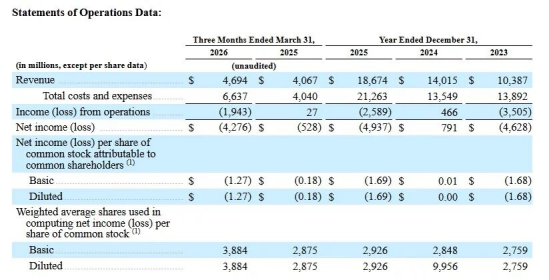
- •The S-1 filing revealed SpaceX's 2025 revenue at $18.7 billion with a net loss of $4.94 billion, and a $4.28 billion loss in Q1 2026, primarily due to substantial capital expenditures for Starship development and Starlink expansion. [3, 16, 20]
- •The ambitious $1.75 trillion to $2 trillion valuation is underpinned by SpaceX's market dominance in commercial launch services, the rapid growth of its Starlink satellite internet service (exceeding 10 million subscribers by February 2026), and strategic integration of AI capabilities through its merger with xAI. [2, 8, 16, 17, 20, 22]
- •SpaceX maintains a significant competitive advantage through its extensive vertical integration, manufacturing approximately 85% of components in-house, and its pioneering reusable rocket technology, with some Falcon boosters completing over 25 flights by 2026, leading to aggressive price disruption in launch costs. [10, 21, 26, 35]
- •In response to its own fragmented regulatory environment, China released its first set of commercial space standards in April 2026, aiming to streamline technical specifications, reduce costs, and foster innovation within its commercial space sector. [31]
Technical Deep Dive
- Starship System: A fully reusable transportation system, standing 120-121.3 meters tall when stacked, with a 9-meter diameter. [9, 12]
- Components: Consists of the Super Heavy booster (69 meters tall) and the Starship upper stage (50-52.1 meters tall). [9, 12, 13, 24]
- Propulsion: Both stages are powered by SpaceX's Raptor engines, which use liquid methane and liquid oxygen (methalox) as propellants. [9, 12, 24]
- Super Heavy Booster: Equipped with 33 Raptor engines, including 3 gimbaled engines for control. [9, 24]
- Starship Upper Stage: Features 6 Raptor engines, comprising 3 sea-level optimized engines and 3 vacuum-optimized engines (RVac). [12, 24]
- Payload Capacity: Designed to carry 100-150 metric tons to Low Earth Orbit (LEO), 21 metric tons to Geostationary Transfer Orbit (GTO), and up to 150 metric tons to GTO or Mars with orbital refueling. [9, 12, 15]
- Construction: Both rocket stages are constructed from welded stainless steel cylinders, each 1.83 meters high and 3.97 mm thick. [12]
- Thermal Protection: The Starship upper stage features a heat shield made of approximately 18,000 hexagonal black ceramic tiles capable of withstanding temperatures up to 1,400 °C during atmospheric reentry. [13, 24]
- Reentry Control: Utilizes four aerodynamic flaps (two aft, two forward) for controlled atmospheric reentry and propulsive landings. [13, 24]
- Starlink Constellation: Comprises over 10,020 satellites in Low Earth Orbit (LEO) as of March 2026, providing two-way satellite-based internet service. [22]
- Starlink V3 Satellites: Optimized for Starship launches, these satellites are designed to add 60 Tbps of capacity per launch, with individual satellites offering 1 Tbps downlink and 160 Gbps uplink capacity. [25]
- User Terminals: Starlink provides various user terminal models (Standard, Mini, Performance Gen 3, Enterprise) that include a dish, Wi-Fi router, and power supply. [23]
- Performance: Typical download speeds range from 45 to 280 Mbps (majority over 100 Mbps), upload speeds between 10 and 30 Mbps, and latency between 25 and 60 ms on land. [19]
- Satellite Technology: Satellites incorporate Ku-, Ka-, and E-band phased array antennas, some with laser transponders for inter-satellite links, and Hall-effect thrusters for orbital maneuvers. [22]
Future ImplicationsAI analysis grounded in cited sources
Timeline
- 2002-05Elon Musk founds Space Exploration Technologies Corp. (SpaceX).
- 2008-09Falcon 1 becomes the first privately developed liquid-fueled rocket to reach orbit.
- 2012-05Dragon spacecraft becomes the first commercial vehicle to deliver cargo to the International Space Station (ISS).
- 2015-12SpaceX achieves the first successful propulsive landing of a Falcon 9 first stage on land.
- 2019-05SpaceX launches the first 60 Starlink internet satellites, initiating its global constellation.
- 2026-05-20SpaceX publicly files its S-1 prospectus with the SEC for a NASDAQ IPO under the ticker 'SPCX'.
Weekly AI Recap
Read this week's curated digest of top AI events →
AI-curated news aggregator. All content rights belong to original publishers.
Original source: 虎嗅 ↗
This is a summary, not the original. Read the source, or get the weekly briefing.
The weekly digest
One email a week. Unsubscribe anytime.