SpaceX IPO to Drive Space-Based AI and Solar Power
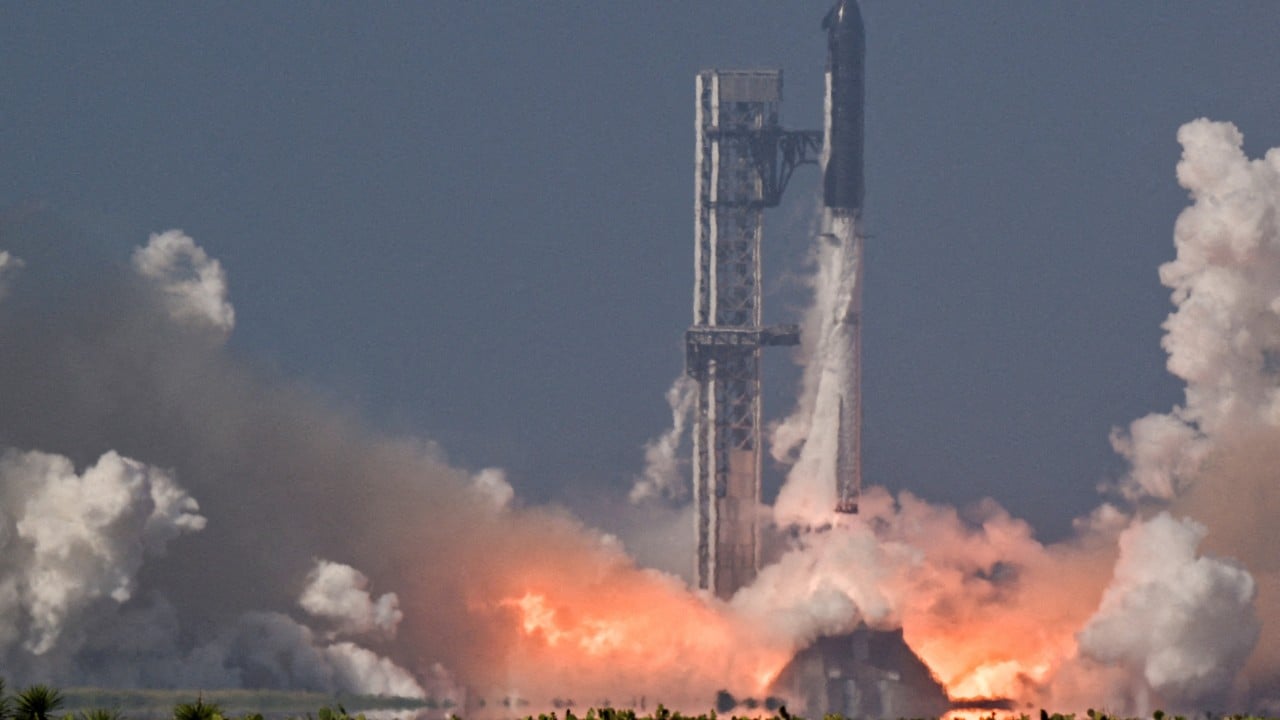
💡SpaceX is moving into space-based AI computing; learn how orbital edge infrastructure could change your deployment stack
⚡ 30-Second TL;DR
What Changed
SpaceX is pivoting toward space-based AI computing and solar energy infrastructure.
Why It Matters
The integration of AI computing into orbital infrastructure could revolutionize edge computing for latency-sensitive applications. This shift signals a new era where space-based data processing becomes a viable commercial layer for global AI deployments.
What To Do Next
Monitor SpaceX's technical documentation for potential edge-computing API releases that allow developers to deploy models on orbital hardware.
Key Points
- •SpaceX is pivoting toward space-based AI computing and solar energy infrastructure.
- •The global satellite industry is projected to grow at a 14% annual rate to US$447 billion.
- •Expansion includes direct-to-cell connectivity, moving beyond traditional satellite broadband.
- •The IPO is expected to provide significant capital momentum for these high-tech satellite initiatives.
🧠 Deep Insight
Background and context from public sources — not the original article. 26 sources cited.
🔑 Enhanced Key Takeaways
- •SpaceX's IPO is scheduled for June 12, 2026, on the Nasdaq Exchange under the ticker SPCX, targeting a valuation between $1.75 trillion and $2 trillion, which could make it the largest IPO in stock market history.
- •The company's expansion into AI infrastructure includes the acquisition of xAI in February 2026, which operates the Grok AI model and a gigawatt-scale data center named Colossus, positioning SpaceX as a significant player in AI compute.
- •SpaceX has filed with the FCC to deploy up to one million solar-powered satellites to serve as space-based AI data centers, with initial deployments projected to commence in 2028 utilizing the Starship heavy-lift vehicle.
- •SpaceX is already generating substantial revenue from its AI compute services, with contracts exceeding $2 billion per month from major clients like Anthropic and Google.
- •Starlink's direct-to-cell service, commercially available in the US (via T-Mobile) and New Zealand (via One NZ), has evolved beyond basic messaging to include voice and data, with next-generation satellites targeting speeds of up to 150 Mbps.
📊 Competitor Analysis▸ Show
Competitor Analysis
| Feature/Company | SpaceX (Starlink Direct-to-Cell) | AST SpaceMobile | Lynk Global | Iridium Communications | Globalstar | Google (Project Suncatcher) | Starcloud | Aetherflux |
|---|---|---|---|---|---|---|---|---|
| Primary Focus | Direct-to-Cell, Space-based AI, Solar Power | Direct-to-Cell broadband | Direct-to-Cell messaging/voice | Satellite phones, IoT, D2D | Satellite phones, IoT, D2D | Space-based AI computing | Space-based AI computing | Space-based AI computing |
| Direct-to-Cell Technology | Satellites act as orbiting cell towers, 4G LTE compatible, 150Mbps target for next-gen. | Broadband connectivity to unmodified 4G/5G smartphones. | "Cell tower in space" for standard mobile phones. | Established LEO constellation for satellite phones/IoT. | Established LEO constellation for satellite phones/IoT. | N/A | N/A | N/A |
| Space-based AI | One million solar-powered satellites for AI data centers, Tesla AI chips, cislunar network. | N/A | N/A | N/A | N/A | Solar-powered satellite computing platforms, onboard TPUs, space lasers. | Train GenAI models in orbit, Nvidia GPUs, hypercluster architecture. | First AI-equipped satellite launch planned by 2027, pivoted from SBSP. |
| Launch Vehicle | Falcon 9, Starship (heavy-lift for AI infrastructure). | Partnered with SpaceX for launches. | Proprietary small satellites. | Various launch providers. | Various launch providers. | Various launch providers. | Starship-class vehicles for future scale. | Various launch providers. |
| Current Status (D2C) | Commercial messaging in US/NZ, voice/data expanding. | Conducted satellite video calls, partnered with major carriers. | Successfully tested text/voice calls. | Operational satellite phone/IoT services. | Operational satellite phone/IoT services. | Early prototypes planned. | Successfully trained first AI model in space (Dec 2025). | First AI-equipped satellite launch planned by 2027. |
| Space Solar Power | Enabler via Starship for large orbital arrays, solar-powered AI data centers. | N/A | N/A | N/A | N/A | Project Suncatcher (solar-powered satellite computing). | N/A | Initially focused on beaming solar power, pivoted to space-based data centers. |
🛠️ Technical Deep Dive
- Space-based AI Computing Infrastructure:
- Plans to deploy a constellation of up to one million solar-powered satellites designed to function as orbital data centers.
- Satellites are expected to be equipped with Tesla AI chips, forming a decentralized supercomputer network in orbit.
- These satellites will operate at altitudes between 500 and 2,000 kilometers, utilizing 30-degree and sun-synchronous inclinations to maximize exposure to constant sunlight for power generation.
- Communication between satellites and with Starlink spacecraft will be facilitated by inter-satellite optical links (lasers), with Starlink then relaying data to ground stations.
- The natural vacuum of space provides an efficient cooling environment, significantly reducing the energy and water consumption typically required by terrestrial data centers.
- Starship, particularly the V3 version, is the designated heavy-lift vehicle, capable of delivering payloads up to 100,000 kilograms to orbit for deploying these large-scale infrastructures.
- The long-term goal for this orbital AI compute capacity is to reach 1 terawatt per year, with an annual target of 100 gigawatts.
- Development includes a cislunar laser network to enable high-bandwidth, low-latency communication for deep space operations and lunar/cislunar AI data centers.
- Direct-to-Cell Services (Starlink Mobile):
- Starlink's direct-to-cell satellites are specifically designed to function as orbiting cell towers, connecting directly to unmodified 4G LTE mobile phones on the ground.
- The service leverages existing midband PCS spectrum, such as T-Mobile's in the US, allowing seamless integration with terrestrial mobile networks.
- Initial capabilities focused on text messaging, with ongoing expansion to include voice and data services.
- Next-generation Starlink Mobile satellites (second-generation) are engineered to deliver significantly enhanced performance, targeting speeds of up to 150 Mbps, representing a nearly 37-fold increase in throughput over initial services.
- These upgraded satellites feature larger phased-array antennas (five times the size of first-generation) and four times the bandwidth per beam.
- SpaceX plans to implement 20x20 MHz beams and introduce MIMO (Multiple-Input Multiple-Output) capabilities on the satellites to boost capacity and efficiency.
- The system will adhere to the 3GPP Release-19 NR-NTN (New Radio Non-Terrestrial Network) standard for 5G-era integration.
- The current Direct-to-Cell system is supported by approximately 650 satellites, with plans to deploy up to 15,000 additional satellites to ensure continuous and high-speed global coverage.
🔮 Future ImplicationsAI analysis grounded in cited sources
⏳ Timeline
📎 Sources (26)
Factual claims are grounded in the sources below. Forward-looking analysis is AI-generated interpretation.
- zacks.com
- fool.com
- gam.com
- nb.com
- morningstar.com
- keeptrack.space
- basenor.com
- cleantechnica.com
- renewablesnow.com
- wikipedia.org
- satelliteinternet.com
- starlink.com
- tesery.com
- gulfnews.com
- marketsandmarkets.com
- sesamedisk.com
- cryptobriefing.com
- ai-supremacy.com
- cutter.com
- wikipedia.org
- enkiai.com
- ceo-worldwide.com
- technologymagazine.com
- space.com
- payloadspace.com
- rcrwireless.com
Weekly AI Recap
Read this week's curated digest of top AI events →
👉Related Updates

AI-curated news aggregator. All content rights belong to original publishers.
Original source: SCMP Technology ↗
This is a summary, not the original. Read the source, or get the weekly briefing.
The weekly digest
One email a week. Unsubscribe anytime.