SpaceX Bets Entirely on Nvidia AI GPUs
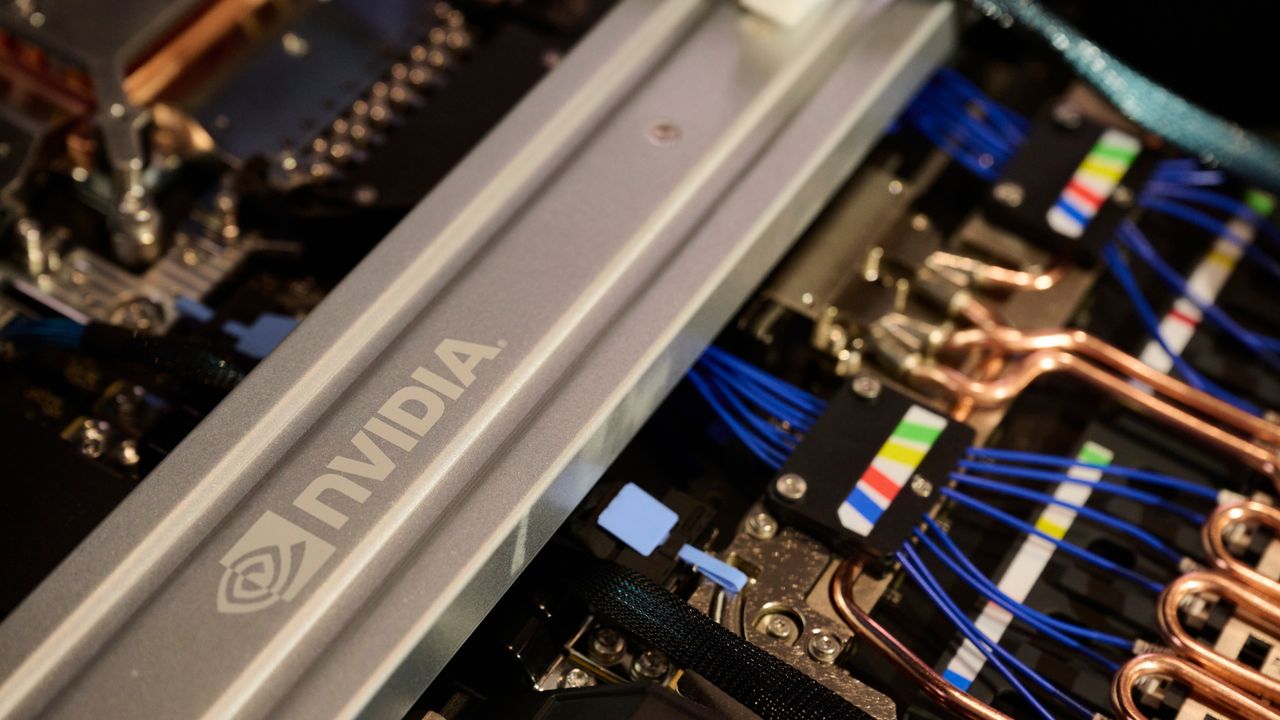
SpaceX and xAI's Nvidia-only strategy could reshape accelerator procurement and future off-Earth AI compute.
30-Second TL;DR
What Changed
SpaceX and xAI reportedly plan to standardize on Nvidia accelerators.
Why It Matters
Exclusive reliance on Nvidia would reinforce its position across frontier AI infrastructure and could influence procurement decisions among other AI companies. A space-qualified NVL72 platform would also signal interest in running advanced AI compute beyond conventional terrestrial data centers.
What To Do Next
Benchmark your training and inference stack on Nvidia's Vera Rubin-compatible CUDA and TensorRT pathways before committing to a long-term accelerator procurement plan.
Key Points
- •SpaceX and xAI reportedly plan to standardize on Nvidia accelerators.
- •The GPUs will support both AI training and inference workloads.
- •An optimized Vera Rubin NVL72 system is planned for a space launch next year.
Deep Insight
AI-generated analysis for this event — not the original article.
Enhanced Key Takeaways
- •The Vera Rubin NVL72 architecture utilizes liquid cooling, a critical engineering challenge for deployment in microgravity environments where traditional convection-based cooling fails.
- •SpaceX's integration of xAI's Grok models into Starlink satellite constellations aims to enable real-time edge processing for autonomous collision avoidance and orbital debris tracking.
- •Nvidia's Blackwell-based NVL72 platform features a multi-node interconnect fabric that provides 130TB/s of aggregate bandwidth, essential for the massive parameter synchronization required by xAI's large language models.
- •The partnership marks a strategic shift for SpaceX, moving away from custom-designed FPGA-based hardware for satellite processing toward standardized, high-performance GPU clusters.
- •Regulatory filings indicate that the space-hardened NVL72 units will be housed in radiation-shielded enclosures to mitigate bit-flip errors caused by cosmic rays in low Earth orbit.
Competitor Analysis
- Nvidia NVL72 (SpaceX/xAI)
- Blackwell (GB200)
- AMD Instinct MI350X
- CDNA 4
- Google TPU v6p
- Trillium (TPU v6)
- Nvidia NVL72 (SpaceX/xAI)
- NVLink Switch System
- AMD Instinct MI350X
- Infinity Fabric
- Google TPU v6p
- Custom Optical Interconnect
- Nvidia NVL72 (SpaceX/xAI)
- Training & Inference
- AMD Instinct MI350X
- Training
- Google TPU v6p
- Large-Scale Training
- Nvidia NVL72 (SpaceX/xAI)
- Custom Hardened Variant
- AMD Instinct MI350X
- Not Publicly Announced
- Google TPU v6p
- Not Publicly Announced
| Feature | Nvidia NVL72 (SpaceX/xAI) | AMD Instinct MI350X | Google TPU v6p |
|---|---|---|---|
| Architecture | Blackwell (GB200) | CDNA 4 | Trillium (TPU v6) |
| Interconnect | NVLink Switch System | Infinity Fabric | Custom Optical Interconnect |
| Primary Use | Training & Inference | Training | Large-Scale Training |
| Space Readiness | Custom Hardened Variant | Not Publicly Announced | Not Publicly Announced |
Technical Deep Dive
- The NVL72 system integrates 72 Blackwell GPUs connected via fifth-generation NVLink, enabling the entire rack to function as a single massive GPU.
- Implementation involves a custom liquid-to-liquid heat exchanger designed to interface with SpaceX's spacecraft thermal control systems.
- The system utilizes high-bandwidth memory (HBM3e) to achieve memory capacities exceeding 1.4TB per rack, facilitating the deployment of massive MoE (Mixture of Experts) models in space.
- Power delivery systems have been modified to operate on the 100V-120V DC bus architecture standard in modern satellite buses, bypassing traditional AC power conversion.
Future ImplicationsAI analysis grounded in cited sources
Timeline
- 2023-07Elon Musk officially announces the formation of xAI.
- 2023-11xAI releases the first version of the Grok AI model.
- 2024-03Nvidia announces the Blackwell GPU architecture and the NVL72 system.
- 2025-05SpaceX begins testing radiation-hardened GPU prototypes on Starlink V3 satellites.
- 2026-02xAI completes the training of its latest model iteration using a massive Nvidia GPU cluster.
Event Coverage
Weekly AI Recap
Read this week's curated digest of top AI events →
AI-curated news aggregator. All content rights belong to original publishers.
Original source: Tom's Hardware ↗
This is a summary, not the original. Read the source, or get the weekly briefing.
The weekly digest
One email a week. Unsubscribe anytime.