South Africa pivots $1.8B research fund to commercialisation
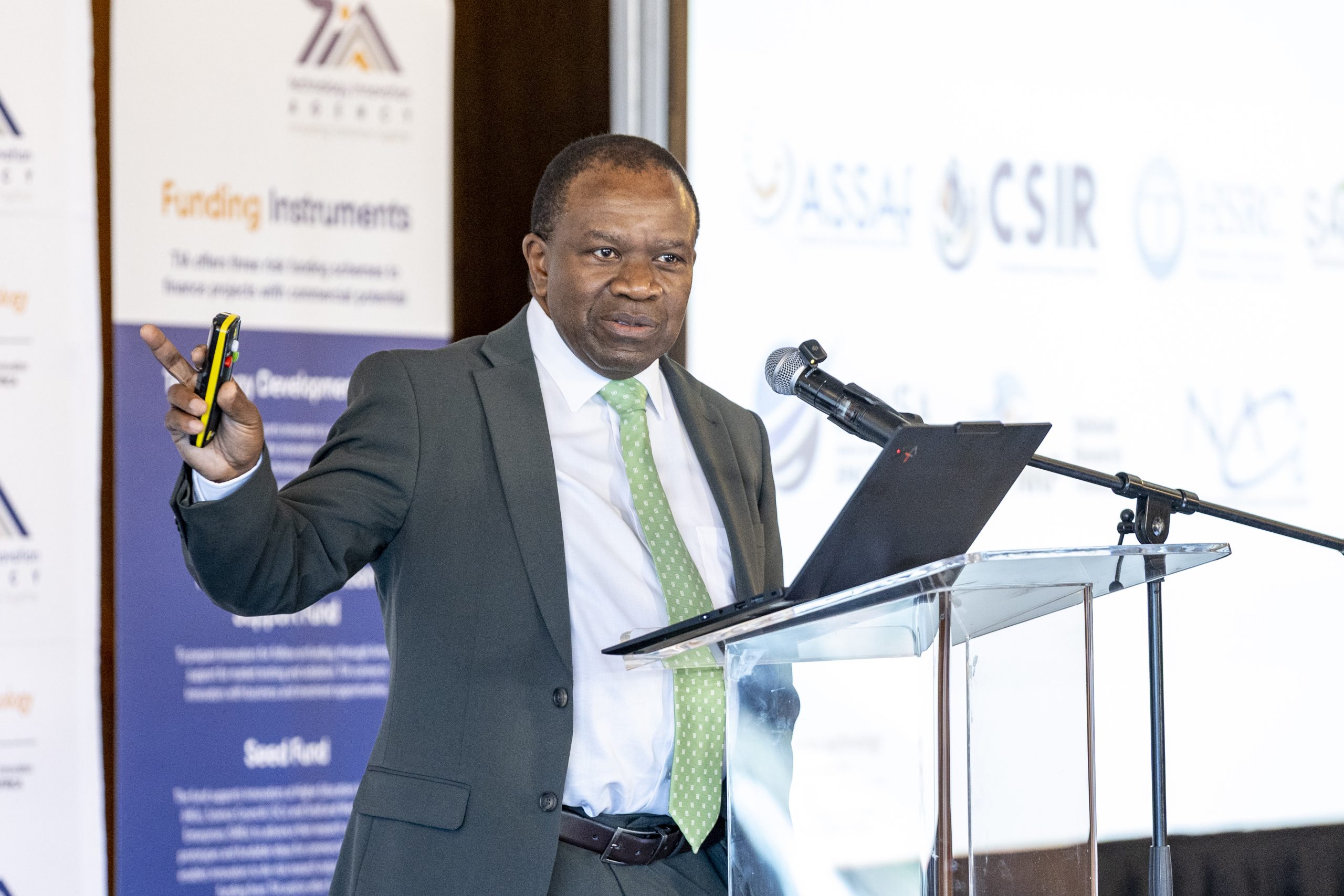
💡A major $1.8B shift in research funding policy that could unlock new commercial opportunities for deep-tech founders.
⚡ 30-Second TL;DR
What Changed
TIA 2.0 represents a structural overhaul of South Africa's national innovation system.
Why It Matters
This shift could create new opportunities for AI startups and deep-tech ventures in South Africa to access capital. It signals a move toward more applied, market-driven research environments.
What To Do Next
If you are a founder in the region, monitor the TIA 2.0 guidelines to align your R&D roadmap with their new commercialisation funding criteria.
Key Points
- •TIA 2.0 represents a structural overhaul of South Africa's national innovation system.
- •The initiative manages a $1.8 billion research budget previously focused on early-stage funding.
- •The agency will now prioritize commercialisation and market-ready innovation over basic research funding.
🧠 Deep Insight
Background and context from public sources — not the original article. 13 sources cited.
🔑 Enhanced Key Takeaways
- •The Technology Innovation Agency (TIA) was established in 2008 through an act of the South African parliament, formed by merging seven pre-existing innovation-focused entities.
- •TIA 2.0 is designed as a ten-year transformation strategy, structured into three phases—consolidate, grow, and scale—and is built upon a 'quadruple helix approach' that integrates government, industry, academia, and civil society.
- •The strategic shift to TIA 2.0 addresses a historically 'suboptimal' commercialization success rate of the previous model, which was hampered by limited funding and a scarcity of investable projects, creating an 'innovation chasm' between research and market.
- •A substantial financial injection for TIA 2.0 comes from a R1.2 billion (approximately $73 million) return on a successful biotechnology investment in Kapa Biosystems made by the agency nearly two decades ago.
- •Under TIA 2.0, the agency will strategically focus on high-impact sectors such as Artificial Intelligence (AI), electric vehicles, climate technology, and critical minerals, including a R62 million ($3.6 million) investment in sovereign AI initiatives like the locally developed large language model, Mzansi Mindz.
🛠️ Technical Deep Dive
- TIA 2.0 implements a 'systems-based approach' and a 'quadruple helix model of innovation' to foster collaboration across government, industry, academia, and civil society.
- The revised business model for TIA 2.0 features three primary pillars, with the 'NSI Curator' pillar focusing on implementing catalytic, high-impact innovation programs through multi-stakeholder collaboration.
- TIA provides both financial and non-financial support, utilizing various funding instruments that cover all stages from early-stage research to market deployment, complemented by a Technology Stations Programme comprising 16 specialized facilities across 11 universities.
- Key financial instruments include the Technology Development Fund and the Youth Technology Innovation Fund, designed to support innovators and entrepreneurs.
- In 2019, TIA launched the Industry Matching Fund (IMF) as a fund-of-funds model to attract and leverage private sector investment, further bolstered by an Innovation Fund that includes a R300 million High Impact Seed Fund of Funds, launched in late 2024.
- The strategy aims to increase the proportion of funding directed towards entrepreneurs and firms (from a previous 35% of funds) and targets leveraging private funding to achieve five times its own funding within three years.
- The initial 'consolidate' phase of TIA 2.0 prioritizes strengthening governance, redesigning the operating model, refining portfolio processes, and enabling commercialization.
🔮 Future ImplicationsAI analysis grounded in cited sources
⏳ Timeline
📎 Sources (13)
Factual claims are grounded in the sources below. Forward-looking analysis is AI-generated interpretation.
Weekly AI Recap
Read this week's curated digest of top AI events →
👉Related Updates
AI-curated news aggregator. All content rights belong to original publishers.
Original source: TechCabal ↗
This is a summary, not the original. Read the source, or get the weekly briefing.
The weekly digest
One email a week. Unsubscribe anytime.