Sora 2 vs Seedance 2.0 vs Kling O1 Comparison
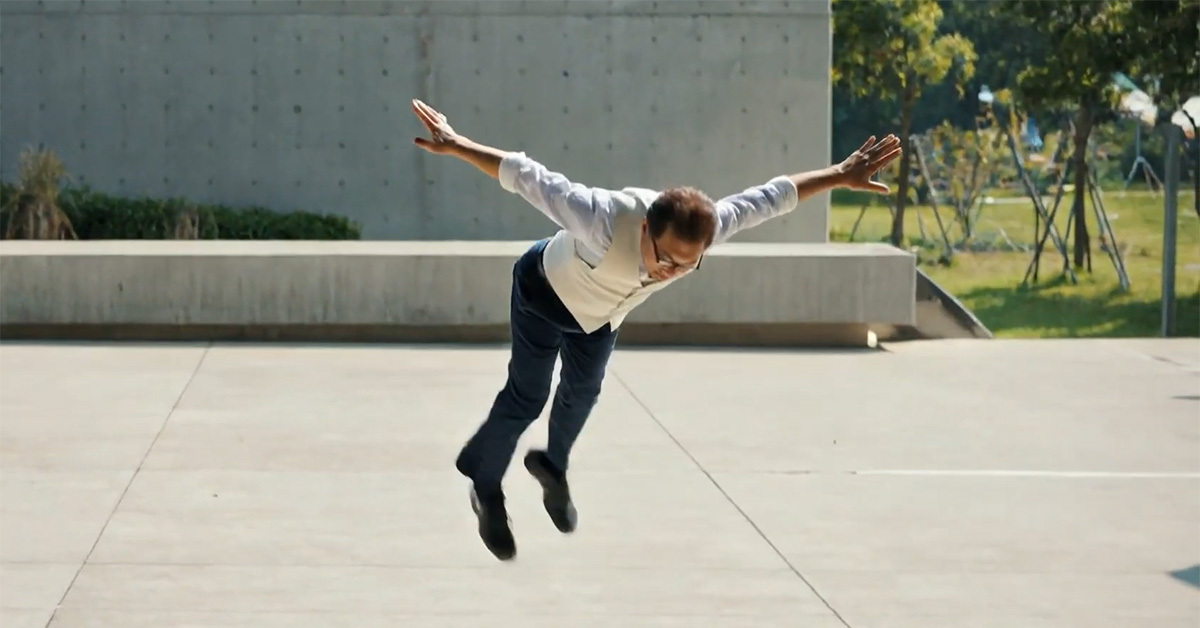
💡Real-world tests of Sora 2 vs rivals reveal video AI strengths for creators
⚡ 30-Second TL;DR
What Changed
Compared Sora 2, Seedance 2.0, Kling O1 with same prompts/reference images
Why It Matters
This hands-on comparison equips AI practitioners with insights to select optimal video generation tools for specific creative needs, potentially speeding up prototyping in film and media. It underscores rapid progress in generative video AI.
What To Do Next
Run your own prompts on Sora 2, Kling O1, and Seedance 2.0 to benchmark against these production tests.
Key Points
- •Compared Sora 2, Seedance 2.0, Kling O1 with same prompts/reference images
- •Tested on bike scene, rain中格闘, slow body rotation scenarios
- •Revealed unique strengths/weaknesses for production use
- •Shows potential to fundamentally change video creation
- •From ITmedia AI+ practical verification
🧠 Deep Insight
Background and context from public sources — not the original article. 9 sources cited.
🔑 Enhanced Key Takeaways
- •Seedance 2.0 supports native 2K resolution and multimodal inputs including up to 9 images, 3 videos, and 3 audio files, outperforming Sora 2's 1080p maximum.[1][4][5]
- •Sora 2 excels in physics simulation with accurate gravity, fluid dynamics, light refraction, and temporal consistency, making it ideal for VFX and realistic product demos.[1][3][5]
- •Independent benchmarks rank Seedance 2.0 first in prompt adherence and constraint enforcement, ahead of Sora 2 and Kling variants, with superior iteration efficiency.[2][7]
- •Kling O1 (part of Kling 3.0 series) leads in motion naturalness and cost-efficiency for action scenes, while offering strong character consistency in dynamic interactions.[1][3][5]
📊 Competitor Analysis▸ Show
| Feature | Seedance 2.0 | Kling 3.0 | Sora 2 |
|---|---|---|---|
| Resolution | Native 2K | Not specified | 1080p max |
| Physics Accuracy | ★★★☆☆ | ★★★☆☆ | ★★★★★ Best |
| Motion Naturalness | ★★★★☆ | ★★★★★ Best | ★★★★☆ |
| Temporal Consistency | ★★★★☆ | ★★★★☆ | ★★★★★ Best |
| Multimodal Input | Text + 9 img + 3 vid + 3 audio | Text + image | Text + image |
| Generation Speed | 5s video <60s | Not specified | Not specified |
| API Pricing | TBA (late Feb) | Varies by platform | Not specified |
| Best For | Creative control, precision | Action + budget | Physics, realism[1][2][3][4][5] |
🛠️ Technical Deep Dive
- •Sora 2 features advanced physics simulation for gravity, momentum, collisions, fluids, light refraction, and 3D depth inference with parallax for cinematic pans.
- •Seedance 2.0 offers four-modal input (text, image, video, audio) with tight cross-attention for token-to-motion binding, high seed parity, and predictable refinement.
- •Kling 3.0 emphasizes motion brush, multi-shot generation, and character lock for smooth human interactions.
- •Sora 2 supports variable frame rates, untraditional aspect ratios, and integrated audio with lip-sync, foley, and ambient noise in one pass.
🔮 Future ImplicationsAI analysis grounded in cited sources
⏳ Timeline
📎 Sources (9)
Factual claims are grounded in the sources below. Forward-looking analysis is AI-generated interpretation.
- evolink.ai — Seedance 2 API vs Kling 3 vs Sora 2 Comparison
- vidau.ai — Seedance 2 0 vs Runway Sora and Kling in Complex AI Video Tests Now
- atlascloud.ai — Seedance 2 vs Sora 2 vs Kling 3 Comparison
- help.apiyi.com — Seedance 2 vs Sora 2 AI Video Comparison En
- vertu.com — Seedance 2 0 vs Kling 3 0 vs Sora 2 vs Veo 3 1 the Ultimate AI Video Generation Guide
- insmind.com — Seedance 2 0 Review
- youtube.com — Watch
- youtube.com — Watch
- youtube.com — Watch
Weekly AI Recap
Read this week's curated digest of top AI events →
👉Related Updates
AI-curated news aggregator. All content rights belong to original publishers.
Original source: ITmedia AI+ (日本) ↗
This is a summary, not the original. Read the source, or get the weekly briefing.
Weekly AI briefing
One email a week. Unsubscribe anytime.