Skyral Turns Real Cities Into Military Simulations
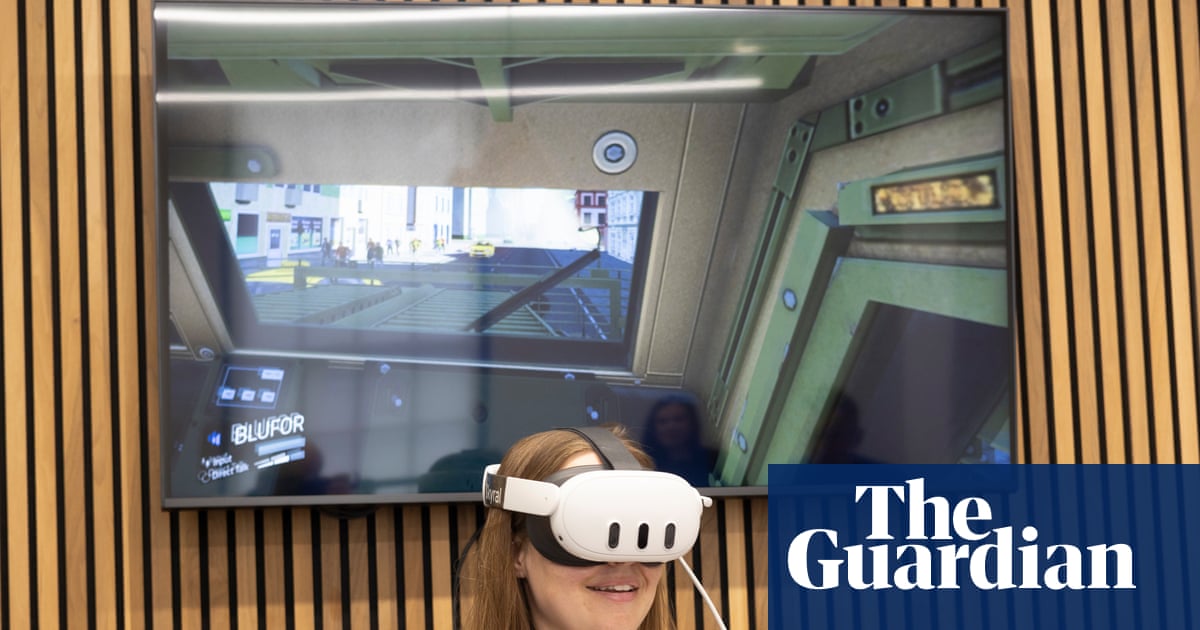
See how game-style digital twins are being used to test high-stakes military decisions.
30-Second TL;DR
What Changed
A consortium including Skyral won a £2bn Ministry of Defence contract.
Why It Matters
The project illustrates how game-engine-style environments can support high-stakes operational planning and training. For AI practitioners, it highlights the value of realistic synthetic environments for testing decision-making systems before real-world deployment.
What To Do Next
Prototype a small synthetic-city scenario in a game engine and benchmark your decision-making agent against varied civilian behaviors and adversarial events.
Key Points
- •A consortium including Skyral won a £2bn Ministry of Defence contract.
- •The simulation recreates identifiable streets and urban corridors in Riga.
- •Virtual civilians are modeled with different ages, behaviors and attitudes toward NATO.
Deep Insight
AI-generated analysis for this event — not the original article.
Enhanced Key Takeaways
- •The £2bn contract is part of the UK Ministry of Defence's 'Defence Synthetic Environment (DSE) Platform' program, aimed at creating a unified digital twin of the battlefield.
- •Skyral's platform utilizes 'agent-based modeling' where individual virtual entities operate autonomously based on programmed psychological profiles rather than scripted paths.
- •The technology integrates real-time geospatial data from satellite imagery and open-source intelligence (OSINT) to ensure the virtual Riga remains synchronized with physical changes.
- •Beyond military training, the platform is designed to test the impact of information warfare and social media influence on civilian populations during conflict scenarios.
- •The consortium, often referred to as the 'Team Skyral' or similar industry partnerships, includes major defense primes working alongside Skyral to integrate legacy military hardware systems into the virtual environment.
Competitor Analysis
- Skyral
- Agent-based urban simulation
- Improbable (MS2)
- Large-scale distributed simulation
- Bohemia Interactive Simulations (BISim)
- High-fidelity tactical training
- Skyral
- Enterprise/Gov Contract
- Improbable (MS2)
- Enterprise/Gov Contract
- Bohemia Interactive Simulations (BISim)
- Licensing/Custom Dev
- Skyral
- High-density civilian behavior
- Improbable (MS2)
- Massive-scale entity count
- Bohemia Interactive Simulations (BISim)
- Realistic vehicle/weapon physics
| Feature | Skyral | Improbable (MS2) | Bohemia Interactive Simulations (BISim) |
|---|---|---|---|
| Core Focus | Agent-based urban simulation | Large-scale distributed simulation | High-fidelity tactical training |
| Pricing | Enterprise/Gov Contract | Enterprise/Gov Contract | Licensing/Custom Dev |
| Key Benchmark | High-density civilian behavior | Massive-scale entity count | Realistic vehicle/weapon physics |
Technical Deep Dive
- Architecture: Utilizes a distributed cloud-native framework allowing for massive parallel processing of individual agent behaviors.
- Data Integration: Employs automated ingestion pipelines for GIS (Geographic Information System) data, converting 2D maps into 3D navigable environments.
- Agent Logic: Agents are governed by a hierarchical decision-making engine that simulates cognitive load, stress, and varying political allegiances.
- Interoperability: Designed to comply with DIS (Distributed Interactive Simulation) and HLA (High Level Architecture) standards to communicate with existing military simulators.
Future ImplicationsAI analysis grounded in cited sources
Timeline
- 2020-01Skyral is founded to focus on advanced simulation and agent-based modeling technologies.
- 2023-09Skyral secures initial funding and begins collaboration with UK defense research agencies.
- 2025-05The UK Ministry of Defence announces the selection of the consortium for the DSE Platform contract.
- 2026-02Initial operational capability of the urban simulation environment is demonstrated to defense officials.
Weekly AI Recap
Read this week's curated digest of top AI events →
AI-curated news aggregator. All content rights belong to original publishers.
Original source: The Guardian Technology ↗
This is a summary, not the original. Read the source, or get the weekly briefing.
The weekly digest
One email a week. Unsubscribe anytime.