Skills Market Reshapes AI Dev Productivity
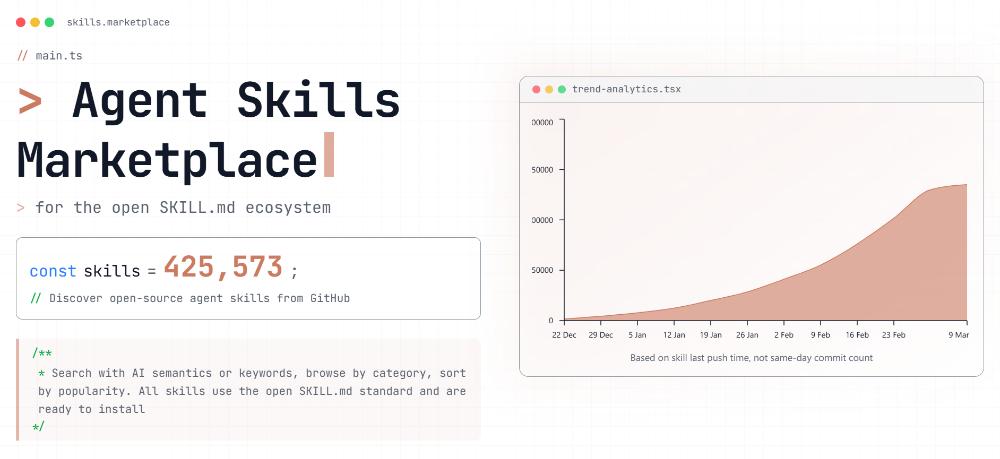
💡Skills markets turn your expertise into sellable AI modules—build once, sell forever.
⚡ 30-Second TL;DR
What Changed
OpenClaw project popularizes Skills as agent 'skill stores'.
Why It Matters
Lowers AI app dev barriers, monetizes expertise as digital assets, positions Shanghai as skills supply chain node.
What To Do Next
Package a domain skill using OpenClaw and publish to test market.
Key Points
- •OpenClaw project popularizes Skills as agent 'skill stores'.
- •Anthropic's MCP standardizes model-tool interactions.
- •Shanghai leads with MiniMax, robot skills, and legal Agents.
- •Enables non-devs like doctors to supply AI Skills.
🧠 Deep Insight
Background and context from public sources — not the original article. 7 sources cited.
🔑 Enhanced Key Takeaways
- •PwC predicts the emergence of AI generalists who orchestrate agentic workflows, replacing specialized mid-tier coders with roles focused on strategy and agent management, reshaping workforce structures into an hourglass or diamond shape.[5]
- •AI-exposed industries have seen productivity growth surge from 7% to 27% since generative AI's rise in 2022, driven by high demand for skills like LangChain, RAG, model fine-tuning, and vector databases in production environments.[1][2]
- •Global skills changes are accelerating 66% faster in AI-impacted jobs, with only 40% of organizations providing effective immersive training, widening the gap as 80% of engineers need upskilling by 2027.[1]
🛠️ Technical Deep Dive
- •Production AI skills in highest demand include LangChain for chaining LLM calls, Retrieval-Augmented Generation (RAG) for enhancing model accuracy with external data, model training/fine-tuning using PyTorch, vector databases for semantic search, and FastAPI/OpenAI API for deployment.[2]
🔮 Future ImplicationsAI analysis grounded in cited sources
📎 Sources (7)
Factual claims are grounded in the sources below. Forward-looking analysis is AI-generated interpretation.
- gloat.com — AI Skills Demand
- knowledgecity.com — The AI Skills Your Workforce Actually Needs in 2026
- elearningindustry.com — Monetize AI Skills Training for Elearning and Hr Tech Vendors
- imf.org — New Skills and AI Are Reshaping the Future of Work
- pwc.com — AI Predictions
- upwork.com — In Demand Skills 2026
- youtube.com — Watch
Weekly AI Recap
Read this week's curated digest of top AI events →
👉Related Updates
AI-curated news aggregator. All content rights belong to original publishers.
Original source: 36氪 ↗
This is a summary, not the original. Read the source, or get the weekly briefing.
The weekly digest
One email a week. Unsubscribe anytime.