Siri AI delayed indefinitely in EU and China
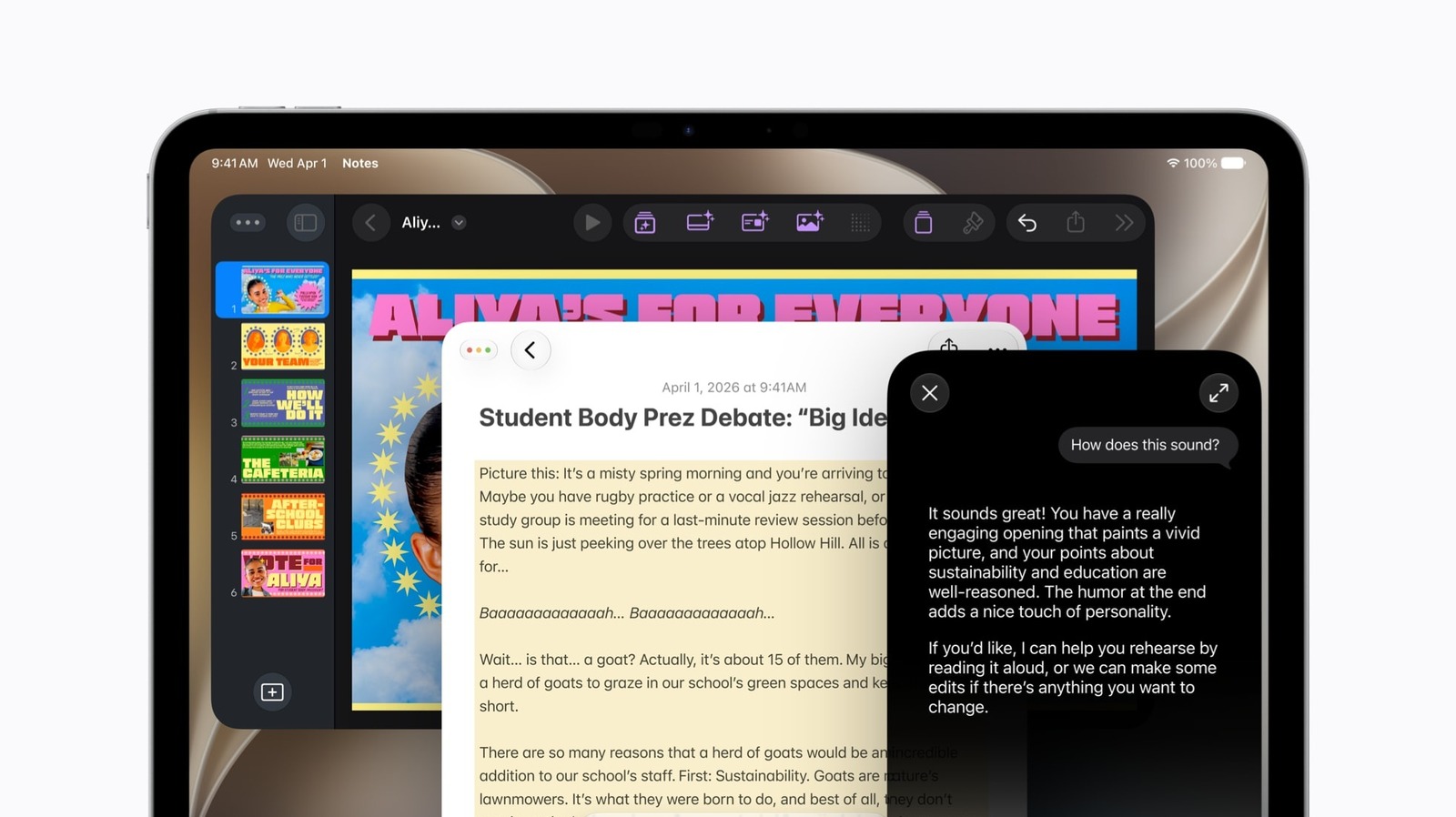
💡Understand how regional regulatory hurdles are forcing Apple to fragment its global AI feature rollout.
⚡ 30-Second TL;DR
What Changed
Siri AI rollout delayed in EU and China
Why It Matters
Developers targeting these regions must adjust their localization and feature-parity roadmaps. The delay highlights the growing friction between AI deployment and regional regulatory frameworks.
What To Do Next
Review your app's regional availability strategy to account for potential feature gaps in EU and Chinese markets.
Key Points
- •Siri AI rollout delayed in EU and China
- •Affects upcoming iOS 27 and iPadOS 27 releases
- •Regulatory hurdles likely driving the indefinite delay
🧠 Deep Insight
Background and context from public sources — not the original article. 26 sources cited.
🔑 Enhanced Key Takeaways
- •The delay in the EU is primarily due to Apple's interpretation of the Digital Markets Act (DMA), which Apple claims would necessitate giving third-party virtual assistants nearly unlimited access to user devices and autonomous control, thereby compromising user privacy and data security.
- •Apple proposed a 'Trusted System Agent' solution to EU regulators, intended to allow third-party virtual assistants safe access to Siri AI's features, but this proposal was rejected by the European Commission.
- •In China, the indefinite delay stems from the need to comply with stringent regulatory requirements for generative AI, including security evaluations, algorithm filings, and data protection laws, which also mandate content safety and accuracy.
- •Apple's new Siri AI is part of a broader 'Apple Intelligence' suite, which integrates generative AI across its operating systems (iOS, iPadOS, macOS) using a hybrid architecture that prioritizes on-device processing and a 'Private Cloud Compute' for more complex tasks, designed with a strong emphasis on user privacy.
- •An accidental, brief rollout of Apple Intelligence in mainland China in March 2026, which reportedly included Google's image recognition technology, exposed Apple to potential administrative penalties for violating local rules on security assessments, algorithm filings, and cross-border data transfers.
🛠️ Technical Deep Dive
- Siri AI is powered by 'Apple Intelligence,' a personal intelligence system that combines generative models with personal context.
- Apple Intelligence utilizes a hybrid architecture, with many models running entirely on-device, and more complex requests offloaded to 'Private Cloud Compute'.
- Private Cloud Compute extends Apple's privacy and security into the cloud, using dedicated Apple silicon servers for larger, server-based models.
- Apple emphasizes a privacy-first approach, asserting that user data processed through Apple Intelligence is not stored or accessible to the company for AI training.
- The enhanced Siri AI is designed to be more conversational, understand personal context, analyze on-screen content, search the web, comprehend images, and execute tasks across various applications.
- Key features include automatic summarization of notifications and long-form content, contextual text rewriting, image generation via 'Image Playground' (with AI-generated images automatically watermarked with SynthID), and semantic understanding of on-screen content.
- Apple has reportedly partnered with Google for certain aspects, including the use of Gemini models for Apple Intelligence, and in China, a deal was struck with Alibaba Group Holding in February 2025 to use its Qwen large language model, with a separate arrangement with Baidu for Visual Intelligence features also reported.
🔮 Future ImplicationsAI analysis grounded in cited sources
⏳ Timeline
📎 Sources (26)
Factual claims are grounded in the sources below. Forward-looking analysis is AI-generated interpretation.
- phonearena.com
- apple.com
- engadget.com
- mashable.com
- thurrott.com
- cambridge.org
- ibanet.org
- stanford.edu
- oup.com
- thenextweb.com
- apple.com
- okoone.com
- medium.com
- techstrong.ai
- apple.com
- globalbankingandfinance.com
- scmp.com
- chinaiplawyer.com
- techradar.com
- apple.com
- businesswire.com
- apple.com
- androidheadlines.com
- cei.org
- kcl.ac.uk
- macrumors.com
Weekly AI Recap
Read this week's curated digest of top AI events →
👉Related Updates
AI-curated news aggregator. All content rights belong to original publishers.
Original source: Engadget ↗
This is a summary, not the original. Read the source, or get the weekly briefing.
The weekly digest
One email a week. Unsubscribe anytime.