Simplified FHE-based ML inference with concrete-ml
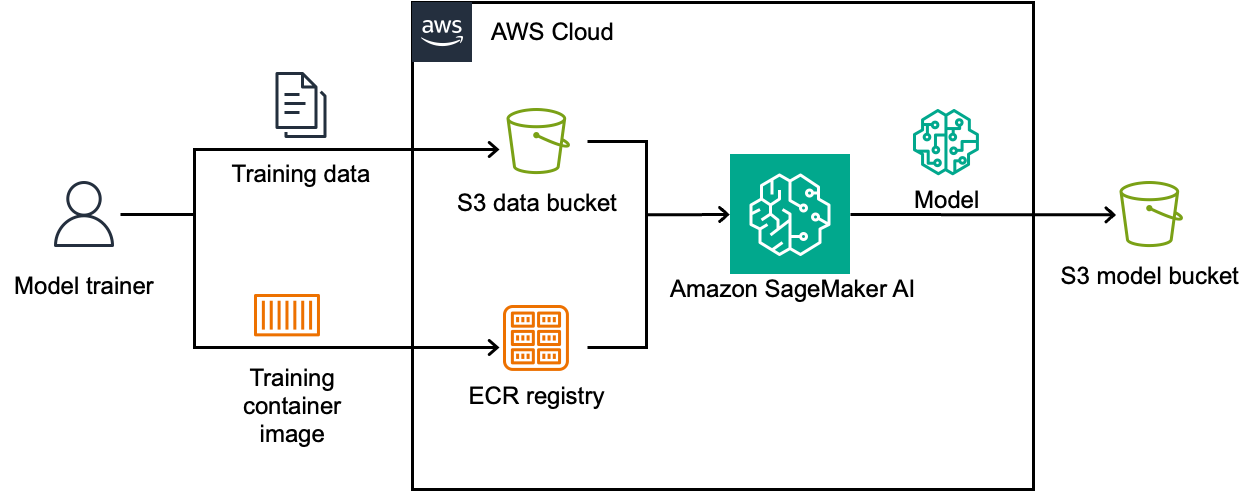
💡Learn how to implement secure, encrypted ML inference using high-level libraries instead of manual cryptography.
⚡ 30-Second TL;DR
What Changed
Transition from low-level SEAL library to high-level concrete-ml library.
Why It Matters
Lowers the barrier to entry for privacy-preserving machine learning by abstracting complex cryptographic implementations. This allows teams to deploy secure inference endpoints without deep expertise in homomorphic encryption.
What To Do Next
Integrate concrete-ml with your existing scikit-learn pipelines to test encrypted inference on Amazon SageMaker endpoints.
Key Points
- •Transition from low-level SEAL library to high-level concrete-ml library.
- •Supports common ML models out-of-the-box for FHE inference.
- •API compatibility with scikit-learn simplifies the integration process.
🧠 Deep Insight
Background and context from public sources — not the original article. 25 sources cited.
🔑 Enhanced Key Takeaways
- •Concrete ML, developed by Zama, is an open-source, privacy-preserving machine learning framework built on the TFHE (Fully Homomorphic Encryption over the Torus) scheme, known for its efficient bootstrapping mechanism.
- •Beyond scikit-learn compatibility, Concrete ML supports PyTorch models through ONNX and offers a DataFrame API inspired by pandas for encrypted data preprocessing, enabling a broader range of ML applications on encrypted data.
- •To make models compatible with FHE, Concrete ML employs quantization, converting inputs, weights, and activations to low-precision integer equivalents (e.g., 2-4 bits) using either Quantization Aware Training (QAT) or Post Training Quantization (PTQ).
- •Recent updates to Concrete ML (v1.7) introduced the capability to fine-tune Large Language Models (LLMs) and neural networks on encrypted data using low-rank approximation parameter efficient fine-tuning, alongside GPU support for improved performance.
- •The underlying Concrete compiler converts quantized models into FHE-equivalent circuits, represented as MLIR programs composed of low-level cryptographic operations, abstracting complex FHE details from data scientists.
📊 Competitor Analysis▸ Show
While direct feature-by-feature and pricing comparisons are often proprietary and not publicly benchmarked, the FHE for ML inference landscape includes several key players and foundational libraries:
| Feature/Platform | Concrete ML (Zama) | Microsoft SEAL | IBM HElib | Duality Technologies | Enveil | Inpher |
|---|---|---|---|---|---|---|
| Focus | High-level, open-source FHE for ML (Python/Rust) | Foundational, open-source FHE library (C++) | Pioneering, research-grade FHE library (C++) | Enterprise secure data collaboration, private LLM inference | ZeroReveal Data Security for data in use | Secret Computing for Privacy-Preserving ML |
| Ease of Use | Developer-friendly APIs (scikit-learn, PyTorch-like), abstracts crypto complexity | Lower-level, requires cryptographic expertise | Difficult to use without cryptography background | Enterprise platform, likely higher-level abstraction | Proprietary, likely abstracted for users | Proprietary, likely abstracted for users |
| FHE Schemes | TFHE | BFV, CKKS | BGV, CKKS (v3.10 in 2026) | CKKS for private LLM inference | Not specified publicly | Not specified publicly |
| ML Models | Linear, tree-based, neural networks, LLMs (inference & fine-tuning) | Suitable for encrypted ML workloads (requires custom implementation) | Optimized for batch arithmetic, suitable for complex computations | Private LLM inference framework | Supports ML, computer vision, language models | Privacy-Preserving ML |
| Performance | Significant speed improvements (20x faster since inception), GPU support | Strong focus on performance optimizations | Slower compared to newer libraries | Leads DARPA TREBUCHET program for hardware acceleration | Not specified publicly | Not specified publicly |
| Pricing | Open-source (free library), cloud deployment costs apply | Open-source (free library), cloud deployment costs apply | Open-source (free library), cloud deployment costs apply | Commercial (contract-based) | Commercial (contract-based) | Commercial (contract-based) |
| Key Differentiator | Simplifies FHE for data scientists, strong Python/ML integration, open-source compiler | Foundational, widely adopted, C++ core | Academically rigorous, mature codebase, advanced features | Enterprise-grade secure data collaboration, hardware acceleration focus | Zero-trust data security, data-in-use protection | Secret computing for privacy-preserving ML |
🛠️ Technical Deep Dive
- Concrete ML is built on top of the
Concretelibrary, which facilitates the conversion of NumPy programs into Fully Homomorphic Encryption (FHE) circuits. - The library primarily implements a variant of the TFHE (Fully Homomorphic Encryption over the Torus) scheme, which is characterized by its efficient bootstrapping mechanism to manage noise growth during homomorphic operations.
- To enable FHE compatibility, Concrete ML quantizes all inputs, outputs, weights, and intermediate values to integer equivalents, typically requiring low precision (e.g., 2-4 bits for weights and activations). This quantization can be performed either during training (Quantization Aware Training - QAT) or after training (Post Training Quantization - PTQ).
- Model compilation involves converting the quantized model into an FHE circuit, which is represented as an MLIR (Multi-Level Intermediate Representation) program consisting of low-level cryptographic operations. This process abstracts the cryptographic complexities from the user.
- Concrete ML supports various machine learning models, including linear models, tree-based models (like Decision Trees and XGBoost), and multi-layer, fully-connected neural networks with customizable activation functions, often using
skorchfor a scikit-learn-like interface to PyTorch models. - For Large Language Models (LLMs), Concrete ML employs a distinct computation paradigm rather than compiling the entire model to FHE, as full FHE compilation for LLMs is currently too slow.
- Recent advancements include GPU support, which can provide a 1-2x speed-up for large neural networks on server-grade GPUs.
- The framework also includes a DataFrame API for encrypted data preprocessing, inspired by pandas, and supports parameter tuning compatible with scikit-learn pipelines like GridSearchCV.
🔮 Future ImplicationsAI analysis grounded in cited sources
⏳ Timeline
📎 Sources (25)
Factual claims are grounded in the sources below. Forward-looking analysis is AI-generated interpretation.
Weekly AI Recap
Read this week's curated digest of top AI events →
👉Related Updates
AI-curated news aggregator. All content rights belong to original publishers.
Original source: AWS Machine Learning Blog ↗
This is a summary, not the original. Read the source, or get the weekly briefing.
The weekly digest
One email a week. Unsubscribe anytime.