SiChuang Aerospace secures funding for rocket engine manufacturing
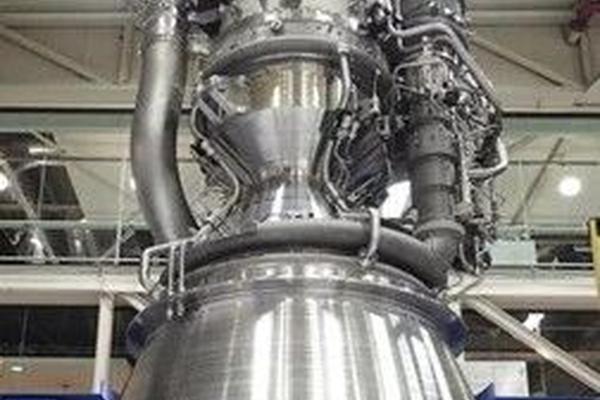
Insight into how AI and automation are transforming the manufacturing bottleneck of commercial rocket engines.
30-Second TL;DR
What Changed
Secured multi-million RMB funding from Dancheng Capital.
Why It Matters
The company's focus on standardized, automated manufacturing processes for aerospace components signals a shift toward industrial-scale, low-cost commercial space flight in China.
What To Do Next
Monitor the integration of AI-driven robotics in aerospace manufacturing to identify potential automation frameworks for high-precision hardware production.
Key Points
- •Secured multi-million RMB funding from Dancheng Capital.
- •Only private enterprise in China offering one-stop manufacturing for rocket engine core components.
- •Plans to implement AI-driven human-machine collaborative flexible production lines to boost efficiency by 50%.
- •Masters advanced welding techniques including electron beam and vacuum diffusion welding.
Deep Insight
Background and context from public sources — not the original article. 12 sources cited.
Enhanced Key Takeaways
- •The funding for SiChuang Aerospace was secured from Dancheng Capital, a China-based private equity firm that focuses on venture opportunities across diversified industries, including industrials.
- •SiChuang Aerospace's strategic implementation of AI-driven human-machine collaborative flexible production lines aims to achieve a substantial 50% increase in manufacturing efficiency, positioning it at the forefront of advanced manufacturing techniques in the Chinese private aerospace sector.
- •The company distinguishes itself as the sole private enterprise in China providing comprehensive one-stop manufacturing solutions for critical rocket engine components, including thrust chambers and turbopumps.
- •SiChuang Aerospace is located in Sichuan Province, a region actively fostering its aerospace industry, with other significant private space companies like iSpace also establishing production and testing bases there.
Competitor Analysis
- SiChuang Aerospace
- One-stop manufacturing for rocket engine core components (thrust chambers, turbopumps)
- LandSpace
- Developing and manufacturing liquid-propellant rocket engines (e.g., TQ methane engines) for their own reusable rockets
- Galactic Energy
- Developing and manufacturing liquid oxygen/kerosene engines (e.g., Welkin 50-ton) for their own rockets
- Space Pioneer
- Developing next-generation environment-friendly rocket propulsion systems and medium-to-large launch vehicles
- SiChuang Aerospace
- AI-driven human-machine collaborative flexible production lines; advanced welding (electron beam, vacuum diffusion)
- LandSpace
- Intelligent manufacturing hub for aerospace engines; mass production of TQ methane engines
- Galactic Energy
- Utilizes 3D printing technology for engine manufacturing, significantly reducing production time and cost
- Space Pioneer
- Establishing intelligent manufacturing centers; claims to be the first and only Chinese commercial aerospace company to independently develop high chamber pressure oxidizer-rich staged combustion LOX/RP1 rocket engines
- SiChuang Aerospace
- Claims unique position as the only private enterprise for one-stop manufacturing of core engine components
- LandSpace
- Leading private firm in China for reusable methane engines; 100 TQ methane engines produced
- Galactic Energy
- First private company in China to achieve consecutive orbital launch successes; developing reusable liquid oxygen/kerosene engines
- Space Pioneer
- Focus on next-gen propulsion systems; aims to complete 'Three Engines and Two Rockets' product line
- SiChuang Aerospace
- Aims for 50% efficiency boost with AI-driven lines; masters electron beam and vacuum diffusion welding
- LandSpace
- Focus on reusability and scale production of specific engine types
- Galactic Energy
- Reduced engine manufacturing time from six months to one month and costs by 90% using 3D printing
- Space Pioneer
- Focus on advanced propulsion technologies like high chamber pressure oxidizer-rich staged combustion
| Feature / Company | SiChuang Aerospace | LandSpace | Galactic Energy | Space Pioneer |
|---|---|---|---|---|
| Core Focus | One-stop manufacturing for rocket engine core components (thrust chambers, turbopumps) | Developing and manufacturing liquid-propellant rocket engines (e.g., TQ methane engines) for their own reusable rockets | Developing and manufacturing liquid oxygen/kerosene engines (e.g., Welkin 50-ton) for their own rockets | Developing next-generation environment-friendly rocket propulsion systems and medium-to-large launch vehicles |
| Manufacturing Capability | AI-driven human-machine collaborative flexible production lines; advanced welding (electron beam, vacuum diffusion) | Intelligent manufacturing hub for aerospace engines; mass production of TQ methane engines | Utilizes 3D printing technology for engine manufacturing, significantly reducing production time and cost | Establishing intelligent manufacturing centers; claims to be the first and only Chinese commercial aerospace company to independently develop high chamber pressure oxidizer-rich staged combustion LOX/RP1 rocket engines |
| Market Position | Claims unique position as the only private enterprise for one-stop manufacturing of core engine components | Leading private firm in China for reusable methane engines; 100 TQ methane engines produced | First private company in China to achieve consecutive orbital launch successes; developing reusable liquid oxygen/kerosene engines | Focus on next-gen propulsion systems; aims to complete 'Three Engines and Two Rockets' product line |
| Efficiency/Technology | Aims for 50% efficiency boost with AI-driven lines; masters electron beam and vacuum diffusion welding | Focus on reusability and scale production of specific engine types | Reduced engine manufacturing time from six months to one month and costs by 90% using 3D printing | Focus on advanced propulsion technologies like high chamber pressure oxidizer-rich staged combustion |
Technical Deep Dive
- Electron Beam (EB) Welding: This fusion welding process involves generating electrons, accelerating them to high speeds, and focusing them onto the materials to be joined. The kinetic heat from the electron beam melts and bonds the workpieces. It is performed in a vacuum to prevent beam scattering by gas, making it highly automated and computer-controlled. EB welding is crucial in aerospace for producing high-strength, defect-free welds with minimal distortion and superior mechanical properties, especially in components like rocket engine nozzles and combustion chambers. It allows for deep, narrow welds with a minimal heat-affected zone and can join dissimilar metals.
- Vacuum Diffusion Welding: While specific details for SiChuang Aerospace are not available, vacuum diffusion welding is a solid-state welding process that joins materials at elevated temperatures and pressures in a vacuum, without melting. It relies on atomic diffusion across the interface. This technique is highly valued in aerospace for creating high-integrity joints in complex geometries and dissimilar materials, often used for critical components requiring high strength and resistance to extreme environments, such as those found in rocket engines.
- AI-driven Human-Machine Collaborative Flexible Production Lines: SiChuang Aerospace plans to integrate AI into its production lines to enhance efficiency by 50%. This likely involves AI optimizing production schedules, predicting maintenance needs, controlling robotic systems, and facilitating seamless collaboration between human operators and automated machinery. Such systems can adapt to varying production demands and component specifications, crucial for complex rocket engine manufacturing.
Future ImplicationsAI analysis grounded in cited sources
Sources (12)
Factual claims are grounded in the sources below. Forward-looking analysis is AI-generated interpretation.
Weekly AI Recap
Read this week's curated digest of top AI events →
AI-curated news aggregator. All content rights belong to original publishers.
Original source: 36氪 ↗
This is a summary, not the original. Read the source, or get the weekly briefing.
The weekly digest
One email a week. Unsubscribe anytime.