Shanghai TV Festival explores AI impact on drama production
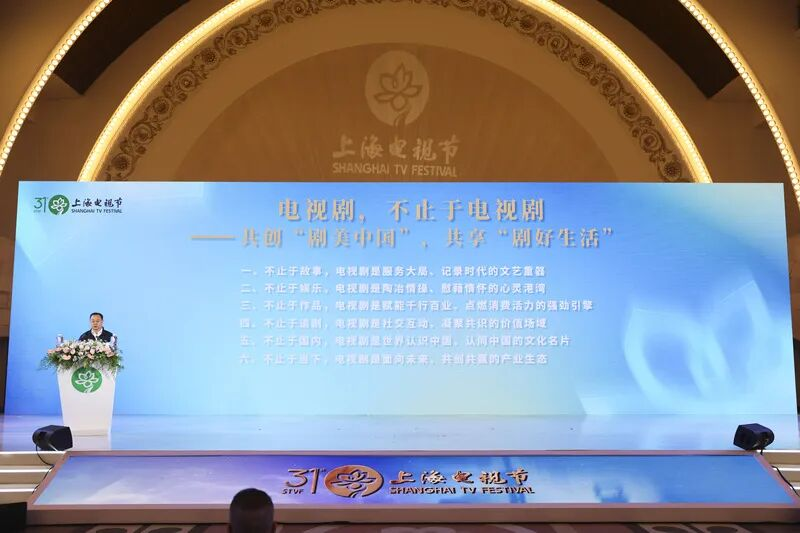
Understand how the Chinese TV industry is balancing AI automation with the demand for authentic, high-quality content.
30-Second TL;DR
What Changed
Industry leaders debate the role of AI in scriptwriting versus human creativity.
Why It Matters
The festival highlights the tension between AI-driven efficiency and the need for human-centric narratives, signaling a shift in how production companies evaluate AI tools.
What To Do Next
Evaluate your current creative pipeline to identify which narrative tasks can be augmented by AI without sacrificing emotional resonance.
Key Points
- •Industry leaders debate the role of AI in scriptwriting versus human creativity.
- •Emphasis on 'authenticity' as the core value for high-quality drama production.
- •Strategic shift from simple storytelling to building integrated industry ecosystems.
Deep Insight
AI-generated analysis for this event — not the original article.
Enhanced Key Takeaways
- •The 31st Shanghai TV Festival introduced new regulatory guidelines regarding AI-generated content (AIGC) labeling to ensure transparency in broadcast media.
- •Major Chinese streaming platforms, including Tencent Video and iQIYI, announced collaborative 'AI-Human Co-creation' pilot programs to standardize AI usage in pre-production workflows.
- •Industry experts at the festival highlighted the emergence of 'AI-driven virtual production' as a cost-reduction strategy for historical dramas, specifically targeting set design and background asset generation.
- •The festival featured a dedicated exhibition showcasing proprietary Chinese Large Language Models (LLMs) fine-tuned specifically on domestic screenwriting datasets to preserve cultural nuances.
- •A consensus was reached among production houses to implement a 'Human-in-the-loop' verification protocol for all AI-assisted scripts to mitigate copyright and intellectual property risks.
Technical Deep Dive
- Implementation of RAG (Retrieval-Augmented Generation) architectures in screenwriting tools to ensure scripts adhere to historical accuracy and local censorship guidelines.
- Utilization of diffusion-based models for automated storyboard generation, allowing for real-time visualization of camera angles and lighting setups.
- Integration of multimodal AI agents capable of analyzing script sentiment to suggest casting choices based on historical performance data and audience engagement metrics.
Future ImplicationsAI analysis grounded in cited sources
Timeline
- 2023-06The 29th Shanghai TV Festival hosts initial panels on the potential of generative AI in media.
- 2024-06The 30th Shanghai TV Festival shifts focus to practical AI applications in post-production and visual effects.
- 2026-06The 31st Shanghai TV Festival establishes industry-wide standards for AI-human collaboration in scriptwriting.
Weekly AI Recap
Read this week's curated digest of top AI events →
AI-curated news aggregator. All content rights belong to original publishers.
Original source: 虎嗅 ↗
This is a summary, not the original. Read the source, or get the weekly briefing.
The weekly digest
One email a week. Unsubscribe anytime.